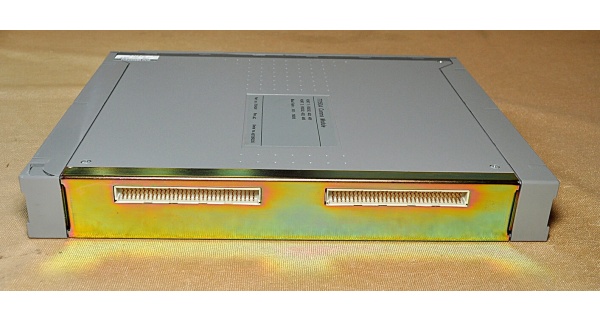
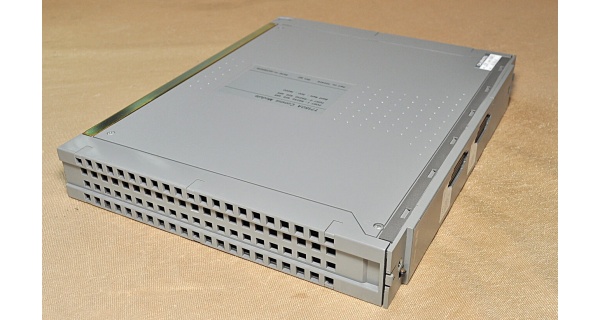
Description
Key Technical Specifications
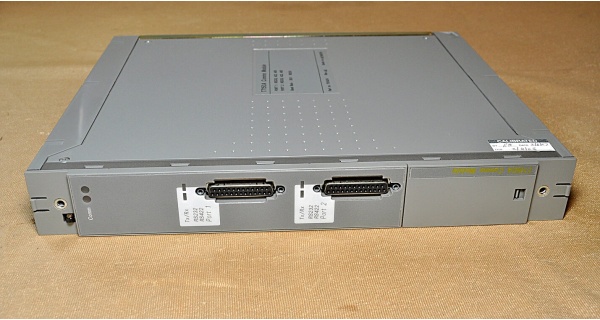
- Communication Performance: It has two serial ports that can be independently configured for point – to – point or multi – drop connection modes. The baud rate ranges from 300 to 19200, which can meet the communication rate requirements of different industrial devices. It is compatible with Regent R2, Modbus RTU, ASCII and guarded peer – link protocols, and can be flexibly integrated with various industrial control systems. The module uses DB – 25 female connectors, and the matching cable uses DB – 25 male connectors. It is recommended to use Belden 813X shielded twisted – pair cables with 120 ohm impedance to ensure stable signal transmission.
- Safety and Power Supply Characteristics: It has excellent electrical isolation performance. The minimum isolation between serial devices and logic circuits and between each port can reach 1000V, which can effectively isolate electrical interference between different circuits and ensure the stability of data transmission. It gets power directly from the triple redundant processor module, without the need for an additional external power supply, and its heat dissipation power is 7 watts (equivalent to 24 BTU/hour), which has little impact on the overall power consumption of the system. In addition, it has obtained TÜV certification with risk class 5, which can meet the safety level requirements of most industrial control scenarios.
- Physical and Environmental Adaptability: The module size is 330mm×38mm×229mm and weighs about 1.4kg. It can withstand the vibration environment of 10 – 55Hz and ±0.15mm, and can resist the impact of 15g and 11ms, which is suitable for industrial sites with slight vibration and impact. The operating temperature range is 0 – 60°C, the storage temperature range is – 40 – 85°C, and it can work normally in an environment with 0 – 95% non – condensing humidity, adapting to the harsh environmental conditions of most industrial sites.

ICS TRIPLEX T7150A
Field Application & Problem Solved
- Chemical Industry Control System Data Interaction: In the chemical production process, multiple controllers need to communicate with on – site detection instruments and actuators. The T7150A module can be used to connect the central controller with these on – site devices through RS – 485 interface. It is compatible with Modbus RTU protocol, which can realize the real – time transmission of data such as temperature and pressure detected by instruments to the controller, and the controller can send control signals to actuators through this module. Its isolation performance can avoid electrical interference between devices in the complex chemical workshop environment, preventing data transmission errors caused by interference and ensuring the accuracy of chemical production control.
- Power Plant Distributed Control System Expansion: In the distributed control system of a power plant, there are many subsystems such as coal feeding, combustion and power generation. The T7150A module can be used as a communication bridge between each subsystem controller. Through the configurable serial port and compatible multi – protocol characteristics, it can realize the data interconnection between subsystems with different communication requirements. When a subsystem needs to be expanded, the module’s flexible port configuration can quickly adapt to the communication needs of new devices, avoiding the problem of difficult system expansion caused by incompatible communication interfaces, and improving the scalability of the power plant control system.
ICS TRIPLEX T7150A
Installation & Maintenance Pitfalls (Expert Tips)
- Cable Selection and Wiring: When wiring, strictly select the specified Belden 813X shielded twisted – pair cable. Using non – compliant cables will lead to signal attenuation and poor anti – interference ability. At the same time, keep the communication cable away from high – voltage cables to avoid electromagnetic interference affecting communication quality. Ensure that the connection between the module connector and the cable is firm to prevent poor contact caused by vibration in the industrial site.
- Port Configuration Check: When configuring the two serial ports, clearly define the working mode and communication parameters of each port. If the parameters such as baud rate and protocol of the port do not match the connected external devices, communication failure will occur. After configuration, conduct a communication test to confirm that data can be transmitted normally between the module and each device.
- Status Monitoring by Indicators: The module is equipped with front – panel indicators for status and activity. During daily maintenance, regularly check the indicator status. If the indicator is abnormal, timely check whether there is a fault in the port, cable or connected device. In addition, since the module is powered by the triple redundant processor module, when the module is abnormal, it is also necessary to check the power supply status of the processor module to eliminate the problem of power supply failure.