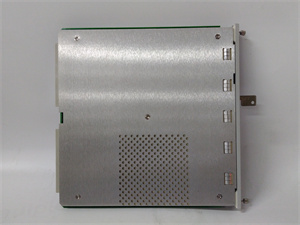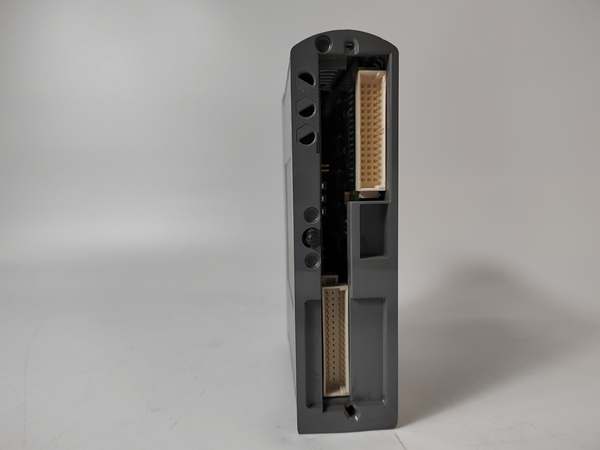
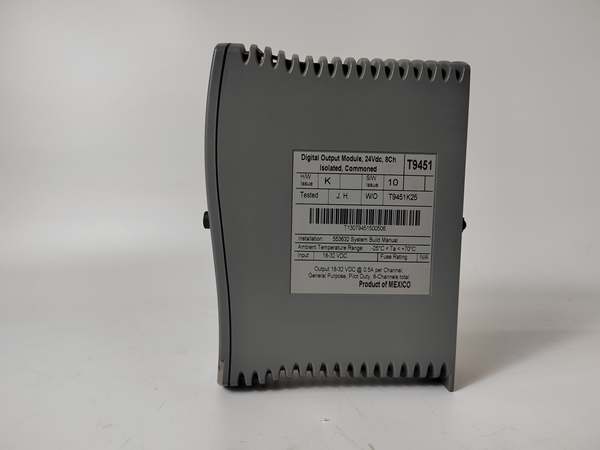
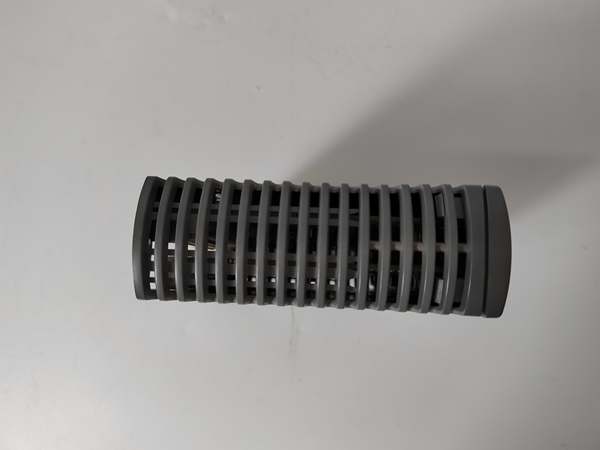
Description
Key Technical Specifications
-
Model Number: P8451
-
Manufacturer: ICS Triplex (Integrated into Rockwell Automation)
-
Input Channels: 8 independent, software-configurable channels
-
Signal Types: 4-20mA (current), 0-10V (voltage), ±5V (voltage), thermocouple (Type J/K/T/E)
-
Measurement Precision: ±0.1% FS (4-20mA), ±0.2% FS (voltage signals)
-
Sampling Rate: 100Hz per channel (simultaneous sampling)
-
Backplane Interface: Trusted TMR system 64-bit parallel backplane
-
Operating Voltage: 24VDC (from controller chassis redundant supply)
-
Power Consumption: 8W typical, 12W max
-
Operating Temperature: -20°C to 70°C (standard), -40°C to 75°C (extended range)
-
Storage Temperature: -40°C to 85°C
-
Humidity Rating: 5% to 95% non-condensing
-
Certifications: IEC 61508 SIL 3, UL 508, CE, ATEX Zone 2 (conformal coated)
-
Isolation: 2500VAC channel-to-backplane, 1500VAC channel-to-channel
-
Protection: Overcurrent (25mA max per channel), reverse polarity protection
-
Mechanical: Chassis-mount (Trusted controller slot), 132mm×107mm×27mm (H×W×D)

ICS Triplex T3484
Field Application & Problem Solved
In safety-critical industrial environments—refineries, petrochemical plants, and thermal power stations—acquiring accurate analog process data (e.g., reactor pressure, pipeline flow, turbine temperature) is the foundation of reliable SIS operation. The biggest pain points here are twofold: generic analog input modules lack the fault tolerance to handle industrial electrical noise, leading to signal drift or false readings; and non-SIL-certified modules fail regulatory audits, exposing plants to non-compliance fines.
I once witnessed a chemical plant use a generic AI module to monitor reactor temperature—signal drift caused by nearby VFDs led to a 15°C overestimation, triggering an unnecessary emergency shutdown that cost $120k in lost production. The P8451 solves these issues by combining TMR system integration with SIL 3-level reliability: its 8 isolated channels prevent cross-talk between signals, while built-in EMI filtering eliminates noise-induced drift.
You’ll typically find the P8451 in Trusted controller chassis managing high-risk processes: in a refinery’s catalytic cracking unit, it acquires 4-20mA signals from pressure transmitters; in a power plant, it collects temperature data from turbine bearings via Type K thermocouples; in an LNG terminal, it monitors cryogenic storage level signals. Its core value lies in accurate, compliant signal acquisition—unlike generic modules, it’s designed to work seamlessly with Trusted TMR logic, ensuring safety responses are based on reliable data, and its SIL 3 certification meets the strictest regulatory requirements for SIS.
Installation & Maintenance Pitfalls (Expert Tips)
Channel Configuration: Match Signal Type Exactly
Rookies often configure all channels as 4-20mA without verifying the field device output. For example, connecting a 0-10V level transmitter to a 4-20mA-configured channel will result in a “signal out of range” fault. Use the Trusted Workbench software to set each channel’s signal type, and cross-verify with the field device manual. For thermocouples, enable the cold-junction compensation (CJC) feature—disabling it leads to ±5°C measurement errors.
Wiring: Shielded Cable & Single-Point Grounding
Unshielded cables pick up EMI from motors or VFDs, causing signal ripple. Always use 24AWG shielded twisted-pair cable for analog wiring. Ground the shield at the module end only—grounding both ends creates ground loops that distort signals. In a coastal refinery project, we fixed a 2mA signal drift by re-routing unshielded cable to shielded and grounding it correctly at the P8451 terminal block.
Conformal Coating: Mandatory in Harsh Environments
The standard P8451 lacks conformal coating—exposing it to humidity, corrosive vapors (e.g., in chemical plants), or salt spray (coastal refineries) will cause PCB corrosion within 18 months. Opt for the 603845-02 variant with IPC-A-610 Class 3 conformal coating. It adds $300 upfront but avoids $8k+ in downtime from module failure, especially in ATEX Zone 2 areas.
Calibration: Don’t Skip Annual Verification
SIL 3 requirements mandate annual calibration (IEC 61508). Use a precision calibrator (e.g., Fluke 754) to inject known signals (e.g., 4mA, 12mA, 20mA for current channels) and verify module readings. A common mistake is calibrating only the midpoint—always test full scale to catch non-linear drift. In one power plant, a 0.3% drift in a P8451 channel went unnoticed for 18 months, leading to inefficient turbine operation.
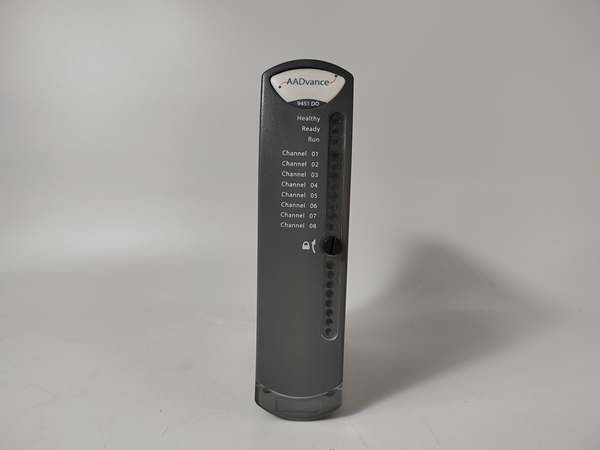
ICS Triplex T3484
Technical Deep Dive & Overview
The P8451 is a purpose-built analog input module for ICS Triplex’s Trusted TMR safety systems, designed to bridge field sensors and the controller’s safety logic. At its core, it uses 8 independent signal conditioning circuits—each with a dedicated ADC (Analog-to-Digital Converter) and EMI filter—to ensure signal integrity. The simultaneous sampling rate of 100Hz per channel is critical for safety applications, as it captures rapid process changes (e.g., a sudden pressure spike in a reactor) without latency.
Unlike generic AI modules, its TMR backplane integration enables the Trusted controller to cross-validate data across redundant modules, a key requirement for SIL 3 certification. If one P8451 module fails, the controller automatically switches to a redundant unit, ensuring no loss of critical process data. The module’s firmware includes built-in fault detection: it flags open circuits (e.g., a broken sensor wire) or overcurrent conditions within 10ms, triggering an alarm to maintenance teams.
Industrial ruggedness is baked into its design: the 2500VAC channel-to-backplane isolation suppresses transient voltage spikes from lightning or power surges, common in outdoor industrial settings. The optional conformal coating creates a barrier against moisture and chemicals, extending service life in harsh environments. Front-panel LEDs (power, channel activity, fault) provide instant visibility—an amber fault LED on channel 3 immediately points to a sensor or wiring issue, simplifying troubleshooting.
What makes the P8451 indispensable is its focus on safety-critical requirements. It avoids unnecessary features (e.g., wireless connectivity) that add failure points, instead prioritizing reliable signal acquisition and compliance. For field engineers, it’s a “set-and-forget” component once configured correctly—its integration with Trusted Workbench means no standalone software is needed, and firmware updates align with the controller’s ecosystem. In SIS where every millivolt of accuracy matters, the P8451 isn’t just an input module—it’s the foundation of safe, compliant process control.