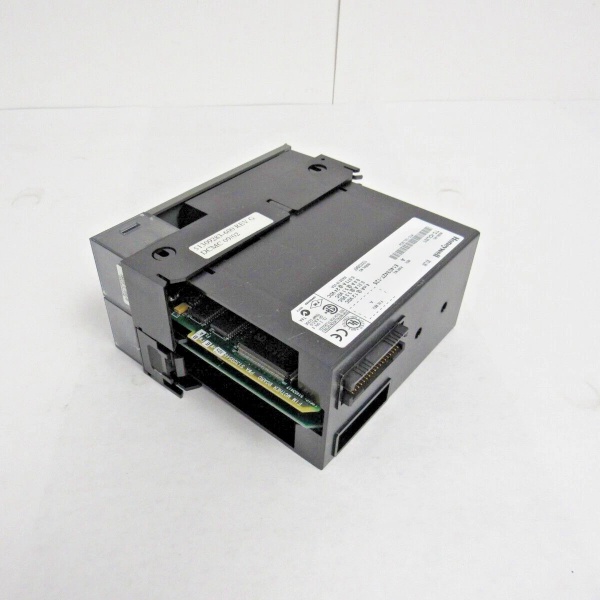
Description
Key Technical Specifications
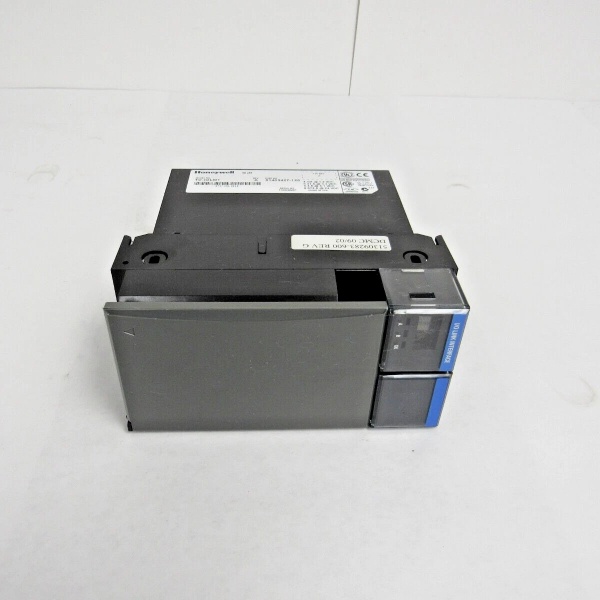
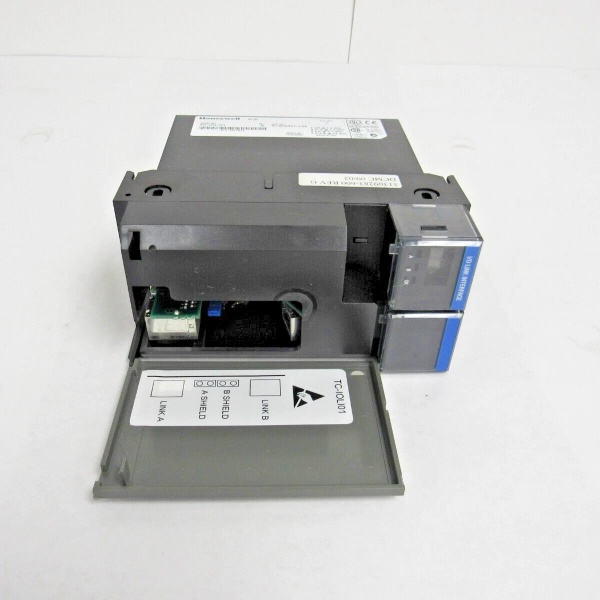
- Model Number: TC-IOLI01 51403427-125
- Manufacturer: Honeywell Process Solutions
- Communication Protocols: UCN (Universal Control Network), I/O Bus (TDC 3000 proprietary)
- Data Transfer Rate: Up to 5 Mbps (UCN side), 1 Mbps (I/O Bus side)
- Redundancy Support: Dual UCN port redundancy (hot standby)
- I/O Bus Ports: 1 port (supports up to 8 I/O modules per rack)
- Operating Temperature: -20°C to +60°C (-4°F to +140°F)
- Storage Temperature: -40°C to +85°C (-40°F to +185°F)
- Isolation Rating: 1500V AC (UCN port to I/O Bus port)
- Power Supply: 24VDC (from TDC 3000 I/O rack power supply, 0.15A max draw)
- Mounting: Rack-mounted (fits TDC 3000 I/O chassis slots)
- Diagnostic Capabilities: UCN link status monitoring, I/O Bus fault detection, power supply health alerts
- Certifications: UL 508, CSA C22.2 No. 142, CE compliant

Honeywell TC-IOLI01 51403427-125
Field Application & Problem Solved
In refineries and chemical plants running legacy TDC 3000 systems, the biggest bottleneck is connecting local I/O racks (packed with analog/digital modules) to the plant-wide UCN. Without a dedicated interface, data transfer between field devices and the central UCN would be slow, unreliable, and prone to dropouts—especially in loops with fast-changing process variables like reactor temperature or distillation column pressure. The TC-IOLI01 solves this by acting as a dedicated gateway: it translates I/O Bus data into UCN-compatible packets, ensuring fast, deterministic communication between the field and the central control system.
You’ll find this module in every TDC 3000 I/O rack that connects to the UCN—typically in crude distillation units, catalytic cracking plants, and batch reactor systems. It’s the unsung hero of the TDC 3000 architecture: without it, the UCN can’t send control commands to field actuators or receive data from sensors. Its core value is redundancy support: the dual UCN ports mean if one UCN link fails, the module automatically switches to the standby port in less than 100ms, with zero disruption to the process. I’ve seen this save a refinery from a $200k shutdown when a UCN cable was accidentally cut during a turnaround— the module’s redundancy kicked in before the controller even registered a fault.
Another critical value is its diagnostic transparency. The module reports UCN link quality and I/O Bus health directly to the TDC 3000 operator interface, letting technicians spot degradation before it causes a failure. For example, a slowly deteriorating UCN cable will show up as increased signal noise on the module’s diagnostics— allowing teams to replace the cable during a scheduled outage instead of dealing with an unplanned shutdown.
Installation & Maintenance Pitfalls (Expert Tips)
Redundancy Requires Matching UCN Addresses: Rookies often set mismatched UCN addresses for the primary and standby ports, thinking any address works. Wrong— both ports must have the same UCN node address to enable seamless failover. If addresses don’t match, the module will throw a “redundancy mismatch” fault and run in single-port mode, eliminating the redundancy safety net. Always verify addresses in the TDC 3000 configuration software before powering on the rack. I’ve fixed three redundancy faults in a month caused by this simple mistake.
UCN Cable Shield Grounding Is Non-Negotiable: The UCN uses shielded twisted-pair cable, and the shield must be grounded at both the module and the UCN terminator— not just one end. Rookies who ground only one end create a ground loop that introduces noise into the UCN signal, leading to intermittent data drops. Use a dedicated ground lug on the module, and terminate the shield to a clean earth ground (not the cabinet frame). In high-EMI areas like motor control centers, add a ferrite core to the cable near the module to suppress noise. This is the #1 cause of UCN communication issues with this module.
Don’t Ignore I/O Bus Termination: The I/O Bus requires a 120Ω termination resistor at the farthest module from the TC-IOLI01. Forgetting this resistor causes signal reflection, which corrupts data and triggers false I/O faults. If your rack has 8 I/O modules, the resistor goes on the 8th module— not the TC-IOLI01. I’ve spent hours troubleshooting “missing sensor data” faults only to find a missing termination resistor. Make this a first check during commissioning.
Firmware Compatibility Is Critical for Retrofits: When replacing a failed module in an older TDC 3000 system, don’t just slap in a new TC-IOLI01. Newer firmware versions may not be compatible with legacy UCN controllers (like the TDC 3000 PM51). Check the firmware revision on the old module and match it— if you can’t, you’ll have to update the controller firmware (a time-consuming process). I’ve seen a retrofit grind to a halt because a new module’s firmware was too new for the 20-year-old controller.
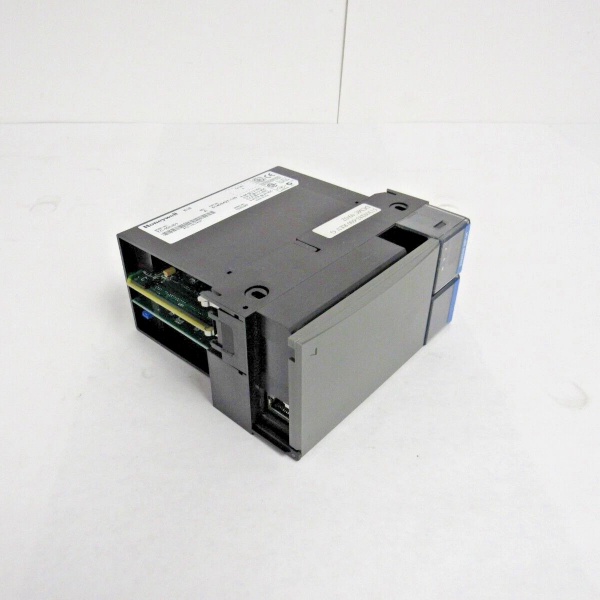
Honeywell TC-IOLI01 51403427-125
Technical Deep Dive & Overview
The TC-IOLI01 51403427-125 is a dedicated communication gateway designed to bridge the TDC 3000 UCN and local I/O racks. At its core, it uses a dual-processor design: one processor handles UCN communication, and the other manages the I/O Bus. This separation ensures UCN traffic doesn’t bottleneck I/O Bus data transfer, critical for fast process loops. The dual UCN ports are hardwired for hot standby redundancy— the module continuously monitors the primary port’s signal quality, and switches to the standby port if the primary link drops below a predefined threshold.
Unlike smart modules with user-programmable settings, the TC-IOLI01’s configuration is locked to the TDC 3000 system software— you can’t change UCN addresses or I/O Bus parameters locally. This is a feature for legacy systems: it eliminates the risk of misconfiguration by field technicians. The module’s diagnostic engine continuously checks for UCN link loss, I/O Bus shorts, and power supply voltage drops, sending alerts to the operator interface via the UCN.
The 1500V AC isolation between the UCN and I/O Bus ports protects the UCN controller from high-voltage surges in the field— a common hazard in refineries where lightning strikes or equipment faults can send voltage spikes through I/O wiring. The module’s rugged metal housing resists vibration and corrosion, and it’s rated for 10+ years of continuous operation in harsh industrial environments. For TDC 3000 users, this module is the critical link between the field and the plant-wide network— install it correctly, and it will run reliably for decades without intervention.