Description
Key Technical Specifications
| Technical Indicator | Details |
|---|---|
| Manufacturer | Honeywell Process Solutions |
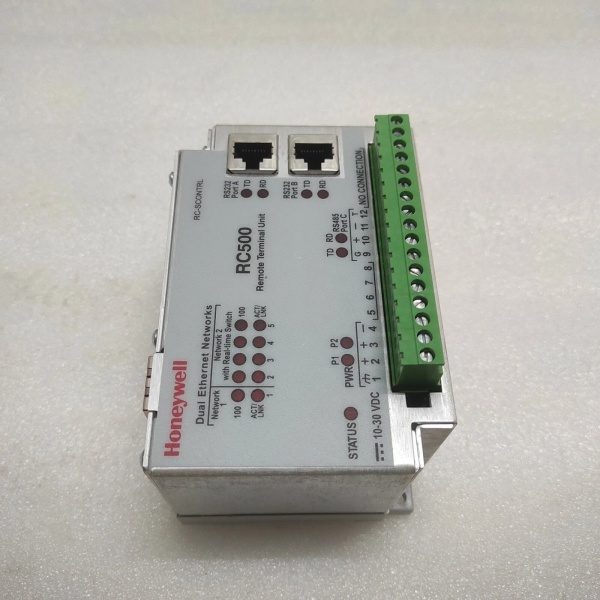
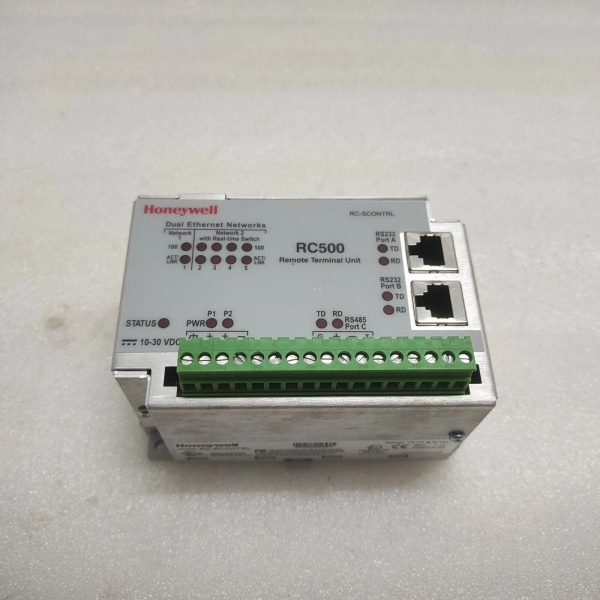
| Power Supply | 10 – 30VDC, current consumption of 175mA |
| Memory Configuration | 128MB DRAM, 64MB Flash (for operating system and user programs), 2MB NVRAM (with rechargeable lithium battery for power failure data storage) |
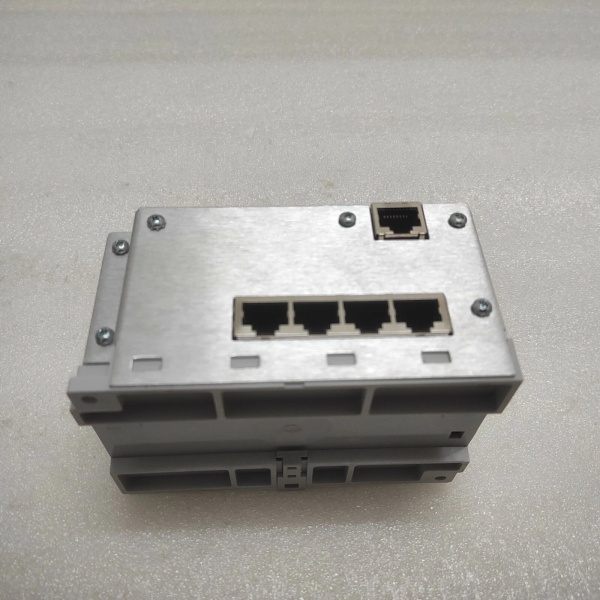
| Communication Interfaces | 5 Ethernet ports, 2 RS – 232 ports, 1 RS – 485 port |
| Communication Protocols | Modbus, DNP3, Ethernet, Modbus RTU |
| Operating Temperature | -40°C to +70°C |
| Storage Temperature | -40°C to +85°C |
| Mounting Method | DIN rail mounting or panel mounting |
| Dimensions & Weight | 140mm×100mm×35mm; about 370g (individual module weight), 2.5kg (overall product weight) |
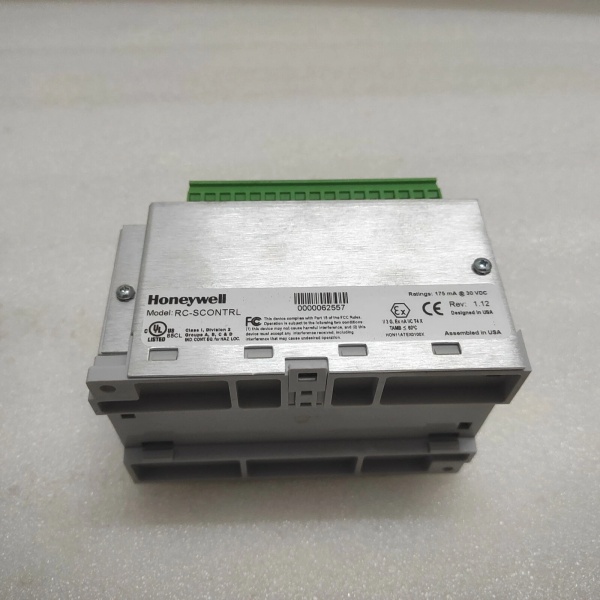
| Certifications | Class I, Div 2 (Groups A – D), ATEX II 3G Ex na IIC T4 X, UL 508, CSA, CE, TUV |
Honeywell RC-SCONTRL
Field Application & Problem Solved
The RC-SCONTRL perfectly solves these pain points. Its IP65 – rated rugged housing can resist harsh environmental impacts. For example, it can operate normally in high – temperature and high – humidity oilfield well sites and corrosive chemical workshops. The support for multiple communication protocols enables it to integrate with various existing SCADA systems on the market without replacing a large number of original equipment. In water treatment plants, it can realize centralized monitoring of distributed water pumps, valves, and water quality sensors; in oil fields, it can remotely collect data such as oil well output and pipeline pressure and send control commands. In addition, its modular design allows enterprises to expand I/O modules according to production scale changes, avoiding the waste caused by overall system replacement.
Installation & Maintenance Pitfalls (Expert Tips)
- Pay attention to the matching of power supply voltage: Although the module supports a 10 – 30VDC wide voltage input, it is strictly prohibited to use a power supply exceeding 30VDC. Some maintenance personnel may mistakenly connect it to a 48VDC industrial power supply during emergency replacement, which will burn out the internal circuit board instantly. It is necessary to use a multimeter to confirm the power supply voltage before installation.
- Do a good job in anti – interference processing of communication lines: The RS – 485 and RS – 232 lines used in the field are prone to signal interference if they are laid in parallel with high – voltage cables. This will lead to data transmission errors, such as incorrect display of sensor data. It is recommended to separate the communication lines from high – voltage lines by more than 30cm during wiring, and use shielded cables. At the same time, ground the shielding layer to enhance anti – interference ability.
- Backup data before expanding modules: The module supports hot – swapping and I/O expansion, but if the system program and configuration data are not backed up in advance during expansion, a sudden power failure or communication interruption may cause configuration loss. It is necessary to use the RC500 toolkit to back up data to the local device before expanding the module, and then perform the expansion operation.
- Regularly check the NVRAM battery: The 2MB NVRAM relies on a rechargeable lithium battery to maintain data when the power is off. After long – term use, the battery capacity will decrease. If it is not replaced in time, data loss will occur when the power is cut off. It is recommended to check the battery state through the diagnostic function of the Isagraf software every 1 – 2 years, and replace the battery if the capacity is lower than 80% of the rated value.

Honeywell RC-SCONTRL
Technical Deep Dive & Overview
In terms of data reliability, the multi – level memory configuration ensures that no data is lost. The Flash memory stores the operating system and user programs stably, while the NVRAM with a lithium battery backup can save key data such as real – time production parameters when the power is suddenly cut off. In terms of communication, the rich interface types and multiple protocol supports enable it to act as a “communication bridge” between distributed field devices and the central control system, realizing real – time transmission and feedback of data and control commands.
Overall, this module is a cost – effective and reliable core control component for distributed industrial control. It can meet the remote management needs of small and large – scale automation systems, and is an important part of ensuring the continuous and stable operation of industrial production.