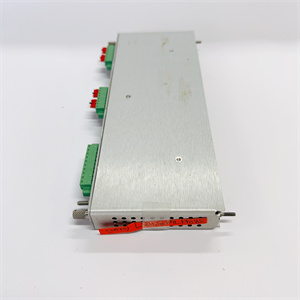
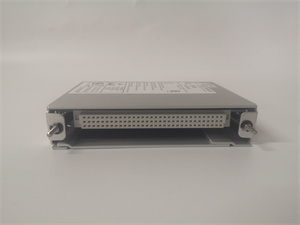
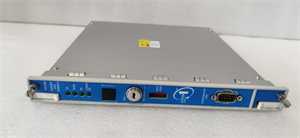
Description
Hard-Numbers: Technical Specifications
-
Processor Architecture: Dual synchronous processors (1oo2D voting – One-out-of-Two with Diagnostics)
-
Clock Speed: 1.2 GHz (enhanced vs. 1.0 GHz in QPP-0001)
-
Memory: 4 GB DDR4 SDRAM (2 GB per processor set); 64 GB SSD flash storage for system/application program and backup
-
Diagnostic Coverage: >99% via hardware data-comparators monitoring every read/write action
-
Safety Integrity Level: SIL3 capable (single module, no time limitation); 2oo4D in redundant configurations
-
Power Requirements: 24 VDC (–15% to +30%); max 25 mA @ 24V; 5 VDC ±5%; max 1.2 A @ 5V
-
I/O Bus Interface: 4× bus drivers for driving I/O chassis (RMU/IO modules)
-
Redundancy Link: Dedicated high-speed communication channel between paired QPP modules via controller backplane
-
Watchdog Circuit: Hardware watchdog with cycle time verification, memory integrity checks, voltage monitoring (under/overvoltage detection)
-
Operating Temperature: –5°C to +70°C (external); –5°C to +85°C (internal module)
-
Storage Temperature: –40°C to +85°C
-
Humidity: 10% to 95% RH non-condensing
-
Dimensions: 176 mm × 88.5 mm × 212 mm (H × W × D)
-
Weight: 1.3 kg (module); 3 kg (shipping)
-
Protection: IP20 (standard); IP67 (conformal coated variants)
-
Approvals: CE, UL, CSA, TÜV, FM
-
Backwards Compatibility: QPP-0001 replacement when Safety Manager runs R121 firmware or higher
The Real-World Problem It Solves
Legacy Safety Manager systems running QPP-0001 modules face obsolescence as original hardware becomes scarce and processing demands increase with modern safety logic complexity. The FS-QPP-0002 drops in as a pin-compatible, firmware-upgradeable replacement that doubles processing power and memory while maintaining the same >99% diagnostic coverage and SIL3 certification. It eliminates the “spare parts panic” for aging ESD systems while providing headroom for expanded I/O and more complex cause-and-effect matrices.
Where you’ll typically find it:
-
Upgraded Emergency Shutdown Systems in 15-year-old LNG liquefaction trains where QPP-0001 spares are exhausted
-
Fire and Gas detection logic solvers on North Sea platforms running Safety Manager R130+ firmware
-
Burner Management Systems (BMS) for combined-cycle turbines requiring faster safety loop response times
This module bridges the gap between proven Safety Manager architecture and modern processing requirements without forcing a full system rip-and-replace.

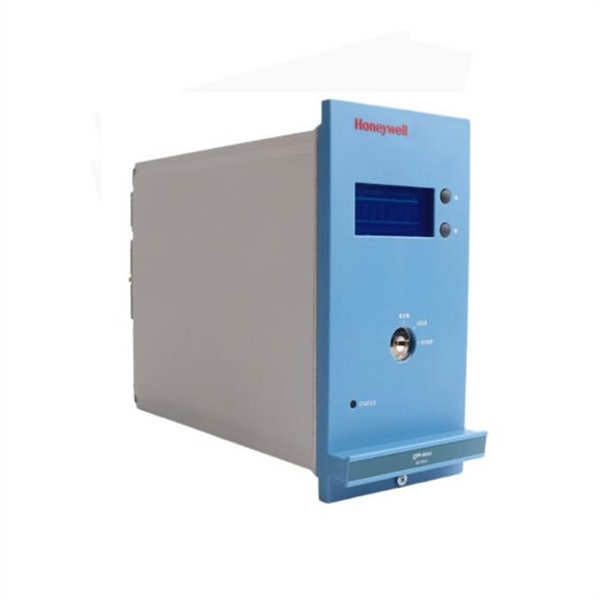
Honeywell FC-QPP-0001
Hardware Architecture & Under-the-Hood Logic
The FS-QPP-0002 functions as the enhanced safety brain of the Safety Manager system. Like its predecessor, it employs dual processors running in lockstep, but with significantly faster clock speeds, expanded memory, and modern DDR4/SSD storage architecture.
Signal flow and processing logic:
-
Dual-Core Execution: Two independent processors execute the same Functional Logic Diagrams (FLDs) simultaneously from separate memory sets. Each has dedicated 2 GB DDR4 SDRAM and access to 64 GB SSD flash.
-
Hardware Comparison: Dedicated data-comparators monitor every read/write action between the processors at hardware level. If any bit differs, the watchdog trips immediately and the module forces safe-state outputs.
-
Watchdog Supervision: Hardware watchdog verifies processors complete tasks within defined cycle times. It monitors data integrity on both processor memories and validates power supply voltages (detecting undervoltage and overvoltage conditions).
-
Safe State Enforcement: Regardless of internal QPP status, the system can force safety-critical outputs to de-energized/failsafe positions via independent hardware paths—ensuring safety even if both processors fail simultaneously.
-
I/O Bus Control: Four independent bus drivers communicate with remote I/O chassis (RMU modules). The QPP reads safety inputs, executes FLDs created in Safety Builder, and writes to safety outputs with deterministic timing.
-
Redundant Synchronization: In 2oo4D configurations, two QPP-0002 modules synchronize via a dedicated high-speed link on the controller backplane. They vote on outputs while maintaining independent diagnostic paths and cross-checking each other’s health.
-
Continuous Self-Test: Additional test hardware exercises memory, buses, and comparators during every scan cycle without impacting application execution—achieving the >99% diagnostic coverage required for SIL3.
Field Service Pitfalls: What Rookies Get Wrong
Assuming Direct QPP-0001 Replacement Without Firmware Check
The FS-QPP-0002 is backwards-compatible with QPP-0001, but only when the Safety Manager is running R121 firmware or higher. Drop this module into an older R120 or earlier system and it won’t boot—leaving your ESD system dark.
-
Field Rule: Check the firmware revision in Safety Builder before ordering spares. If running pre-R121, upgrade the firmware first (requires planned shutdown). Document the firmware version on the cabinet door. Never assume “backwards compatible” means “plug-and-play” without verifying the revision level.
Mixing QPP-0001 and QPP-0002 in Redundant Pairs
In a redundant (2oo4D) configuration, both Control Processors must be identical. You cannot pair a QPP-0001 with a QPP-0002—the synchronization protocol and memory architecture differences will cause the redundancy link to fail, leaving you with two independent CPUs arguing over who is primary.
-
Quick Fix: When replacing a failed QPP in a redundant pair, either use two QPP-0002 modules (upgrade both) or source a matching QPP-0001 spare. If upgrading to QPP-0002, replace both modules during the same outage and verify the “SYNC” LEDs are solid green before leaving site. A blinking SYNC after replacement means the pair is mismatched.
Ignoring the Battery-Backed RAM Dependency
The 4 GB DDR4 SDRAM includes battery-backed segments for I/O data, markers, counters, timers, and registers. This battery is located in the FC-BKM-0001 (Battery and Key-switch Module), not on the QPP itself. When the BKM battery dies, the QPP loses all volatile data on next power cycle.
-
Field Rule: Check the BKM battery status quarterly via Safety Builder diagnostics. Replace the BKM battery every 3-5 years during scheduled maintenance—never wait for the “Battery Low” alarm. If replacing a QPP-0002, verify the BKM in that chassis has a fresh battery; a new CPU with a dead BKM will lose its mind on first power-down.