Description
Hard-Numbers: Technical Specifications
- Input Voltage Range: 100–240 VAC (47–63 Hz)
- Input Current: 14–16A typical (at full load)
- Output Voltage: 24VDC nominal (selectable 25VDC or 28VDC per application)
- Output Current: Up to 50A maximum (1200W rated power)
- Output Options (Dual): 25VDC @ 48A OR 28VDC @ 43A
- Efficiency: ≥90% (typically 87–92% depending on load and input voltage)
- Hold-Up Time: 100 ms at full load
- Output Voltage Tolerance: ±10% (24VDC), ±5% (25VDC/28VDC)
- Ripple & Noise: <40 mVpp
- Protection: Overvoltage (dual OVP), overcurrent (OCP), short-circuit (SCP), over-temperature (OTP)
- Operating Temperature: -20°C to +50°C @ full load; -40°C to +70°C @ half load
- Storage Temperature: -25°C to +85°C
- Humidity Range: 10–90% RH non-condensing
- Approvals/Certifications: UL 508, CE, TUV, CSA, ATEX (FA-version), IECEx (FA-version)
- Dimensions: 191 mm × 188 mm × 65 mm (7.5″ × 7.4″ × 2.6″)
- Weight: 0.8–4.55 kg (varies per configuration and packaging)
- Mounting: DIN rail or panel mount
- Relay Output: De-energizes when output voltage drops below 22VDC
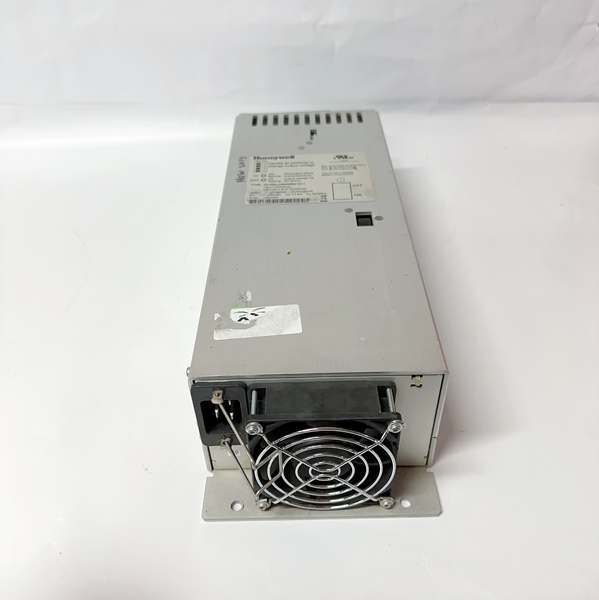
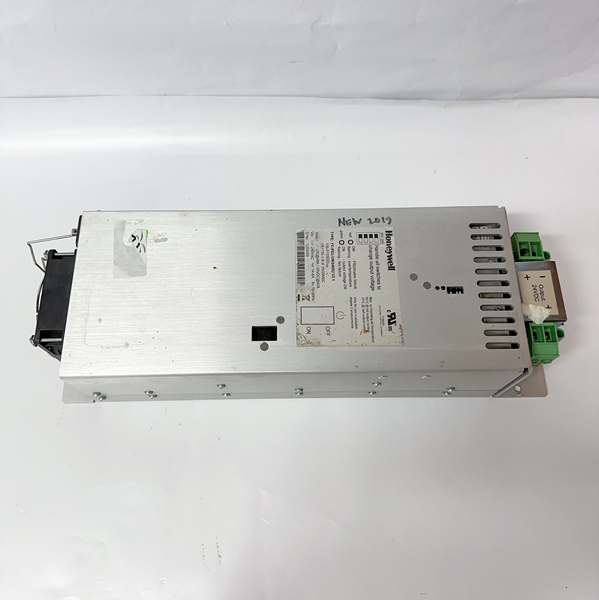
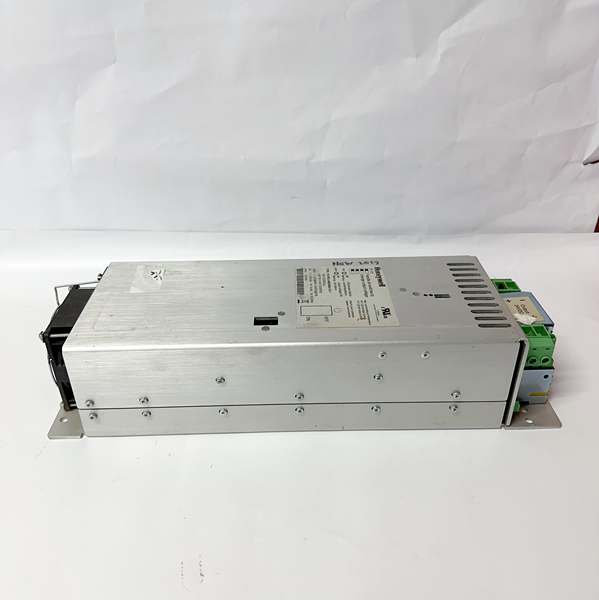
Honeywell FC-PSU-UNI2450U-V2.1
The Real-World Problem It Solves
Safety Manager systems can’t afford power interruptions. When you’re running SIL 3 ESD systems, HIPPS, or fire & gas detection, a power supply failure takes down the entire safety function—valves don’t trip, shutdowns don’t execute, and you’re staring at a hazardous situation with no protection. The FC-PSU-UNI2450U delivers up to 50A of clean 24VDC power with redundant output options and comprehensive protection, ensuring your Safety Manager controllers, I/O chassis, and field devices stay powered even when input voltage sags, loads spike, or environmental conditions turn harsh.
Where you’ll typically find it:
- Safety Manager cabinets in refineries, petrochemical plants, and offshore platforms providing primary power to redundant controllers and I/O chassis
- FSC (Fail Safe Controller) systems integrated into Experion PKS Safety platforms
- High-integrity protection systems (HIPPS), emergency shutdown (ESD), and fire & gas detection applications requiring SIL 3-certified power infrastructure
Bottom line: This PSU is the heart of your Safety Manager system—don’t compromise safety integrity with underpowered or non-redundant power supplies.
Hardware Architecture & Under-the-Hood Logic
The FC-PSU-UNI2450U is a high-current switching power supply designed specifically for Honeywell Safety Manager and FSC systems. It takes wide-range AC input (100–240VAC), rectifies and filters it, then uses high-frequency switching to generate regulated 24VDC (selectable 25VDC or 28VDC). The module features dual output stages for redundancy—two independent output circuits can be paralleled or configured as primary/backup. Built-in protection circuits continuously monitor output voltage, current, and internal temperature, triggering shutdown or alarm relay activation if limits are exceeded.
-
AC Input Stage: Wide-range 100–240VAC input passes through EMI filtering and input surge protection per IEC 61000-4-5. The bridge rectifier converts AC to rough DC, and bulk capacitors smooth the input before the switching stage.
-
High-Frequency DC/DC Conversion: A switching regulator (operating at ~50–100 kHz) converts the rough DC to an isolated intermediate bus voltage. High-frequency transformers provide galvanic isolation between input and output, protecting downstream equipment from line transients.
-
Dual Output Stage Regulation: Two independent output regulator circuits deliver 24VDC (25VDC or 28VDC selectable). Each circuit has its own current limiting and voltage regulation loop. In redundant configurations, outputs can be paralleled via diode OR-ing or configured as primary/backup with automatic switchover.
-
Protection Logic: Continuous monitoring circuits trip protective shutdowns under fault conditions:
- Overvoltage Protection (OVP): Dual-stage OVP trips if output exceeds set threshold (typically +10% above nominal)
- Overcurrent Protection (OCP): Current limiting at ~105–110% of rated current, with full shutdown at ~130%
- Short-Circuit Protection (SCP): Fast shutdown within 10–50 μs on output short-circuit
- Over-Temperature Protection (OTP): Derates output above ~85°C internal temp, full shutdown above ~105°C
-
Diagnostics & Alarm Relay: Front panel LEDs indicate power status (green = OK, yellow = derated/warning, red = fault). An onboard relay de-energizes when output voltage drops below 22VDC, providing a hard-wired alarm signal to external monitoring systems.
-
Hold-Up Capability: Internal bulk capacitors provide 100 ms hold-up time at full load, allowing the Safety Manager system to ride through brief input power interruptions without initiating a false safety trip.
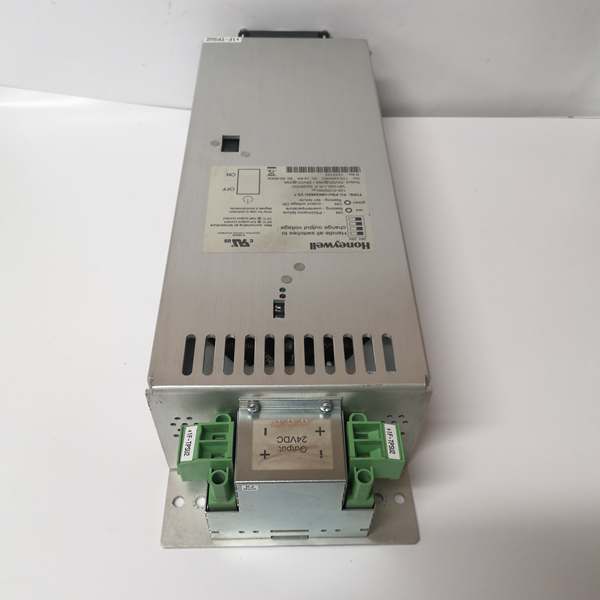
Honeywell FC-PSU-UNI2450U-V2.1
Field Service Pitfalls: What Rookies Get Wrong
Ignoring Input Voltage Range When Upgrading Facilities
I’ve seen facilities upgrade from 115VAC to 230VAC distribution and forget to check PSU compatibility. The FC-PSU-UNI2450U handles 100–240VAC, but older FSC systems often had fixed-voltage PSUs (115VAC only). If you don’t verify, you might feed 230VAC into a 115V-only PSU and smoke the input stage immediately.
- Field Rule: Always verify the PSU’s input voltage range matches your facility’s distribution voltage before applying power. Check the nameplate—FC-PSU-UNI2450U explicitly says 100–240VAC. If upgrading distribution, confirm all PSUs in the cabinet are universal-input rated.
Overloading the PSU in Redundant Configurations
Techs assume redundant PSUs share load equally and stack 48A total load on a pair of 25A-rated PSUs, thinking “redundant means double capacity.” If one PSU fails, the survivor gets hit with 48A—it’s rated for 25A continuous, so it trips or burns out. The redundancy fails when you need it most.
- Quick Fix: Calculate total load for the entire Safety Manager system (controllers + I/O + field devices). In redundant configurations, each PSU should carry no more than 50% of total load under normal operation. If you’re running above 80% capacity on a single PSU, add parallel units or upgrade to higher-rated PSUs.
Disabling the Alarm Relay Output
Rookies wire the PSU output to the Safety Manager but ignore the alarm relay contact. When the PSU starts derating due to over-temperature or aging capacitors cause voltage drift, the Safety Manager keeps running on marginal power. The PSU eventually fails, and the safety function goes offline without any warning alarm.
- Field Rule: Always wire the alarm relay (de-energizes below 22VDC) to a digital input on the Safety Manager or external alarm system. Test it by lowering input voltage until the relay trips—verify the alarm reaches the operator console. Don’t assume “no red light” means everything’s fine.
Overlooking Hold-Up Time Requirements
The FC-PSU-UNI2450U provides 100 ms hold-up at full load. If you’ve got long cable runs, high inrush loads (solenoid banks firing simultaneously), or weak facility power, this might not be enough to ride through momentary sags. The Safety Manager executes a partial shutdown or false trip when voltage dips below threshold during an inrush event.
- Quick Fix: Calculate total system inrush current when all outputs switch simultaneously. If hold-up time is insufficient, add external bulk capacitance or an uninterruptible power supply (UPS) upstream of the PSUs. Don’t rely on the PSU alone for facilities with poor power quality.
Neglecting Cabinet Ventilation Around PSUs
These PSUs generate heat—lots of it at full load. I’ve seen techs mount them in tightly packed cabinets with zero clearance above or below, blocking airflow entirely. Internal temps hit 90°C+, the OTP derates output, and eventually the PSU shuts down mid-process.
- Field Rule: Maintain minimum 50mm (2″) clearance above and below each PSU for convective cooling. Ensure cabinet fans are operational, filters are clean, and intake/exhaust vents aren’t obstructed. If ambient temps exceed 40°C, derate PSU load per the datasheet or add forced air cooling directed at the PSU.
Failing to Version-Match PSUs in Redundant Pairs
Honeywell released V1.0, V2.0, and V2.1 of the FC-PSU-UNI2450U with internal design changes to improve dust tolerance and reliability. Rookies mix versions in redundant pairs—a V1.0 paired with a V2.1. If load sharing or switchover logic differs between versions, you get uneven loading or one PSU refusing to pick up load during failover.
- Quick Fix: In redundant pairs, always use identical firmware/hardware versions. Check the nameplate version (V2.1, etc.) before installation. Honeywell explicitly recommends V2.1 or later for new installations due to improved reliability. Don’t mix old stock with new upgrades in the same redundant pair.
Commercial Availability & Pricing Note
Please note: The listed price is for reference only and is not binding. Final pricing and terms are subject to negotiation based on current market conditions and availability.