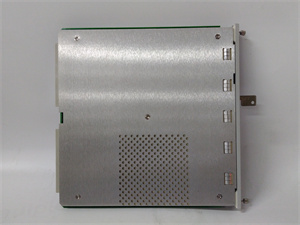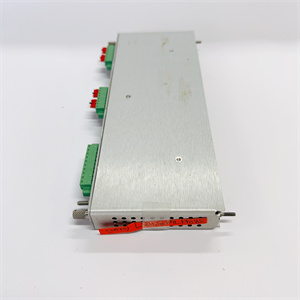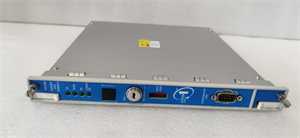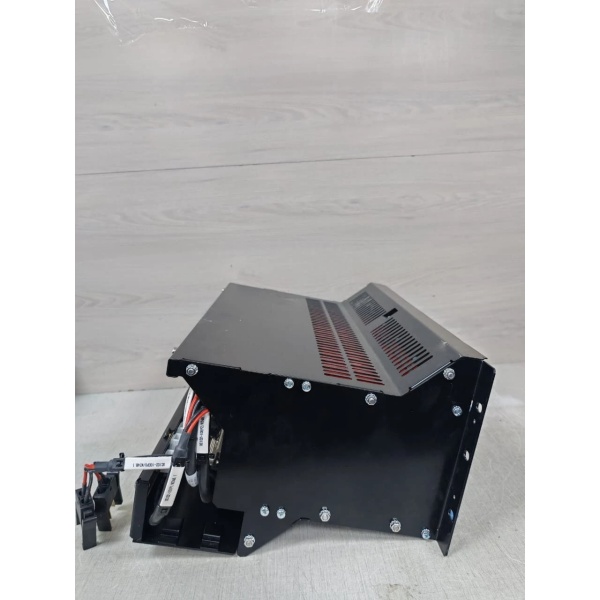
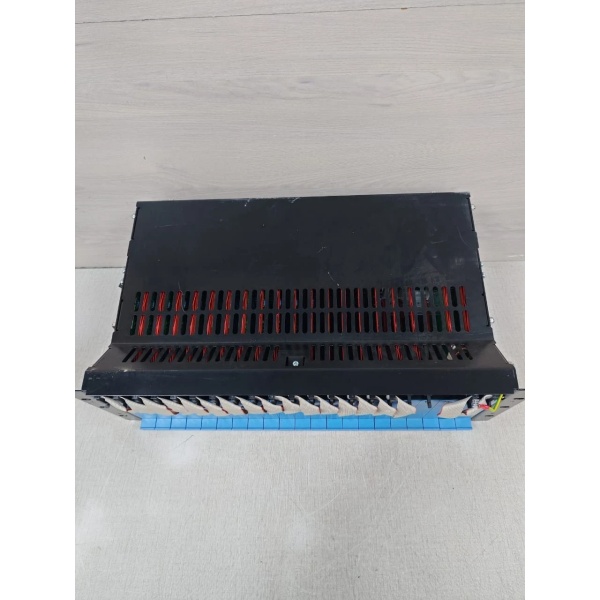
Description
Hard-Numbers: Technical Specifications
- Slot Count: 8 slots for Safety Manager I/O modules
- Power Input Options:
- 5VDC: Max 1.28A (Max 2X)
- 24VDC: Max 9.08A (Max 8X)
- 48VDC: Max 4.62A (Max 8X)
- 110VDC: Max 2.07A (Max 8X)
- Power Output:
- 24VDC: Max 2A (Max 27X)
- 48VDC: Max 0.75A (Max 36X)
- 110VDC: Max 0.32A (Max 36X)
- Dimensions: 177 mm × 482.6 mm × 280 mm (6.96″ × 19″ × 11″)
- Weight: 6.91–8.5 kg (verify per hardware revision)
- Operating Temperature: -20°C to +70°C (Safety Manager Remote Cabinet)
- Storage Temperature: -40°C to +85°C
- Humidity Range: 5–95% RH non-condensing
- Approvals/Certifications: CE, TUV, UL508, CSA, FM, IEC 61508 SIL 3
- Vibration Rating: 15G sinusoidal, 10–150 Hz per IEC 60068-2-6
- Shock Rating: 15G half-sine shock per IEC 60068-2-27
- Backplane Communication: Dual-redundant FSC safety bus for Safety Manager
- Mounting: 19-inch rack or panel mount
- Pollution Degree: Pollution Degree 2 environments per IEC 60664
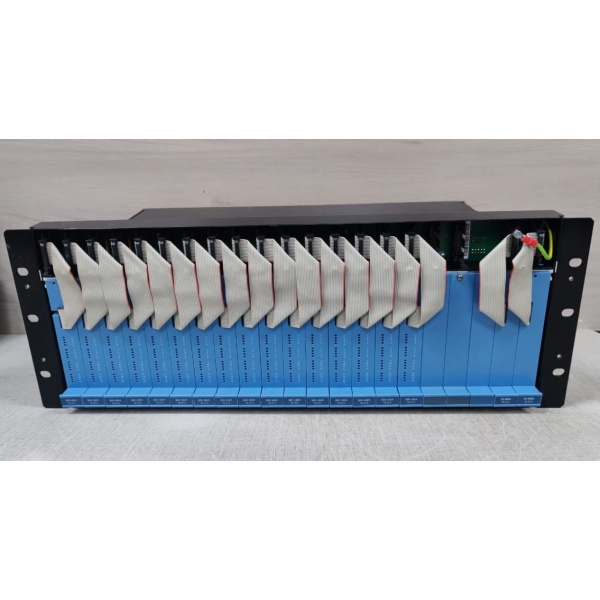
Honeywell FC-IOCHAS-0003R
The Real-World Problem It Solves
Safety Instrumented Systems (SIS) can’t afford single points of failure. When you’re running ESD valves, HIPPS, fire & gas systems, or burner management with SIL 3 requirements, a standard non-redundant I/O chassis is a liability—if the backplane fails or a power supply craps out, your safety functions go offline. The FC-IOCHAS-0003R gives you a redundant chassis architecture with dual power inputs and dual backplane communication paths, so if one side fails, the other keeps the safety I/O alive without interrupting process operations or compromising safety integrity.
Where you’ll typically find it:
- Safety Manager cabinets in refineries, petrochemical plants, and offshore platforms housing ESD, HIPPS, and fire & gas detection I/O modules
- FSC (Fail Safe Controller) system retrofits integrated into Experion PKS Safety platforms
- High-integrity protection systems requiring SIL 3 compliance with redundant I/O infrastructure
Bottom line: This chassis is the backbone of your Safety Manager I/O—don’t build a SIL 3 system on a non-redundant rack.
Hardware Architecture & Under-the-Hood Logic
The FC-IOCHAS-0003R is a ruggedized 19-inch metal chassis designed to house up to 8 Safety Manager I/O modules. It’s not passive—it contains active power distribution, backplane bus routing, and diagnostic monitoring circuits. The chassis supports dual-redundant power inputs (typically 24VDC from redundant FC-PSU modules) and distributes power to each I/O slot via isolated rails. The backplane provides dual communication paths for redundant Safety Manager controllers, ensuring that a single backplane fault doesn’t knock out I/O communication. Each slot has mechanical keying to prevent incorrect module insertion, and LEDs indicate chassis health, power status, and per-slot module presence.
-
Dual Redundant Power Distribution: Power enters through two independent input terminals (24VDC, 48VDC, or 110VDC per system configuration). Internal OR-ing diodes or active switching circuits combine the feeds, so if one power source fails, the other picks up the entire load without interruption. Power regulators drop voltage to 5VDC for logic and 24VDC for field I/O.
-
Backplane Bus Architecture: The chassis contains two independent backplane communication buses (Safety A and Safety B) that connect to redundant Safety Manager controllers. Each I/O module communicates over both buses simultaneously, and the controllers perform compare operations to detect discrepancies. If one bus fails, the other carries all traffic.
-
Slot Power & Signal Routing: Each of the 8 slots receives filtered, regulated power from the redundant supply rails. Signal pins on the backplane route analog/digital I/O, diagnostic data, and module status to the Safety Manager controllers. Mechanical keying ensures only compatible I/O modules insert into designated slots.
-
Diagnostics & Health Monitoring: The chassis monitors power supply health (voltage, current), backplane communication status, and per-slot module presence. Diagnostic LEDs on the chassis front panel indicate power OK, bus faults, and slot occupancy. These diagnostics feed back to Safety Builder software for remote monitoring and predictive maintenance.
-
Hot-Swap Support: The backplane uses make-before-break sequencing on power and signal contacts. When you remove an I/O module, power disconnects before signal pins separate, preventing backfeed or arcing. Insertion reverses the sequence—power makes first, then signals connect—allowing online module replacement without system shutdown.
-
EMI/EMC Protection: Shielded backplane traces, filtered power inputs, and galvanic isolation on I/O paths protect against electromagnetic interference from nearby VFDs, motors, or switchgear. The chassis meets IEC 61000-6-2 EMC requirements for industrial environments.
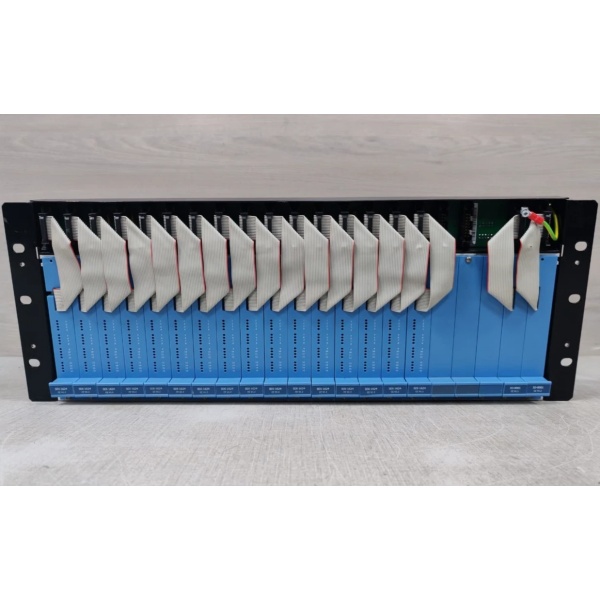
Honeywell FC-IOCHAS-0003R
Field Service Pitfalls: What Rookies Get Wrong
Ignoring Redundant Power Feed Balancing
I’ve seen techs wire both redundant power inputs to the same 24VDC source or daisy-chain them off a single breaker. When that breaker trips or the supply fails, both feeds go down—your “redundant” chassis drops dead, and safety I/O goes offline.
- Field Rule: Feed each redundant power input from separate, independent power sources. If you’re using a single power supply, split it into two independent output breakers or fuses before routing to the chassis. Verify each feed carries roughly half the load under normal operation—unbalanced loading indicates a weak or failed power source.
Mixing Safety Manager and Experion PKS I/O in the Same Chassis
Techs try to save rack space by plugging Experion C300 I/O modules (like CC-PAIH51 or CC-PUIO31) into an FC-IOCHAS-0003R. The backplane buses are incompatible—Safety Manager modules speak FSC protocol, C300 modules speak Series-C protocol. At best, modules won’t communicate; at worst, you backfeed power into incompatible cards and fry them.
- Field Rule: Never mix I/O module families in the same chassis. FC-IOCHAS-0003R is strictly for Safety Manager I/O modules (FC-TUIO, FC-TDO, FC-AI, FC-AO, etc.). Use CC-TAIX51 or CC-TAIX61 IOTAs for Experion PKS C300 I/O. If you’re integrating both platforms, keep their chassis physically separate.
Overlooking Grounding Between Redundant Controllers
In dual-controller setups, rookies ground one Safety Manager chassis to the cabinet earth and leave the other floating or grounded to a different point. Ground potential differences cause backplane communication errors, false compare faults, or intermittent safety trips that shut down the plant for no reason.
- Field Rule: Bond all redundant Safety Manager chassis to a single clean ground reference point in the cabinet. Use heavy-gauge wire (minimum 2 mm² or 14 AWG) from each chassis ground stud to the cabinet ground bus. Never rely on rack rails or mounting bolts for the primary safety ground path.
Forgetting to Verify Backplane Bus A/B Sync
After installing a new chassis or replacing a Safety Manager controller, I’ve seen engineers assume both backplane buses are active. If Bus B is disconnected or the controller’s port is misconfigured, the system runs in simplex mode—no redundancy. A single bus failure later drops the entire safety I/O.
- Quick Fix: In Safety Builder, verify both Safety A and Safety B communication paths show “healthy” status. Check chassis LEDs for bus faults. If one bus is down, trace the backplane cable (or fiber link) to the controller and verify connectivity before declaring the system operational.
Ignoring Weight and Cabinet Mounting for Full Configurations
The FC-IOCHAS-0003R weighs 6.9–8.5 kg empty. Load it with 8 I/O modules, field wiring, and terminations, and you’re looking at 15–20 kg hanging on the cabinet rail. I’ve seen racks sag, rail mounts strip out, and chassis tilt downward, stressing backplane connectors.
- Field Rule: Reinforce cabinet rails for fully loaded chassis. Use additional support brackets or front-mounting hardware if the chassis exceeds 15 kg. Don’t rely on the rail alone—use mounting screws through the chassis front flange into the cabinet structure. Verify load rating of your cabinet rail matches the total weight of chassis + modules + wiring.
Commercial Availability & Pricing Note
Please note: The listed price is for reference only and is not binding. Final pricing and terms are subject to negotiation based on current market conditions and availability.