Description
Key Technical Specifications
- Model Number: EC7810 A1027
- Manufacturer: Honeywell Process Solutions
- Power Supply: 24VAC ±10% (50/60Hz)
- Ignition Type: Intermittent pilot (IP)
- Flame Signal Input: 1–5 µA (AC flame rectification)
- Operating Sequence: Pre-purge → pilot ignition → main valve open → flame monitoring
- Lockout Time: 1 hour (manual reset required after fault)
- Temperature Rating: -40°C to +65°C (-40°F to +149°F)
- Enclosure Rating: NEMA 1 (indoor use) / IP20
- Valve Outputs: 2 SPDT relays (pilot valve, main valve)
- Safety Certifications: UL 795, CSA C22.2 No. 30, CE compliant
- Cycle Timing: Pre-purge (adjustable 0–255s), pilot ignition (4s fixed), main valve delay (2s fixed)
- Compatible Flame Sensors: Honeywell Q340, Q313, C7027 series rectification-type sensors

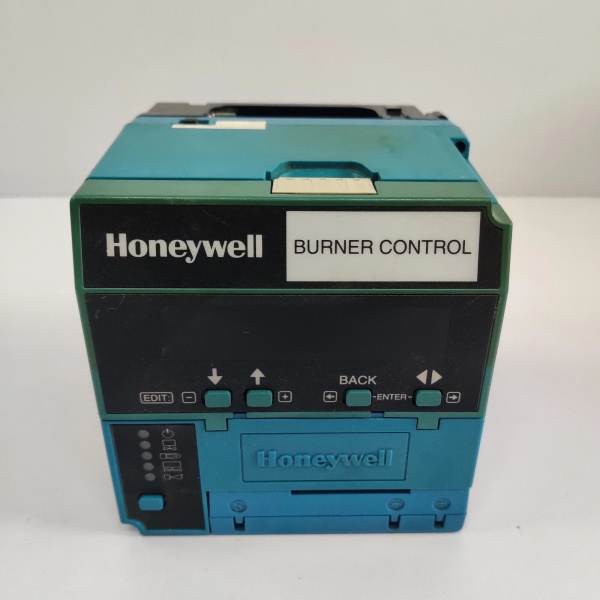
Honeywell EC7810 A1027
Field Application & Problem Solved
In industrial plants and commercial facilities, the biggest risk with burners is unignited fuel accumulation—this leads to explosions, equipment damage, and catastrophic safety incidents. Legacy burner controls lack precise sequence timing and flame verification, relying on manual checks that are prone to human error. The EC7810 A1027 solves this by enforcing a strict, automated safety sequence: it won’t open the main fuel valve unless it confirms a stable pilot flame first, and it shuts down the system instantly if the flame is lost during operation.
You’ll find this controller in every application with a single burner—package boilers in power plants, process heaters in chemical plants, and rooftop HVAC units in commercial buildings. It’s the first line of defense against burner-related hazards, and it’s mandatory in most jurisdictions for compliance with NFPA 85 boiler safety standards. Its core value is fail-safe design: every step in the ignition sequence is locked to flame detection, and any fault (flame loss, pilot failure, power dip) triggers an immediate lockout that requires manual reset. I’ve seen this controller prevent a boiler explosion in a food plant— it detected a weak pilot flame and locked out before the main valve opened, saving the facility from $1M+ in damage.
Another critical value is its adjustable pre-purge timer. In plants with dusty or oily combustion chambers, a short pre-purge can leave unburned fuel residues that ignite when the pilot fires. The EC7810 A1027 lets you extend pre-purge time up to 255 seconds, clearing the chamber of flammable gases before ignition. This is a game-changer for facilities with dirty combustion processes— it eliminates “puffbacks” that damage burner components and create safety hazards.
Installation & Maintenance Pitfalls (Expert Tips)
Flame Sensor Grounding Is Make-or-Break: Rookies often forget to ground the flame sensor properly, thinking the sensor’s mounting bracket is enough. Wrong— the flame rectification circuit requires a clean, dedicated ground connection between the sensor and the controller’s ground terminal. A poor ground causes weak flame signals, leading to false lockouts or failed ignition attempts. Always run a separate ground wire from the sensor to the controller, and avoid grounding through the burner’s metal frame (which can have paint or rust that disrupts conductivity). I’ve fixed more ignition faults from bad grounding than any other issue with this controller.
Don’t Ignore Pre-Purge Airflow Requirements: The controller’s pre-purge sequence only works if the burner has adequate airflow to clear the combustion chamber. Rookies set a 30-second pre-purge but don’t check if the combustion fan is delivering enough CFM— this leaves fuel residues that cause puffbacks. Before commissioning, verify that the fan provides 4 air changes per minute during pre-purge (per NFPA 85). If airflow is too low, increase the pre-purge time or upgrade the fan— don’t just rely on the controller’s timer.
Manual Reset Is Non-Negotiable After Lockout: This controller has a 1-hour lockout after a fault, and it requires a manual reset (via the front-panel button or remote reset switch) to restart. Rookies often try to bypass the reset by cycling power, which damages the controller’s internal memory and voids the warranty. The lockout is a safety feature— it forces technicians to diagnose the fault (e.g., dirty flame sensor, faulty valve) before restarting the burner. Never bypass the manual reset— it’s a quick fix that leads to deadly consequences.
Valve Wiring Polarity Doesn’t Matter— But Relay Ratings Do: The controller’s valve relays are SPDT and non-polarized, so you don’t have to worry about wiring polarity. What you do have to worry about is relay current ratings: the pilot valve relay is rated for 5A, and the main valve relay for 10A (both at 24VAC). Rookies often connect high-current valves (e.g., 20A main valves) directly to the controller, burning out the relays in weeks. Always use external contactors for valves that exceed the relay ratings— this is the #1 cause of premature controller failures.
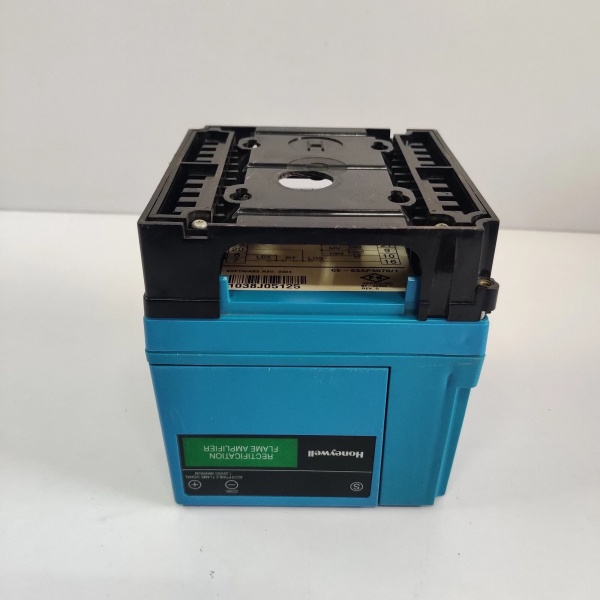
Honeywell EC7810 A1027
Technical Deep Dive & Overview
The EC7810 A1027 is a microprocessor-based flame safeguard controller designed to enforce NFPA-compliant ignition sequences for single burners. At its core, it uses a flame rectification circuit to detect pilot and main flames: the flame sensor acts as a rectifier, converting the AC flame signal into a DC current that the controller’s microprocessor verifies as a valid flame. The controller won’t proceed to the main valve stage unless it detects a pilot flame current of 1–5 µA— this is a non-negotiable safety threshold.
The controller’s internal timer manages the entire operating sequence: pre-purge (adjustable), pilot valve open, ignition transformer activation, pilot flame verification, main valve open, and continuous flame monitoring. If the flame is lost at any point, the controller immediately closes both valves, triggers a lockout, and illuminates the fault LED. The 1-hour lockout is programmed into the firmware— it can’t be adjusted or bypassed without modifying the controller (which is illegal and unsafe).
Unlike older mechanical burner controls, the EC7810 A1027 has no moving parts— all sequence control is done via software, which reduces wear and tear and improves reliability. The front-panel LEDs provide clear status feedback: power (green), flame detected (green), lockout (red). The controller’s NEMA 1 enclosure is designed for indoor use— if you need outdoor installation, you must mount it in a NEMA 4X cabinet to protect it from moisture and dust.
In the field, this controller’s strength is its simplicity and fail-safe design. It has no user-programmable settings beyond pre-purge time— this eliminates the risk of misconfiguration by untrained technicians. It’s a workhorse that runs for 10+ years with minimal maintenance, as long as you follow the installation rules. For burner safety, there’s no better choice— it’s a controller that prioritizes safety over convenience, and that’s exactly what you need in a hazardous environment.