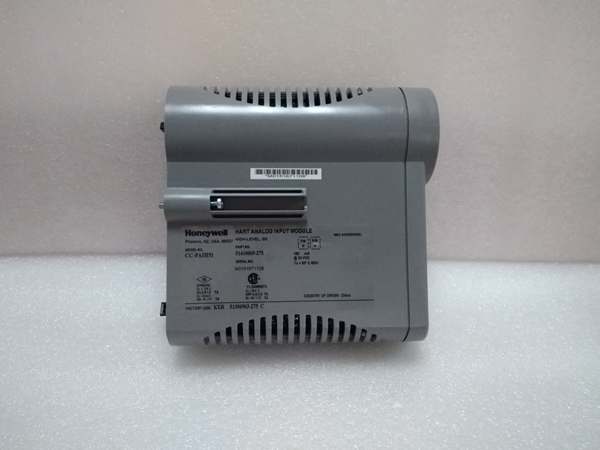
Description
Hard-Numbers: Technical Specifications
- Input Channels: 16 (all single-ended)
- Input Type: Current (2-wire or self-powered transmitters)
- Input Range: 4–20 mA (through 200Ω sampling resistor)
- Maximum Normal Mode Input: ±30 V
- A/D Converter Resolution: 16 bits
- Input Scan Rate: 50 ms
- Common Mode Rejection Ratio (DC–60 Hz): 70 dB (500Ω source imbalance)
- Common Mode Voltage (DC–60 Hz): –6 to +5 V peak
- Normal Mode Rejection Ratio (60 Hz): 19 dB
- Normal Mode Filter Response: Single-pole RC, –3 dB @ 6.5 Hz
- Crosstalk (DC–60 Hz, channel-to-channel): –60 dB
- Hardware Accuracy (@ CMV = 0 V): ±0.075% of full-scale (23.5°C ± 2°C), ±0.15% of full-scale (0–60°C)
- Operating Temperature: 0°C to +60°C
- Protection/Certifications: Class I, Division 2, Zone 2 (hazardous area); ATEX/IECEx (verify per label)
- Power Consumption: ~180 mA @ 24 VDC (backplane powered)
- Weight: ~0.35 kg (per label; some sources cite 2 kg—verify with unit)
- IOTA Compatibility: Non-redundant CC-TAIX51 (6″), redundant CC-TAIX61 (12″)
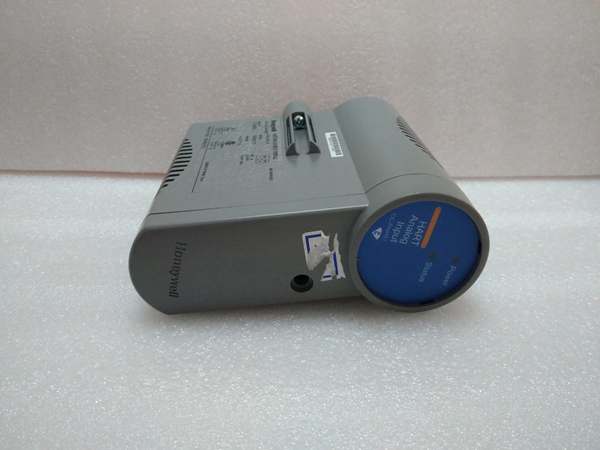
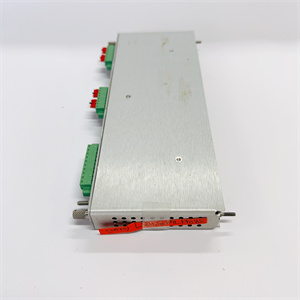
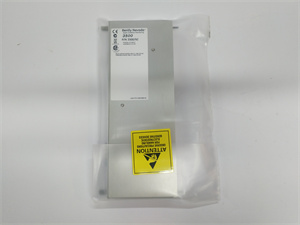
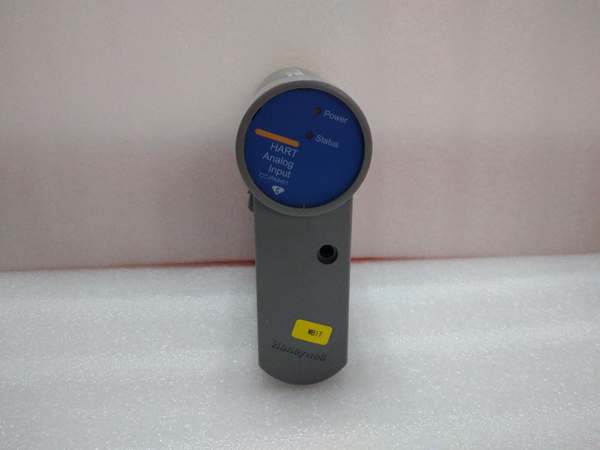
Honeywell CC-PAIH51
The Real-World Problem It Solves
Process plants run on 4–20mA loops. When you’ve got dozens of pressure, flow, temperature, and level transmitters tied to a DCS rack, you need a high-density analog input that won’t flake out in the heat and noise of a refinery control room. The CC-PAIH51 gives you 16 channels of clean, isolated 4–20mA acquisition with HART pass-through, so you’re not just getting raw process values—you’re also pulling diagnostic data from smart instruments without extra wiring.
Where you’ll typically find it:
- Experion PKS C300 controller racks in refineries and petrochemical plants, handling critical process variable inputs from field transmitters
- Safety Instrumented Systems (SIS) and Emergency Shutdown (ESD) cabinets requiring Class I Div 2 Zone 2 certification
- Retrofit projects adding HART-enabled smart transmitters to existing Honeywell DCS installations
Bottom line: This module is your workhorse for high-density 4–20mA signal capture with built-in HART capability—no external modems or splitter boxes required.
Hardware Architecture & Under-the-Hood Logic
The CC-PAIH51 slides into an Experion Series-C IOTA backplane and draws power from the 24VDC bus. It doesn’t have its own microcontroller for heavy processing—that job belongs to the C300 controller. Instead, it’s a signal conditioning front-end with HART overlay capability. Each channel takes a 4–20mA current loop, drops it across a 200Ω precision resistor, digitizes the voltage, and superimposes HART FSK tones on the same pair of wires for bidirectional communication with smart field devices.
- Current-to-Voltage Conversion: Each input passes through a 200Ω sampling resistor, converting the 4–20mA current to 0.8–4.0V for the ADC.
- Signal Conditioning & Filtering: A single-pole RC filter (–3dB at 6.5Hz) knocks down 60Hz noise before the ADC. Common mode rejection circuitry handles ground loops and offset voltages up to ±6V.
- 16-Bit ADC Digitization: A successive approximation ADC converts the filtered analog signal to digital values at 50ms scan intervals, delivering ±0.075% accuracy at room temp.
- HART Modem Integration: Each channel includes a Bell 202-compatible modem that superimposes 1200/2200 Hz FSK tones onto the 4–20mA loop. This lets the C300 poll smart transmitters for diagnostics, configuration, and secondary variables without extra wiring.
- Backplane Communication: Digitized values and HART data packet up and head over the IOTA backplane to the C300 controller via the Series-C I/O bus. No external gateway or separate HART interface card needed.
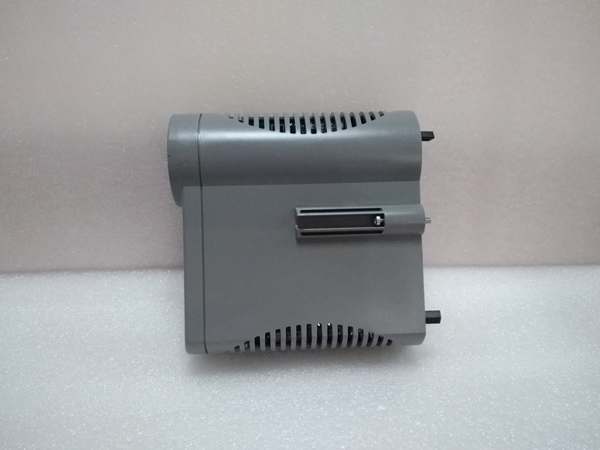
Honeywell CC-PAIH51
Field Service Pitfalls: What Rookies Get Wrong
Ground Loops from Multiple Shield Grounds
I see techs ground both ends of shielded twisted pair—at the transmitter and at the DCS cabinet. This creates a ground loop, and you end up with erratic readings or channels pegged at full scale because common mode voltage exceeds the –6V limit.
- Field Rule: Ground shields only at the DCS cabinet end. Use an insulated ground block or cabinet ground bus. Never connect shields to earth at both the field device and the rack.
Ignoring Loop Resistance for HART Reliability
HART needs enough resistance in the loop to develop a clean voltage waveform for the modem. If you’ve got long cable runs with low-resistance transmitters and minimal loop resistance, HART communication gets flaky or fails entirely.
- Field Rule: Verify total loop resistance is between 250Ω and 1000Ω. The CC-PAIH51 provides 200Ω internally. If your field device and wiring add less than 50Ω, add a 250Ω resistor at the DCS terminals to ensure reliable HART FSK signaling.
Mixing 2-Wire and 4-Wire Transmitters on the Same Module
Rookies wire 4-wire (self-powered) transmitters alongside 2-wire loop-powered devices without checking isolation. This can backfeed power into the module or create ground offsets that fry input circuits.
- Field Rule: Use separate modules or isolated input channels for mixed transmitter types. If you must mix them on the same CC-PAIH51, verify the 4-wire device outputs are floating (isolated) and don’t share a common ground with the 2-wire loops.
Overlooking Temperature Derating in Hot Cabinets
Control rooms in Gulf Coast refineries hit 55°C ambient in July. The CC-PAIH51 is rated 0–60°C, but accuracy drifts to ±0.15% at the upper end, and thermal shutdown isn’t unheard of if ventilation fails.
- Quick Fix: Keep cabinet ambient below 40°C for optimal accuracy. If the cabinet runs hot, derate your measurement expectations or install forced air cooling. Verify intake filters aren’t clogged—dust buildup kills airflow and cooks the module.
Not Verifying Redundant IOTA Load Sharing
In redundant setups with CC-TAIX61, I’ve seen engineers assume both IOTAs share the load evenly. If the backplane communication link between IOTAs fails or one module drifts out of sync, you’re not actually redundant—you’re running on a single point of failure.
- Field Rule: After installation, check both IOTAs show active status and no FAULT LEDs. Use Experion diagnostics to verify both modules report healthy. Don’t trust the green light alone—pull one module and confirm the other picks up all 16 channels without alarms.
Commercial Availability & Pricing Note
Please note: The listed price is for reference only and is not binding. Final pricing and terms are subject to negotiation based on current market conditions and availability.