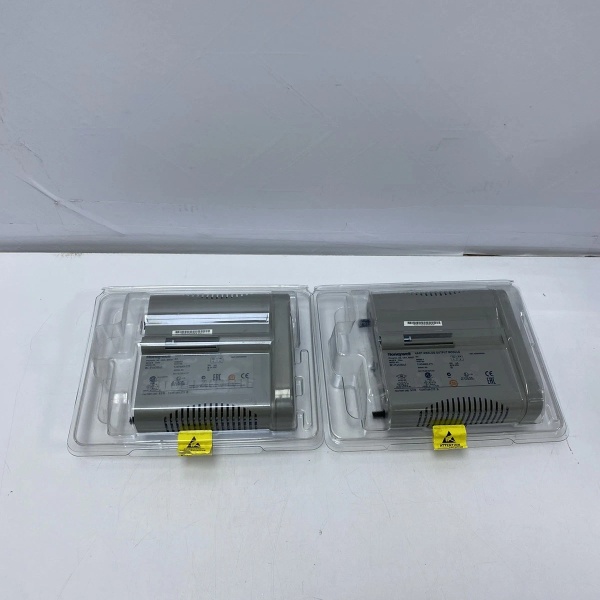
Description
Key Technical Specifications
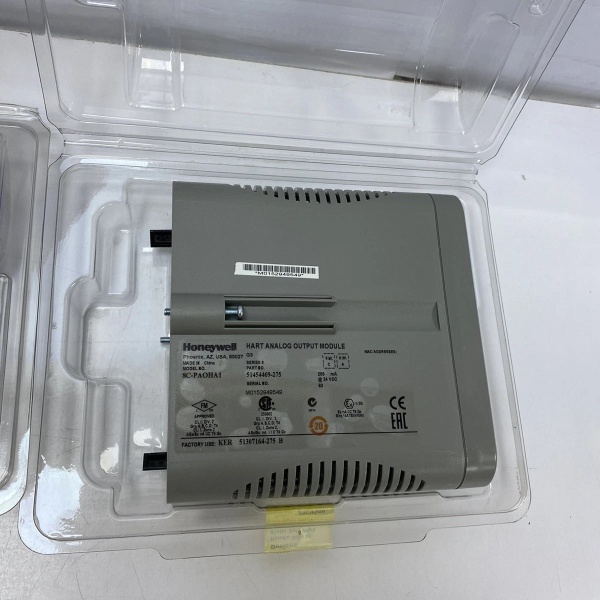
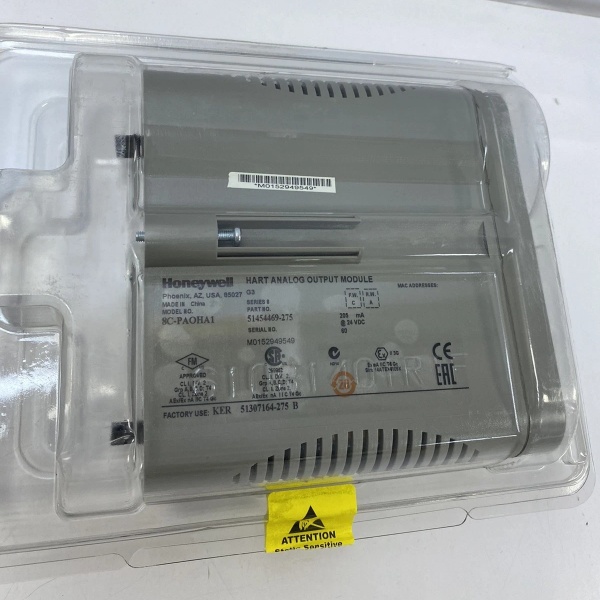
- Model Number: 8C-PAOHA
- Manufacturer: Honeywell Process Solutions
- Output Channels: 16 independent, isolated analog outputs
- Output Signal Range: 4-20mA DC (primary); 0-10V DC (optional, via configuration)
- Accuracy: ±0.2% of full scale (25°C operating temperature)
- Linearity: ±0.05% of full scale
- Temperature Drift: 0.005% of full scale per °C
- Load Compatibility: 50Ω to 800Ω (22–28VDC supply voltage)
- Isolation Rating: 2500V AC channel-to-channel; 1500V AC channel-to-backplane
- Power Supply: 24VDC (22–28VDC range), 205mA max current draw
- Hot-Swap Capability: Yes (auto-recognized by C300 controller)
- Operating Temperature: -20°C to +60°C (-4°F to +140°F)
- Diagnostic Capabilities: Per-channel open-circuit, short-circuit, overcurrent detection; HART device health monitoring

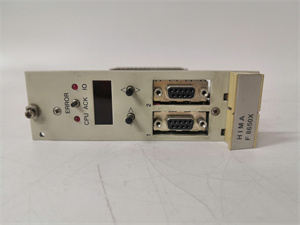
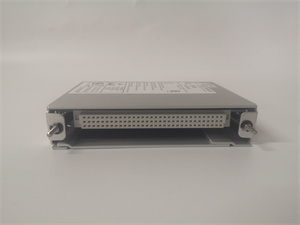
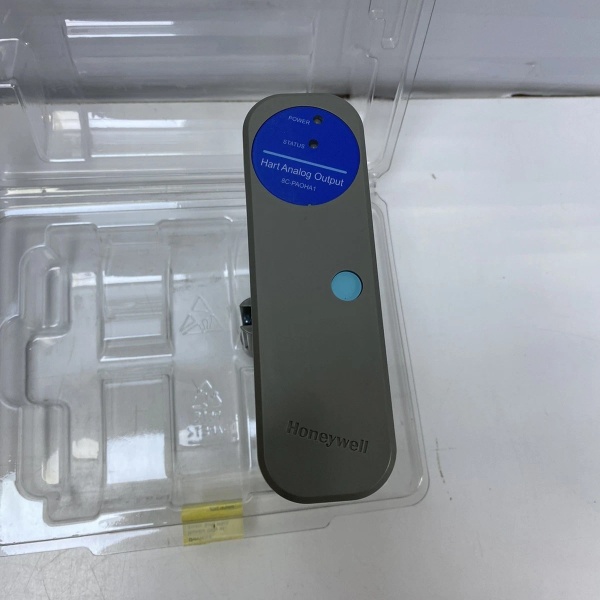
Honeywell 8C-PAOHA
Field Application & Problem Solved
In refineries, chemical plants, and power generation facilities running Experion PKS C300 systems, the biggest pain point with analog output modules is twofold: lack of remote device visibility and signal drift that destabilizes control loops. Legacy AO modules force technicians to physically visit field devices for configuration or troubleshooting— a time-consuming task in sprawling facilities with valves mounted 50+ feet above ground. They also suffer from temperature drift, causing control valves to hunt or hold incorrect positions, which ruins product quality or triggers process upsets. The 8C-PAOHA solves both problems with built-in HART modems per channel and ultra-low temperature drift.
You’ll typically find this module in crude distillation units, reactor temperature control loops, and boiler feedwater systems— anywhere precise valve positioning is critical. It’s the go-to choice for retrofits, too, because it drops into existing 8C 300 I/O racks without rewiring. Its core value is eliminating manual field trips: technicians can configure control valve setpoints, check actuator health, and calibrate devices directly from the control room via HART. The low temperature drift also cuts down on unplanned maintenance— I’ve seen plants reduce loop calibration frequency from monthly to quarterly after switching to this module.
Another hidden value is its configurable fail-safe states. For safety-critical loops like emergency shutdown (ESD) valve control, you can set channels to hold last value, go to 4mA, or go to 20mA if the module faults. This prevents catastrophic valve failures that could lead to pressure spikes or product leaks— a feature legacy modules lack.
Installation & Maintenance Pitfalls (Expert Tips)
HART Communication Requires Correct Wiring Topology: Rookies often wire HART devices in series instead of parallel, which kills communication. HART is a digital overlay on 4-20mA signals— it needs a parallel connection to the AO channel to carry diagnostic data. If you wire devices in series, you’ll get valid 4-20mA signals but zero HART data. Always use a 2-wire parallel setup for HART devices, and keep cable runs under 1000 meters to avoid signal attenuation.
Load Resistance Calculations Are Non-Negotiable: The module’s 800Ω max load limit isn’t a suggestion— exceed it, and the output current will drop below 4mA, triggering a false open-circuit fault. Don’t just check the actuator’s resistance; add the cable resistance to the total. For example, a 500Ω valve plus 300Ω of 1000ft 18-gauge wire hits the 800Ω limit exactly. If you need longer runs, use a signal booster— don’t force the module to drive overloaded circuits.
Hot-Swap Needs Controller Configuration First: The module is hot-swappable, but only if you enable the “hot-swap” flag in the Experion PKS Configuration Studio. If you yank an unconfigured module, the C300 will fault the AO loop and trigger a process alarm. Before replacement, mark the module as hot-swappable and set the loop to “hold last value” during swap. I’ve seen a tech take down a gasoline blending loop by ignoring this step— don’t repeat the mistake.
Don’t Disable Diagnostic Alerts to “Stop the Noise”: Technicians often turn off open-circuit alerts because they’re tired of alarms from corroded terminal blocks. This is a fatal error— an open-circuit alert on an ESD valve channel means the valve won’t actuate during a shutdown. Instead of disabling alerts, fix the root cause: replace corroded terminals, use stainless steel hardware in corrosive environments, and apply anti-seize compound to connections.
Honeywell 8C-PAOHA
Technical Deep Dive & Overview
The 8C-PAOHA is an intelligent analog output module designed for the 8C 300 I/O family, with a focus on precision and HART integration. At its core, each of the 16 channels uses a 16-bit DAC (digital-to-analog converter) to convert the C300 controller’s digital setpoint into a precise 4-20mA current signal. The per-channel HART modem overlays digital diagnostic data on the analog signal, enabling two-way communication between the control room and field devices without additional wiring.
The module’s isolation is achieved via optocouplers and isolated power supplies per channel, which means a shorted actuator in one loop won’t damage the module or disrupt other channels. Its power management circuit handles voltage fluctuations between 22–28VDC, ensuring stable output even during plant power glitches. When hot-swapped, the module auto-syncs with the C300 controller and restores loop parameters without manual intervention.
Unlike passive AO modules, the 8C-PAOHA has on-board firmware that handles signal linearization, temperature compensation, and diagnostic monitoring. This firmware is updated via the Experion PKS system, so you don’t need separate programming tools. The module reports all faults— open circuits, short circuits, overcurrent— to the controller’s HMI in real time, so technicians can troubleshoot from the control room instead of the field. In the field, this module’s strength is its reliability— with proper installation, it runs for 7–10 years without unplanned failures.