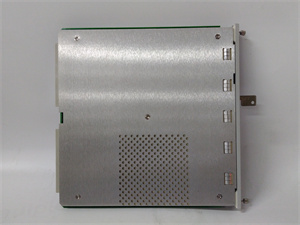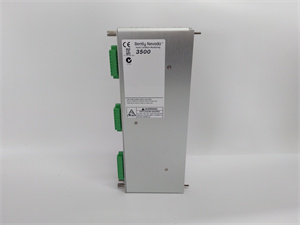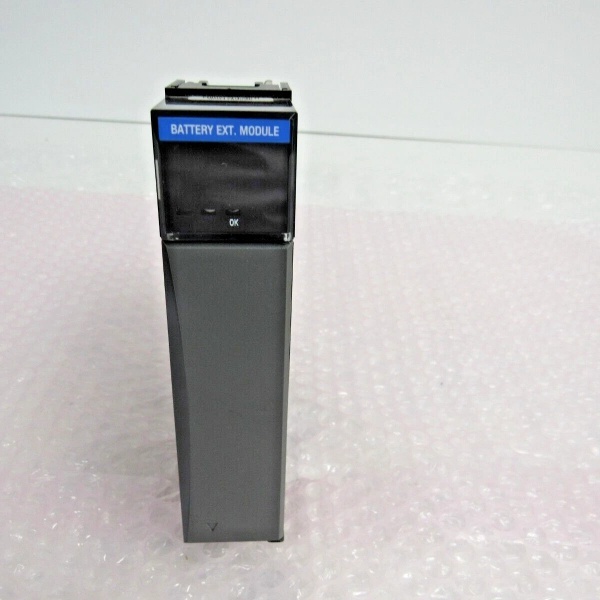
Description
Key Technical Specifications
- Model Number: 51309241-175
- Manufacturer: Honeywell Process Solutions
- Input Channels: 8 independent, isolated analog inputs
- Input Signal Range: 4-20mA DC (HART digital overlay compatible)
- Accuracy: ±0.05% of full scale (at 25°C operating temperature)
- Linearity: ±0.02% of full scale
- Temperature Drift: 0.002% of full scale per °C
- Isolation Rating: 2500V AC channel-to-channel; 1500V AC channel-to-backplane
- Power Supply: Dual redundant 24VDC inputs (18–32VDC operating range), 0.25A max total current draw
- Hot-Swap Capability: Yes (auto-recognized by Experion PKS C300 controller)
- Operating Temperature: -20°C to +60°C (-4°F to +140°F)
- Storage Temperature: -40°C to +85°C (-40°F to +185°F)
- Diagnostic Capabilities: Per-channel open-circuit, short-circuit, under-range/over-range detection; HART device health monitoring
- Certifications: UL 508, CSA C22.2 No. 142, CE, ATEX Zone 2 compliant
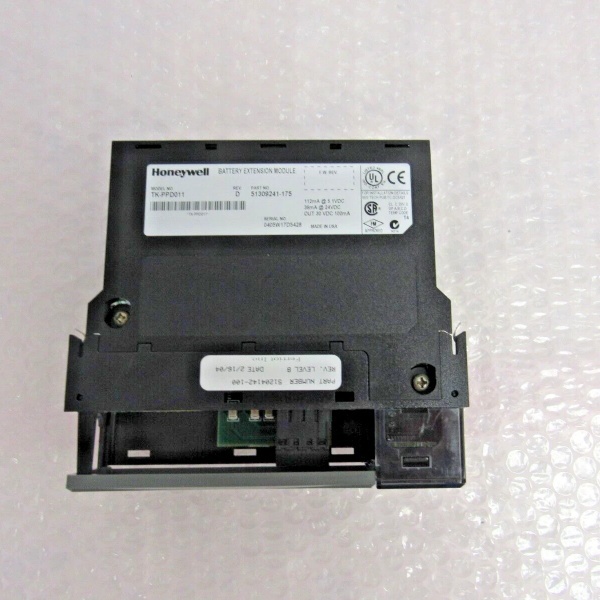
Honeywell TK-PPD011
Field Application & Problem Solved
In refineries, chemical plants, and LNG terminals running Experion PKS systems, the biggest pain point with analog input modules is the lack of visibility into field transmitter health. Legacy AI modules only capture the 4-20mA analog signal—they can’t tell you if a pressure transmitter is drifting, has a clogged impulse line, or is about to fail. This forces technicians to make time-consuming field visits to diagnose issues, even for minor faults. The 51309241-175 solves this with per-channel HART communication, letting you access transmitter diagnostics, calibrate devices, and adjust setpoints directly from the control room.
You’ll typically find this module in critical process loops: monitoring reactor pressure, distillation tower temperature, and pipeline flow rate—anywhere real-time transmitter health data is non-negotiable. It’s a staple in greenfield projects and retrofits alike, because it drops into existing C-Series I/O racks without rewiring or controller reconfiguration. Its core value is predictive maintenance capability: HART data lets you spot transmitter degradation before it causes process upsets, reducing unplanned downtime by up to 30% in some plants. I’ve seen a chemical plant avoid a reactor shutdown by identifying a drifting temperature transmitter via the module’s HART diagnostics— a problem that would have gone unnoticed with a legacy AI module.
Another hidden value is its ultra-low temperature drift. In outdoor installations or unheated control cabinets, temperature swings can cause legacy modules to drift, leading to inaccurate process measurements. The 51309241-175’s 0.002% per °C drift rate ensures stable readings even in extreme temperature conditions, eliminating the need for frequent recalibration. For process engineers, this means tighter control over product quality and fewer batch rejects.
Installation & Maintenance Pitfalls (Expert Tips)
HART Communication Requires a 250Ω Load Resistor— No Exceptions: Rookies often forget to install a 250Ω load resistor in the loop, assuming HART works without it. Wrong— HART is a digital overlay on the 4-20mA signal, and it needs the resistor to create a voltage drop for data transmission. Without it, you’ll get valid 4-20mA readings but zero HART communication. Install the resistor at the module terminal (not the transmitter end) for best results— this centralizes diagnostics and simplifies troubleshooting. I’ve fixed a dozen HART communication faults in a month because techs skipped this resistor.
Hot-Swap Needs Loop Configuration First: The module is hot-swappable, but only if you set the associated AI loops to “hold last value” in Experion PKS Configuration Studio before replacement. Yanking an unconfigured module will cause the controller to set the loop to a fault state, potentially triggering a process shutdown. Always follow the hot-swap procedure: tag the loop as hold last value, remove the module, install the new unit, and reset the loop. Don’t cut corners— this 5-minute step prevents costly process upsets.
Isolation Testing Is Critical Before Commissioning: The module’s 2500V AC isolation is a safety feature, but it can degrade over time due to moisture or corrosion. Before commissioning, perform a dielectric test on each channel to verify isolation— skip this, and a channel-to-channel short could take down multiple process loops. Use a calibrated insulation tester set to 2500V AC, and test for 1 minute per channel. If isolation resistance drops below 100MΩ, replace the module— it’s not worth the risk.
Don’t Disable HART Diagnostic Alerts: Technicians often disable HART alerts to “reduce noise” on the HMI, but this defeats the module’s core purpose. Alerts like “transmitter drift” or “low power” are early warning signs of impending failures. Instead of disabling them, configure the HMI to prioritize critical alerts and filter non-essential ones. For example, set a “drift warning” to trigger a maintenance work order, but don’t let it alarm the control room. Ignoring these alerts is like driving a car without a check engine light— it’s only a matter of time before something breaks.
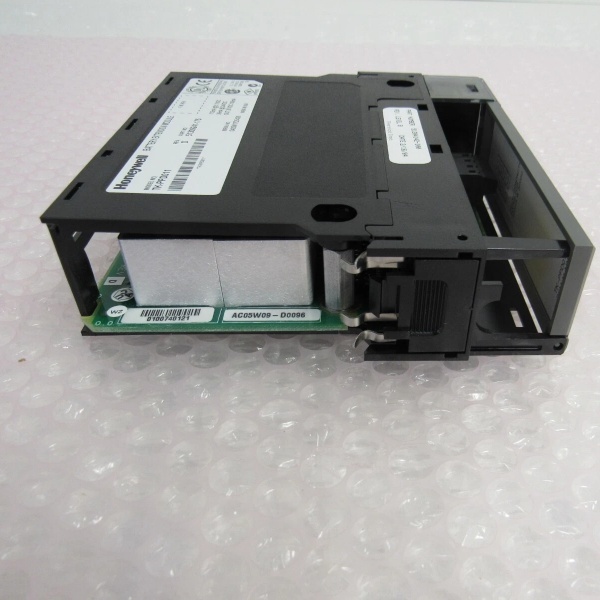
Honeywell TK-PPD011
Technical Deep Dive & Overview
The Honeywell 51309241-175 is an intelligent HART analog input module designed for Experion PKS C-Series I/O racks, optimized for precision and diagnostic visibility. At its core, each of the 8 channels uses a 16-bit ADC (analog-to-digital converter) to convert the 4-20mA signal into a digital value for the controller. The per-channel HART modem overlays digital data on the analog signal, enabling two-way communication with the field transmitter— this is the key to its predictive maintenance capability.
The module’s isolation is achieved via optocouplers and isolated power supplies per channel, which prevents cross-channel interference and protects the controller from high-voltage surges in the field. The dual redundant 24VDC power inputs ensure uninterrupted operation during power glitches, switching between primary and secondary supplies in less than 1ms. When hot-swapped, the module auto-syncs with the C300 controller and restores loop parameters without manual intervention, thanks to its non-volatile memory that stores configuration data.
Unlike legacy AI modules, the 51309241-175 has on-board firmware that processes HART data and reports diagnostics to the Experion PKS HMI. This firmware is updated via the controller, eliminating the need for separate programming tools. The module’s ultra-low temperature drift is achieved via a precision reference voltage circuit and temperature compensation algorithms, ensuring stable readings in extreme conditions.
In the field, this module’s strength is its reliability and versatility. It’s built to withstand vibration, corrosion, and temperature swings that would take down cheaper modules, and it runs for 8–10 years without unplanned failures. For Experion PKS users, it’s the go-to AI module for any application where HART diagnostics and precision measurements are non-negotiable— a true workhorse that combines analog performance with digital intelligence.