Description
Key Technical Specifications
- Model Number: 51304386-100
- Manufacturer: Honeywell Process Solutions
- Input Channels: 32 discrete digital inputs (24VDC nominal)
- Input Voltage Range: 18–32VDC (operational)
- Input Current: 2mA per channel nominal at 24VDC
- Status Indicators: Per-channel green LED (illuminates on active input signal)
- Connectivity: Backplane interface for direct pairing with TDC 3000 DI I/O modules
- Mounting Type: DIN rail (35mm) or rack-mounted (fits TDC 3000 I/O chassis)
- Operating Temperature: -20°C to +60°C (-4°F to +140°F)
- Storage Temperature: -40°C to +85°C (-40°F to +185°F)
- Terminal Type: Screw-clamp terminals (22–14 AWG wire compatibility)
- Isolation Rating: 500V AC channel-to-channel; 1500V AC field-to-logic
- Certifications: UL 508, CSA C22.2 No. 142, CE compliant
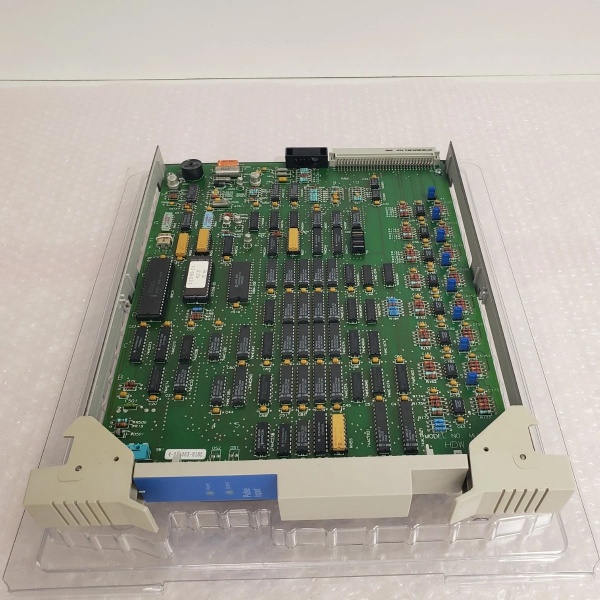
Honeywell 51304386-100
Field Application & Problem Solved
In refineries, chemical plants, and pulp mills still relying on legacy TDC 3000 systems, the biggest pain point with digital input wiring is density and organization. Older low-density termination assemblies require multiple modules to handle large numbers of discrete inputs, leading to cluttered control cabinets, tangled wiring, and hours of troubleshooting when a signal fails. The 51304386-100 solves this with 32 channels in a single compact unit, cutting down on rack space and simplifying wire routing.
You’ll typically find this FTA mounted in TDC 3000 I/O racks, terminating signals from limit switches, pressure switches, and motor run-status sensors in crude distillation units, reactor feed systems, and boiler control loops. It’s a critical interface between the field and the TDC 3000 DI I/O module—without it, field signals can’t be safely routed to the controller. Its core value is organization paired with reliability: the screw-clamp terminals hold wires securely, even in high-vibration environments, and the per-channel LEDs let technicians quickly identify active signals without pulling up HMI screens.
Another hidden value is its compatibility with existing TDC 3000 infrastructure. Plants with legacy systems can’t afford to replace entire racks, so this FTA drops into existing slots without rewiring or controller reconfiguration. I’ve seen a refinery reduce cabinet wiring time by 40% during a TDC 3000 upgrade by switching to this high-density FTA— a direct result of its 32-channel design. For maintenance teams stuck with aging TDC 3000 systems, this FTA is a workhorse that keeps input signals flowing reliably.
Installation & Maintenance Pitfalls (Expert Tips)
Wire Gauge Compatibility Is Non-Negotiable: Rookies often use 16 AWG wire for long runs, assuming thicker wire is better. Wrong— this FTA only accepts 22–14 AWG wire. Using 12 AWG wire will strip the screw-clamp terminals or prevent them from tightening properly, leading to loose connections and intermittent signal drops. Always match the wire gauge to the terminal specs; for long runs over 100 meters, use 14 AWG wire to minimize voltage drop, but never go thicker.
LED Indicators Are Your First Diagnostic Step: The green per-channel LEDs aren’t just for show— they confirm whether a field signal is reaching the FTA. If the LED is off but the field device is active, the problem is in the field wiring (frayed cable, corroded terminal). If the LED is on but the controller doesn’t register the input, the issue is in the backplane or the paired DI I/O module. Too many techs skip checking the LEDs and waste hours troubleshooting the controller when the problem is a loose wire. Make this a first-step check.
Backplane Seating Must Be Flawless: This FTA connects to the TDC 3000 backplane via a edge connector, and rookies often don’t seat it fully— they push until it “feels” seated, not until it clicks into place. A loose backplane connection causes intermittent communication faults: the FTA will drop signals randomly, triggering false alarms. To seat it correctly, align the connector with the backplane slot, push firmly until you hear a click, then tug gently to confirm it’s locked. Don’t use a screwdriver to pry it— this bends the connector pins and ruins the FTA.
Terminal Torque Is Critical in Corrosive Environments: The screw-clamp terminals require a torque of 0.4 N·m to hold wires securely. In coastal refineries or chemical plants with corrosive air, under-tightening terminals leads to corrosion and signal loss; over-tightening strips the threads. Use a torque screwdriver, not a regular screwdriver, to set the correct torque. After tightening, apply a thin layer of anti-corrosion grease to the terminals— this prevents rust buildup that causes intermittent faults over time.

Honeywell 51304386-100
Technical Deep Dive & Overview
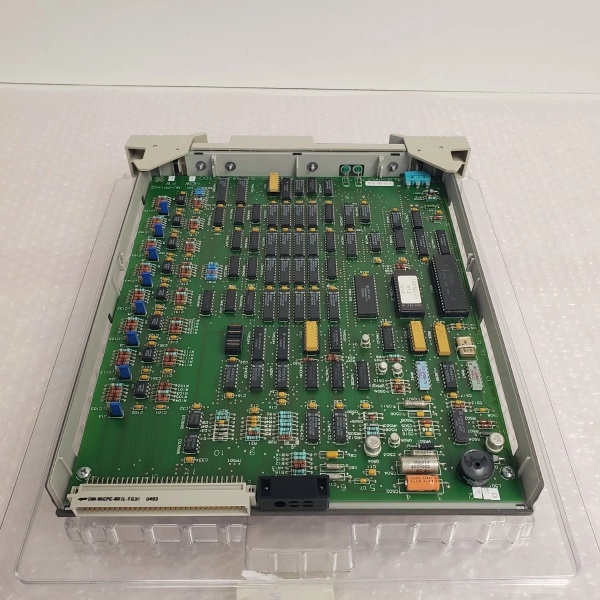
The Honeywell 51304386-100 is a high-density digital input field termination assembly designed exclusively for TDC 3000 distributed control systems, acting as the critical interface between field devices and the TDC 3000 DI I/O module. At its core, it routes 32 independent 24VDC discrete input signals from field sensors to the I/O module via a backplane connection. The screw-clamp terminals provide a secure, vibration-resistant hold for wires, while the per-channel LEDs are hardwired to the input circuits, providing real-time signal status that’s independent of controller communication.
Unlike smart modules, this FTA has no on-board firmware or programming— it’s a passive device that relies on the paired DI I/O module for signal processing. This is a feature for legacy systems: it means there’s nothing to configure, update, or misprogram, reducing the risk of human error during installation. The 500V channel-to-channel isolation prevents cross-talk between signals, even in high-EMI environments like motor control centers, and the 1500V field-to-logic isolation protects the TDC 3000 controller from high-voltage surges in the field.
The FTA’s compact design fits into standard TDC 3000 I/O rack slots, and its 32-channel density cuts down on the number of modules needed per rack— a game-changer for crowded control cabinets. It’s built to withstand the harsh conditions of industrial environments: the rugged plastic housing resists chemical corrosion, and the terminals hold up to temperature swings from -20°C to +60°C. In the field, this FTA’s strength is its simplicity— it has no moving parts to wear out, and it runs for 10+ years without unplanned failures. For plants with TDC 3000 systems, it’s an indispensable component that keeps discrete input signals flowing reliably to the controller.