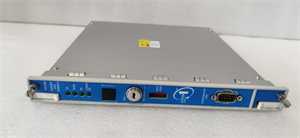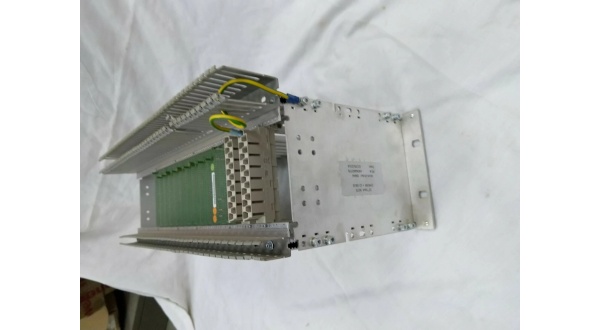
Description
Key Technical Specifications
- Model Number: 12-SBUS
- Manufacturer: Honeywell Process Solutions
- Serial Ports: 12 independent, software-configurable ports
- Interface Standards: RS-232, RS-422, RS-485 (half-duplex/full-duplex selectable)
- Supported Protocols: Modbus RTU/ASCII, Honeywell SDS, DF1, ASCII, RTU 32
- Data Rate: Up to 115.2 kbps per port
- Isolation Rating: 2500V AC port-to-backplane; 500V AC port-to-port
- Power Supply: 24VDC dual redundant inputs (18–32VDC operating range), 0.5A max total current draw
- Operating Temperature: -20°C to +60°C (-4°F to +140°F)
- Storage Temperature: -40°C to +85°C (-40°F to +185°F)
- Mounting Type: Rack-mounted (fits Experion PKS I/O chassis)
- Surge Protection: ±15kV ESD protection per port; ±2kV transient voltage suppression
- Certifications: UL 508, CSA C22.2 No. 142, CE, ATEX Zone 2 compliant

Honeywell 12-SBUS
Field Application & Problem Solved
In refineries, chemical plants, and power generation facilities running Experion PKS, the biggest challenge is integrating legacy serial devices—think older Modbus power meters, DF1-compatible controllers, and ASCII-based sensors—into a modern DCS. These devices lack Ethernet connectivity, and using separate serial-to-Ethernet converters creates a patchwork of unreliable connections that’s hard to maintain. The 12-SBUS solves this by providing 12 configurable serial ports in a single module, eliminating the need for external converters and centralizing communication under the Experion PKS system.
You’ll typically find this module in control cabinets handling remote I/O communication, integrating legacy flow meters on pipeline skids, connecting temperature controllers in batch reactors, and linking pressure transmitters in boiler systems. It’s a staple in retrofits where replacing legacy devices is too costly or disruptive—instead of ripping out functional equipment, the 12-SBUS bridges the gap to the modern DCS. Its core value is protocol flexibility: each port can be independently configured for RS-232/RS-422/RS-485 and a range of protocols, letting you mix and match devices without reconfiguring hardware.
Another critical problem it addresses is signal integrity. Legacy serial connections often suffer from noise and transient surges in industrial environments, leading to dropped data or corrupted messages. The 12-SBUS’s built-in surge protection and port isolation prevent these issues, ensuring reliable communication even in high-EMI areas like motor control centers. I’ve seen a refinery reduce serial communication faults by 70% after replacing a bank of external converters with this module— a direct result of its rugged design and integrated protection features.
Installation & Maintenance Pitfalls (Expert Tips)
Port Configuration Must Match Field Devices—No Guesswork: Rookies often configure all ports to the same protocol (e.g., Modbus RTU) without verifying the field device’s requirements. This leads to communication failures that are hard to trace. For each port, cross-reference the device’s datasheet to confirm the interface (RS-232 vs. RS-485) and protocol (Modbus ASCII vs. DF1). For RS-485, ensure you set the correct termination (120Ω resistor) and half-duplex/full-duplex mode. I’ve wasted hours troubleshooting a DF1 controller that was connected to a Modbus-configured port—don’t make the same mistake.
RS-485 Wiring: A/B Polarity Is Non-Negotiable: Mixing up the A and B lines on RS-485 connections is the #1 cause of serial communication failures. The 12-SBUS labels ports clearly (A+/B-), but techs often reverse them when wiring. This results in no data transmission or garbled messages. Always use a multimeter to verify continuity between the module’s A+ terminal and the device’s A terminal (and B- to B) before powering on. For multi-drop RS-485 networks, daisy-chain devices—never star-wire them— to maintain signal integrity.
Don’t Overload RS-485 Multi-Drop Networks: The 12-SBUS’s RS-485 ports support up to 32 devices per network, but rookies often max out the network without accounting for cable length. Each device adds capacitance, and cables over 1000 feet will cause signal degradation. For networks with 15+ devices, limit cable length to 500 feet, or use a signal repeater. I’ve fixed a pipeline monitoring system where 40 flow meters were daisy-chained over 1500 feet—adding a repeater and splitting the network into two segments restored reliable communication.
Surge Protection Isn’t Invincible—Avoid Direct Field Wiring: While the module has built-in surge protection, it’s not designed for direct wiring to devices in hazardous areas or outdoors. Always use surge protectors at the field junction box for devices exposed to lightning or high-voltage transients. I’ve seen a module fried by a lightning strike that traveled through an outdoor temperature sensor’s wiring—adding a field-mounted surge protector would have prevented the damage.
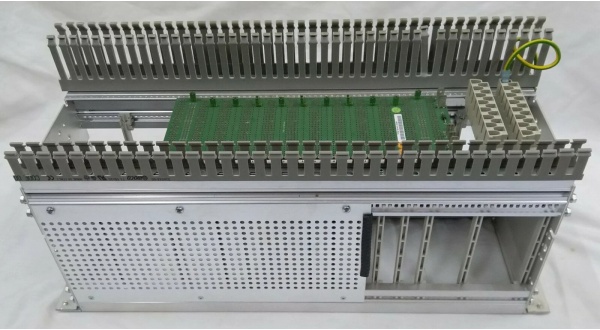
Honeywell 12-SBUS
Technical Deep Dive & Overview
The Honeywell 12-SBUS is a multi-protocol serial bus interface module designed to integrate legacy serial devices into Experion PKS DCS, bridging the gap between old and new control systems. At its core, the module uses a dedicated microprocessor to handle serial communication, offloading data processing from the C300 controller and preventing scan time overruns. Each of the 12 ports is independently configurable via Experion PKS Configuration Studio, supporting RS-232 (for point-to-point connections), RS-422 (for multi-drop with full-duplex), and RS-485 (for long-distance multi-drop with half-duplex).
The module’s protocol flexibility is enabled by firmware that supports industry-standard serial protocols, including Modbus RTU/ASCII (the most common for industrial devices), Honeywell SDS (for legacy Honeywell controllers), DF1 (for Allen-Bradley devices), and generic ASCII/RTU 32. This eliminates the need for custom drivers or protocol converters, simplifying integration. The 2500V port-to-backplane isolation and 500V port-to-port isolation protect the Experion PKS controller from high-voltage transients in the field, while the ±15kV ESD protection per port guards against static damage during wiring.
Powered by dual redundant 24VDC inputs, the module switches seamlessly between primary and secondary supplies in less than 1ms, ensuring uninterrupted communication during power glitches. It communicates with the C300 controller via the Experion PKS backplane, transmitting data in real time and receiving configuration commands. Unlike external serial-to-Ethernet converters, the 12-SBUS is fully integrated into the DCS, so diagnostics (e.g., port faults, communication timeouts) are displayed directly on the HMI, enabling quick troubleshooting.
In the field, this module’s strength is its reliability and versatility. It’s built to withstand the vibration, temperature swings, and EMI of industrial environments, and it runs for 8–10 years without unplanned failures. For plants with legacy serial devices, it’s an indispensable component that extends the life of functional equipment while leveraging the power of a modern DCS. Its high port density also saves rack space, reducing clutter in control cabinets and simplifying wiring.