
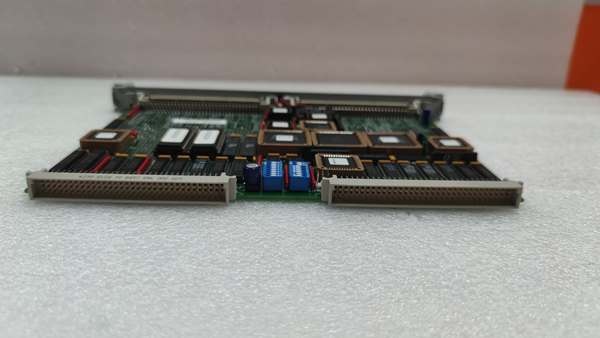
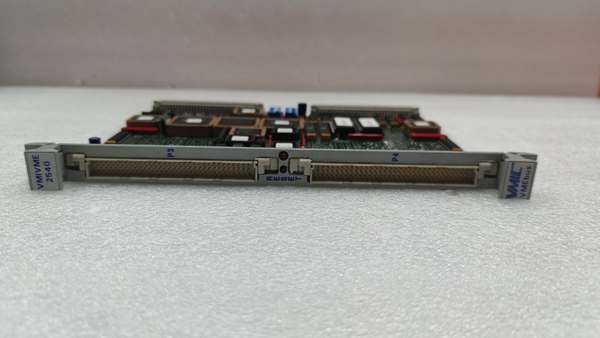
Description
Hard-Numbers: Technical Specifications
- Channel Count: 24 configurable I/O channels for counting, frequency, and encoder feedback
- Counter Resolution: 32-bit per independent channel
- Max Input Frequency: 2.5 MHz event counting, 1 MHz quadrature encoder support
- I/O Signal Type: Differential RS-422, TTL/CMOS compatible, hardware ESD protection
- Onboard Processor: Motorola 68HC000 15 MHz local processing core
- VME Interface: VMEbus Rev C.1, A16/A24 addressing, D08/D16/D32 slave operation
- Operating Temperature: -40°C to +85°C continuous rated
- Shock/Vibration Rating: 5g continuous vibration, 50g structural shock tolerance
- Power Draw: 4.25A @ 5VDC, 21.25W nominal load
- Diagnostic Features: Onboard BIT, channel readback, and fault latch registers
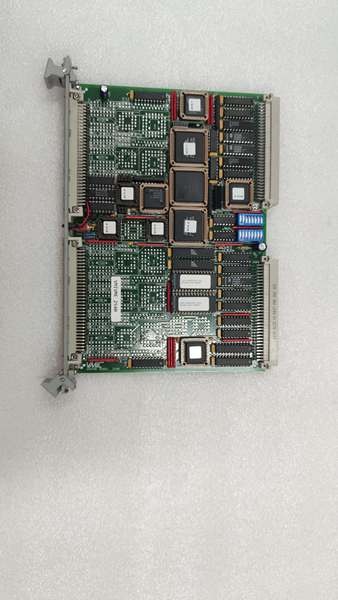
VMIVME-2540-000
The Real-World Problem It Solves
Standard commercial-grade counter cards fail early in unheated, high-vibration cabinet locations common in northern plants and outdoor auxiliary buildings. Marginal temperature tolerance and weak mechanical construction create intermittent signal dropout and locked measurement registers.
Where you’ll typically find it:
- Mark VI and Mark VIe turbine racks for shaft speed, gearbox feedback, and auxiliary machinery pulse data
- Offline power plant balance-of-plant cabinets with minimal temperature conditioning and high mechanical vibration
- Refinery and heavy manufacturing process racks requiring differential noise immunity for low-level pulse signals
Bottom line: It delivers fully independent high-speed counting and position feedback in a ruggedized VME design that holds steady in extreme cold and high-vibration industrial locations.
Hardware Architecture & Under-the-Hood Logic
This card operates as a self-contained intelligent VME slave with local processing, isolating high-speed pulse circuitry from noisy plant backplane traffic.
- Field differential or single-ended pulse/encoder signals pass through transient suppression and line receiver hardware.
- Dedicated timer/counter ICs process frequency, period, and quadrature movement without VME bus dependency.
- The onboard 68K processor manages channel configuration, data buffering, and continuous built-in testing.
- Processed measurement data stores in shared onboard memory for low-latency VME controller polling.
- Latched fault registers capture signal anomalies, allowing technicians to trace intermittent field wiring issues.
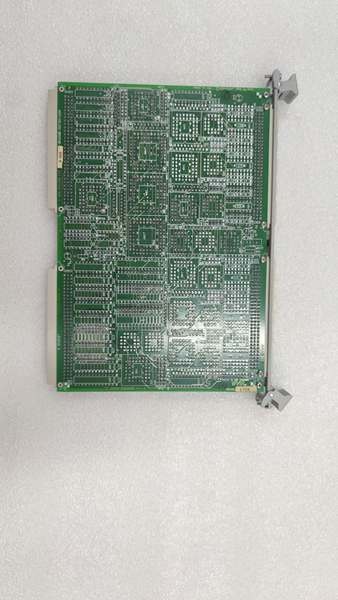
VMIVME-2540-000
Field Service Pitfalls: What Rookies Get Wrong
Single-Ended Wiring on Differential ChannelsMost new techs run unpaired single-conductor wiring to differential inputs. Common-mode EMI from variable frequency drives and relay arrays skews frequency readings and triggers false count spikes.
- Field Rule: Always use twisted shielded pair for all high-speed inputs; configure jumpers for differential mode at all times.
Ignoring Cold-Startup Thermal LoadsRoutine startup procedures skip cold soak verification. Rapid temperature cycling inside unconditioned cabinets stresses solder joints and creates intermittent channel failure over time.
- Quick Fix: Allow 10-minute cabinet stabilization after cold power-up before enabling critical speed and flow measurement logic.
Overlooking VME Retention HardwareLoose ejector latches and missing hold-down brackets let the card shift under constant vibration. Slow backplane pin wear leads to non-reproducible communication faults.
- Field Rule: Secure both ejector latches fully; install optional VME strain brackets for all ruggedized I/O cards in turbine-level cabinets.
Please note: The listed price is for reference only and is not binding. Final pricing and terms are subject to negotiation based on current market conditions and availability.


