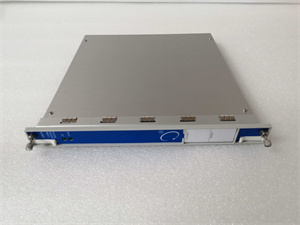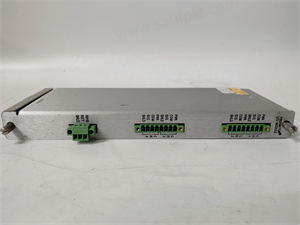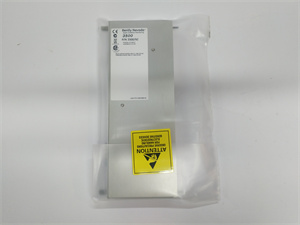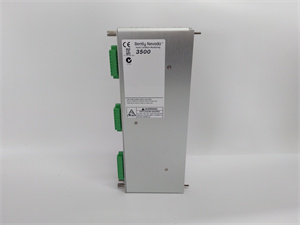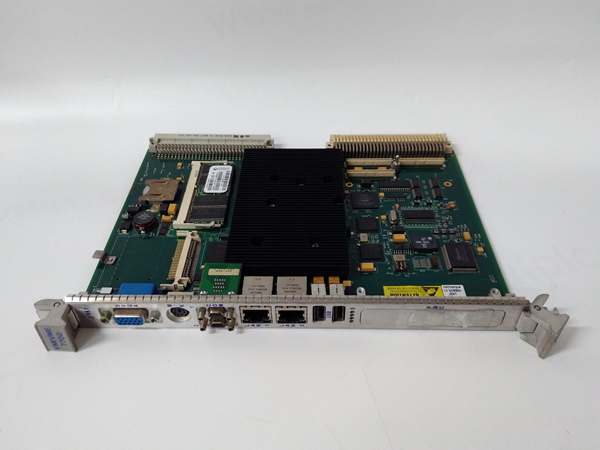
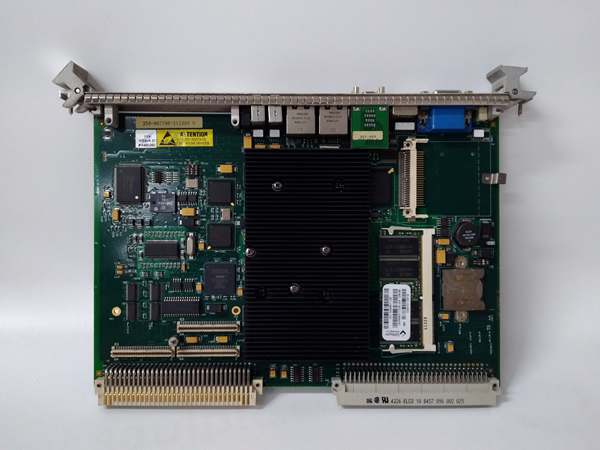
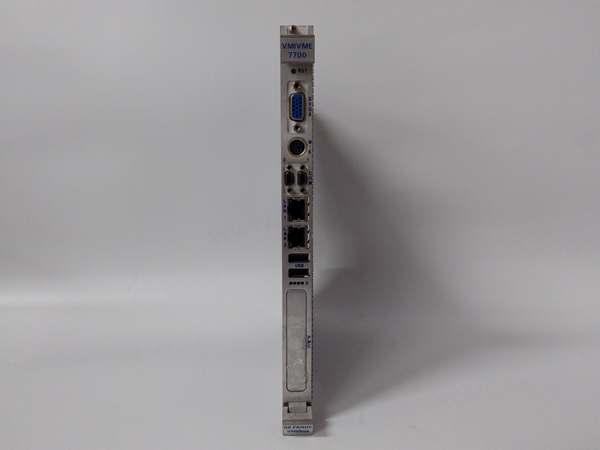
Description
Key Technical Specifications
-
Model Number: VMIVME-9064
-
Manufacturer: GE Fanuc / VMIC (General Electric)
-
Processor: 32-bit Motorola 68040 @ 25 MHz, full four-level VME arbiter
-
Memory: 16 MB 32-bit wide shared DRAM (zero-wait-state) accessible from VME & fiber link
-
Reflective-Memory Link: ≤2.1 µs latency, up to 174 MB/s, requires VMIVME-5565/-5576/-5588 fiber card
-
I/O Support: Hosts Abaco BITMODULES™ (digital, analog, relay) – auto-scanned by on-board firmware
-
Firmware: Pre-loaded IIOC – handles EU scaling, fault detection, floating↔fixed conversion, real-time diagnostics
-
Diagnostics: Front-panel FAIL LED, run/halt & reset switches, host-reportable BIT status
-
Connectors: Front-panel reset/abort switches, 96-pin DIN for local I/O, P2 for fiber link & host comms
-
Power: +5 V from VME back-plane; ≈ 8 W typical
-
Operating Temperature: –40 °C…+85 °C (conformal-coated, no fan)
-
Form Factor: 6U single-slot VME64x
-
Status: Factory discontinued – new & tested spares available

GE VMIVME-7700RC
Field Application & Problem Solved
In combined-cycle plants the biggest headache is getting I/O data from remote skids (turbine auxiliaries, cooling pumps) back to the main VME CPU without running hundreds of copper wires. The VMIVME-9064 solves that by acting as a reflective-memory node: it scans local BITMODULES™, stuffs the data into shared DRAM, and the fiber link replicates it across the ring in < 2.1 µs. You’ll typically find one per remote cabinet on Frame-7/9 peakers—one fiber pair replaces a 100-pair cable and you still meet real-time requirements. Core value: it collapses a 68040 SBC, 16 MB shared RAM, fiber link, and auto-scan firmware into one 6U card you can swap while the unit is on turning gear
In combined-cycle plants the biggest headache is getting I/O data from remote skids (turbine auxiliaries, cooling pumps) back to the main VME CPU without running hundreds of copper wires. The VMIVME-9064 solves that by acting as a reflective-memory node: it scans local BITMODULES™, stuffs the data into shared DRAM, and the fiber link replicates it across the ring in < 2.1 µs. You’ll typically find one per remote cabinet on Frame-7/9 peakers—one fiber pair replaces a 100-pair cable and you still meet real-time requirements. Core value: it collapses a 68040 SBC, 16 MB shared RAM, fiber link, and auto-scan firmware into one 6U card you can swap while the unit is on turning gear
.
Installation & Maintenance Pitfalls (Expert Tips)
Reflective-Memory Fiber Must Be Clean – One Speck = Node Drop
The front-panel fiber connector is an ST type; leave it uncapped and dust drops the link margin by 3 dB. Clean with alcohol and a lint-free swab every time you open the door.
The front-panel fiber connector is an ST type; leave it uncapped and dust drops the link margin by 3 dB. Clean with alcohol and a lint-free swab every time you open the door.
BITMODULES Must Seat Fully – Or the Scan Dies
The card auto-scans local I/O via the 96-pin DIN. If a BITMODULE is cocked the firmware flags “LOCAL FLT” and stops updating shared RAM. Push each module until the latch clicks, then cycle reset.
The card auto-scans local I/O via the 96-pin DIN. If a BITMODULE is cocked the firmware flags “LOCAL FLT” and stops updating shared RAM. Push each module until the latch clicks, then cycle reset.
Shared DRAM Is Zero-Wait – Don’t Overfill
16 MB sounds big, but at 1 kHz scan rate a full remote rack fills it in minutes. Set the host watermark in the IIOC config or you’ll overwrite data and chase phantom faults.
16 MB sounds big, but at 1 kHz scan rate a full remote rack fills it in minutes. Set the host watermark in the IIOC config or you’ll overwrite data and chase phantom faults.
Spare Lead-Time Is 6-8 Weeks – Keep One on the Shelf
Factory stock is gone; new & tested spares are available but not overnight. If you crack a BGA or burn the 5 V rail you’ll be down until the part arrives—keep one in stores or you’ll discover the weakness during the next grid event
Factory stock is gone; new & tested spares are available but not overnight. If you crack a BGA or burn the 5 V rail you’ll be down until the part arrives—keep one in stores or you’ll discover the weakness during the next grid event
.
GE VMIVME-7700RC
Technical Deep Dive & Overview
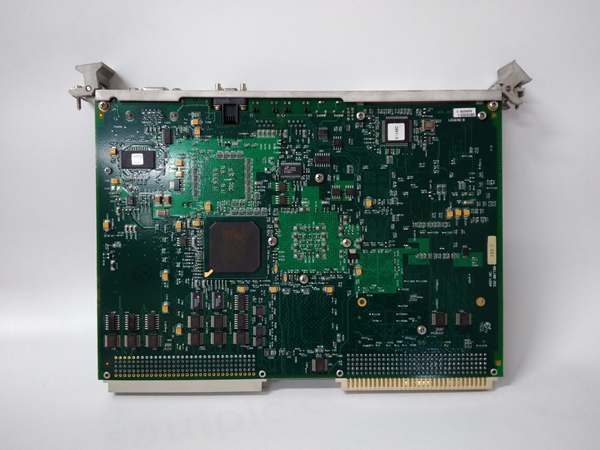
Internally the card is a 68040 SBC bolted to a 32-bit DRAM controller and a fiber-optic reflective-memory controller. The CPU runs the IIOC firmware: it scans local I/O, scales engineering units, detects faults, and copies the data into shared DRAM. The reflective-memory chipset broadcasts the DRAM image across the fiber ring so every node sees the same data within 2.1 µs. Lose the fiber link and the node drops off the ring; lose the 5 V rail and the CPU halts, the VME grant times out, and the crate throws “CPU TIMEOUT” within 50 ms. Swap takes two minutes: pull the old card, slide the new one in until the ejectors latch, and the ring re-initializes—no software reload required .
Internally the card is a 68040 SBC bolted to a 32-bit DRAM controller and a fiber-optic reflective-memory controller. The CPU runs the IIOC firmware: it scans local I/O, scales engineering units, detects faults, and copies the data into shared DRAM. The reflective-memory chipset broadcasts the DRAM image across the fiber ring so every node sees the same data within 2.1 µs. Lose the fiber link and the node drops off the ring; lose the 5 V rail and the CPU halts, the VME grant times out, and the crate throws “CPU TIMEOUT” within 50 ms. Swap takes two minutes: pull the old card, slide the new one in until the ejectors latch, and the ring re-initializes—no software reload required .