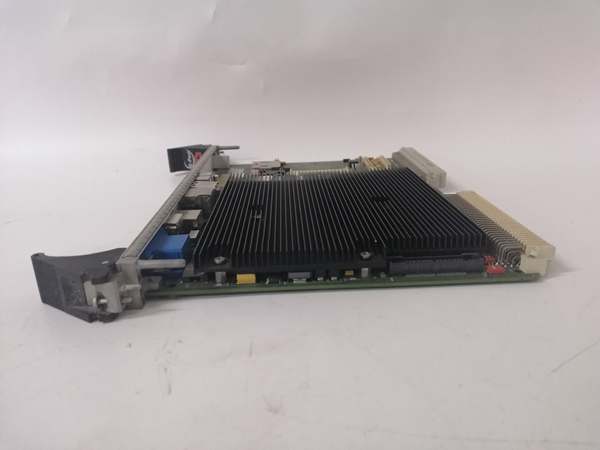
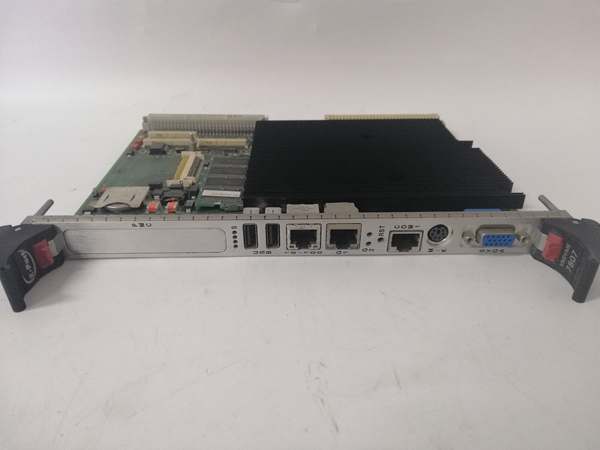
Description
Hard-Numbers: Technical Specifications
-
Processor: Intel Pentium M 1.1 GHz to 1.8 GHz (configurable variants), 2 MB L2 cache
-
Chipset: Intel 855GME with integrated graphics
-
System Bus: 400 MHz front-side bus
-
Memory: Up to 1.5 GB DDR SDRAM (1 SODIMM slot + 512 MB soldered onboard), optional ECC support
-
Storage: Up to 2 GB bootable CompactFlash (IDE interface), Serial ATA (SATA) support for hard drives
-
Graphics: Intel 855GME integrated SVGA (front panel VGA) + DVI-D (rear I/O), dual independent display support up to 1600×1200
-
Network: Dual Gigabit Ethernet (Intel 82546EB, 10/100/1000 Mbps) + single 10/100 Ethernet (Intel 82551ER)
-
Serial Ports: 4× RS-232/422/485 (16550-compatible), COM1 front panel, COM2-4 rear I/O
-
USB: 4× USB 2.0 ports (2 front panel, 2 rear I/O)
-
Expansion: 1× PMC-X slot (PCI-X 66 MHz, front panel access) for custom I/O
-
Non-Volatile Memory: 32 KB SRAM with battery backup
-
Watchdog Timer: Programmable, supports reset or interrupt
-
Real-Time Clock: Battery-backed RTC
-
Power Supply: +5 VDC from VME backplane, 25W typical, 30W maximum
-
Operating Temperature: 0°C to +60°C (1.1 GHz variant), -40°C to +85°C (other variants with heatsink)
-
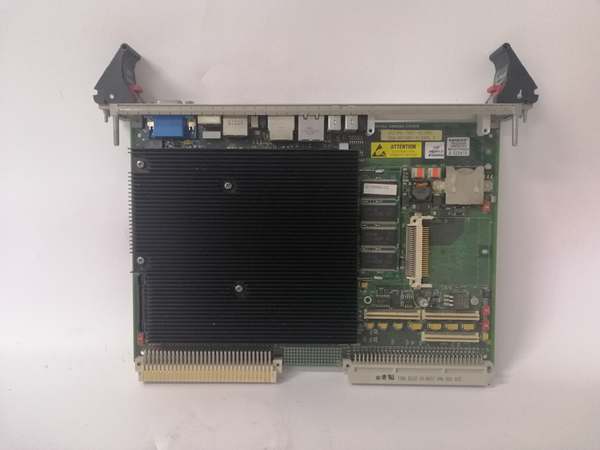
Cooling: Passive cooling (no fans), aluminum heatsink with thermal interface
-
Form Factor: 6U VME Eurocard, single-slot (233.35 mm × 160 mm)
-
Weight: Approximately 1.2 kg
-
Operating Systems: Windows XP/2000, VxWorks, QNX, LynxOS, Linux, Solaris x86
-
Certifications: CE, UL, RoHS (VMIVME-7807RC variant)

GE VMIVME-7807
The Real-World Problem It Solves
You know the situation: legacy VME systems running on 200 MHz Pentium III boards that can’t handle modern HMI graphics, complex control algorithms, or Ethernet-based I/O. The VMIVME-7807 drops a 1.8 GHz Pentium M into that same 6U VME slot—giving you modern computing power without ripping out your backplane, cabling, or I/O infrastructure. The passive cooling eliminates fan failure risks in vibrating environments like turbine control cabinets or shipboard electronics.
Where you’ll typically find it:
-
Upgraded Mark VI Speedtronic turbine control systems replacing obsolete VMIVME-7750 or IS215UCVE boards
-
Military ground vehicle and naval shipboard C4ISR systems requiring MIL-STD-810G ruggedization
-
Aerospace test stands and engine monitoring systems where VME form factor is locked in by certification
Bottom line: It extends the life of VME-based control architectures by providing Pentium M performance with dual Gigabit Ethernet, letting you run modern operating systems and HMI software while preserving your VME I/O investment.
Hardware Architecture & Under-the-Hood Logic
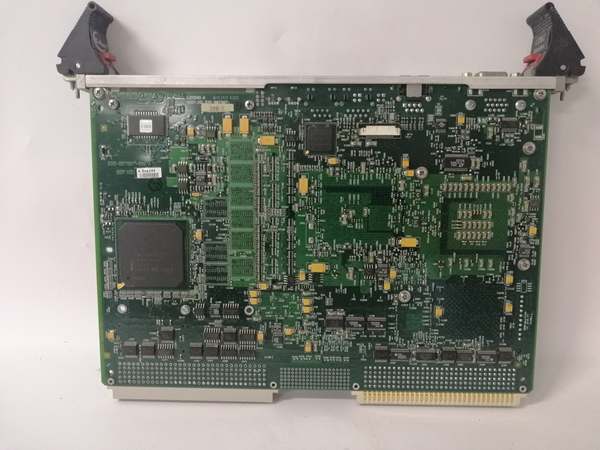
The VMIVME-7807 is a complete Pentium M computer on a single VME card. Unlike stack-PC solutions, this is a native VME64 design with the Intel 855GME chipset providing integrated graphics and I/O. The board functions as both the application processor and the VMEbus master, interfacing with legacy I/O while providing modern network connectivity.
Signal flow and processing logic:
-
Processing Core: The Pentium M executes the host OS and real-time applications with full x86 compatibility, including MMX and SSE instructions for signal processing
-
Memory Architecture: DDR SDRAM provides high-bandwidth memory access; the 855GME chipset supports dual-channel operation for improved graphics performance
-
VME Interface: The board interfaces with VME64 backplane via standard VME protocols, allowing access to legacy I/O modules and shared memory devices
-
Network Integration: Dual Gigabit Ethernet ports provide redundant network paths or segregation of control traffic (real-time) from supervisory traffic (SCADA)
-
Graphics Subsystem: The 855GME integrated graphics drives both analog VGA (local HMI) and digital DVI (remote displays) simultaneously—critical for operator interfaces in control rooms
GE VMIVME-7807
Field Service Pitfalls: What Rookies Get Wrong
Assuming Active Cooling is Present Rookies see a Pentium M running at 1.8 GHz and assume there’s a fan somewhere. There’s not. The VMIVME-7807 relies entirely on passive heatsinking. Install it in a VME chassis with poor airflow or blocked ventilation slots, and you’ll get thermal shutdowns or intermittent lockups that look like software faults.
Field Rule: Verify your VME chassis has adequate vertical airflow (bottom intake, top exhaust) and that the chassis fans are operational. The heatsink on the VMIVME-7807 requires direct air movement across its fins. If the chassis runs hot (>45°C ambient), add a fan tray or upgrade chassis cooling before blaming the CPU.
Mixing Up Ethernet Ports The board has three Ethernet ports: two Gigabit (Intel 82546EB) and one 10/100 (Intel 82551ER). Rookies plug their control network into the 10/100 port and wonder why HMI response is sluggish, or they use the Gigabit ports for Modbus TCP and saturate the control network with SCADA traffic.
Quick Fix: Use the 10/100 port (Intel 82551ER) for dedicated control protocols (EGD, SRTP) that don’t need high bandwidth. Reserve the dual Gigabit ports for HMI/SCADA traffic and redundant network paths. Check the MAC addresses in BIOS—the Gigabit ports share a controller and have sequential MACs, while the 10/100 is separate.
Forgetting the PMC Site Clearance The PMC-X expansion site on the front panel allows custom I/O, but rookies install the VMIVME-7807 in a VME chassis without checking clearance for the PMC card. The mezzanine card adds 15-20mm height beyond the standard VME front panel.
Field Rule: Verify your VME chassis front panel aperture allows for PMC card protrusion. If the chassis has a fixed front cover or limited depth, you’ll crush the PMC connector or prevent proper seating. Remove the PMC retention clips if not using expansion, or specify a chassis with extended front clearance for PMC applications.
Confusing This with PowerPC Variants Some gray-market suppliers list VMIVME-7807 as a “PowerPC-based” board. It’s not—it’s x86 Pentium M. If you order expecting PowerPC architecture for a legacy VxWorks/PowerPC application, you’ll have incompatible binaries and a failed commissioning.
Field Rule: Verify the processor type in BIOS at power-up (Intel Pentium M). The VMIVME-7807 runs x86 operating systems only. For PowerPC VME applications, you need a different board (e.g., VMIVME-7805 or Motorola MVME series). Check the silkscreen on the PCB—Pentium M boards have Intel chipset markings, not PowerPC.