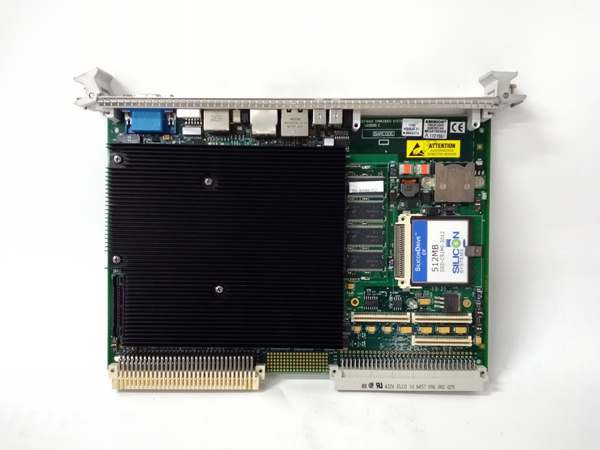
Description
Hard Numbers: Technical Specifications
- Processor: Intel Pentium M, 1.1 GHz to 1.8 GHz (up to 2MB Advanced L2 Cache)
- Memory: Up to 1.5 GB DDR SDRAM (PC266/333, via 200-pin SODIMM, optional ECC support)
- Bus Interface: VMEbus (VME64x compliant, supports 2eVME and 2eSST protocols)
- Ethernet: 10/100BaseTX (Optional dual 10/100/1000BaseTX via PMC or on-board variants)
- Graphics: Integrated Intel Extreme Graphics 2 with VGA and DVI outputs
- Storage: Supports up to 1 GB bootable CompactFlash (Secondary IDE), Ultra ATA/100, and SATA via P2
- Serial Ports: 4x RS-232/422/485 (16550 compatible, software selectable)
- USB: 4x USB 2.0 ports
- Expansion: 1x PCI-X PMC Site (66 MHz, 64-bit)
- Watchdog Timer: Yes, Software programmable (prevents system lock-ups)
- Non-Volatile Memory: 32 Kbyte SRAM (battery-backed)
- Chipset: Intel 855GME + ICH4
- Operating Temp: 0°C to +55°C (Commercial) / -40°C to +70°C (RC ruggedized variant available)
- Power Draw: Typical ~25W – 30W (Dependent on CPU speed and PMC loading)
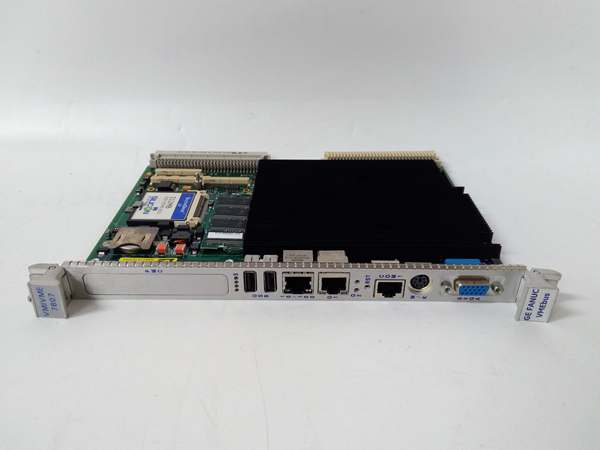
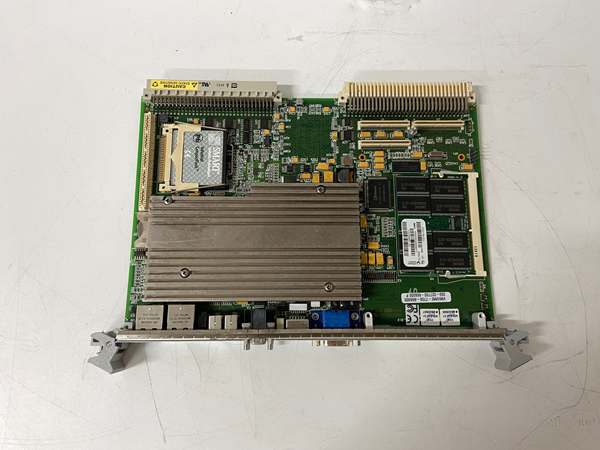
VMIVME-7807
The Real-World Problem It Solves
Modern industrial and defense applications demand massive computational throughput, strict real-time response, and bulletproof reliability in electrically noisy environments. The solves the obsolescence of older 32-bit VME boards by introducing a 32/64-bit hybrid architecture. It allows legacy VME64x systems to run modern 32-bit operating systems (like Windows XP Embedded, Linux, or VxWorks) at Pentium M speeds, bridging the gap between archaic 1970s bus standards and early 2000s PC performance.
Where you’ll typically find it:
- Military & Aerospace: In fighter jet avionics racks, shipboard radar processing, and ground-based air defense systems requiring MIL-STD-810G shock/vibration tolerance .
- Energy & Utilities: As the primary controller in Gas and Steam Turbine control cabinets (e.g., GE Mark VIe) and Nuclear Power Plant DCS systems .
- Industrial Automation: Driving high-speed machine vision, motion control, and data acquisition in manufacturing lines .
Hardware Architecture & Under-the-Hood Logic
This board integrates a full Pentium M PC into a 6U VME form factor using the Intel 855GME chipset and a dedicated VMEbus interface chip.
- System Initialization: The AMI BIOS probes the DDR SODIMM for memory and initializes the CompactFlash or SATA interfaces for the OS bootloader .
- Bus Arbitration: A dedicated VME-6410 bridge chip manages the VME64x protocol, supporting 2eVME and 2eSST (Source Synchronous Transfer) for significantly increased backplane bandwidth compared to traditional A32/D32 transfers .
- I/O Offloading: The 400 MHz system bus relieves the CPU from handling low-speed I/O. The 4x USB 2.0 and 4x serial ports are managed by the ICH4 southbridge, ensuring deterministic interrupt latency for critical field devices .
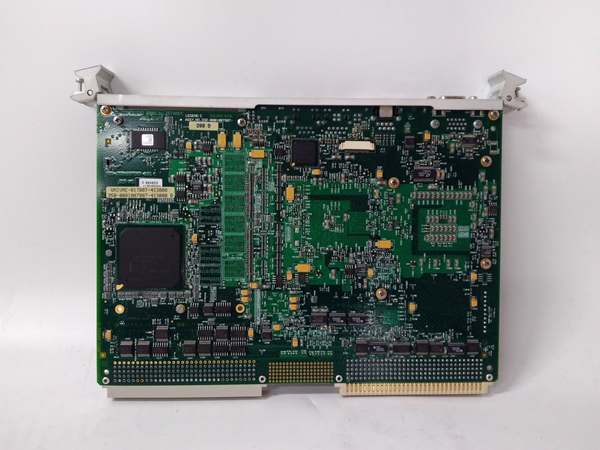
VMIVME-7807
Field Service Pitfalls: What Rookies Get Wrong
Mixing Up SODIMM Pin Counts and Voltages
Rookies often try to install standard 184-pin desktop DDR1 DIMMs or newer 200-pin DDR2/DDR3 SODIMMs into the memory slot. The strictly requires 200-pin DDR SDRAM (PC266 or PC333) operating at 2.5V. Inserting the wrong module will prevent the board from posting and may damage the memory slot.
- Field Rule: Always verify the memory label. If the board has soldered 512MB memory, adding a 1GB SODIMM will max it out at 1.5GB. Do not attempt to remove soldered memory .
Overloading the PCI-X Bus with High-Speed PMC Modules
Because the board features a 64-bit/66MHz PCI-X bus, rookiess assume they can plug in any modern PCIe PMC module (like a 10GbE card). PCI-X is backward compatible with PCI, but mixing 33MHz and 66MHz cards on the same bus segment will force the entire bus to throttle down to the lowest common denominator, killing system performance.
- Quick Fix: If using a 66MHz PCI-X card, ensure no other devices on the backplane are forcing the bus speed down via the P2 connector. Check the jumper settings for PCI clock isolation.
Neglecting the Battery-Backed SRAM
The board includes 32KB of battery-backed SRAM for storing critical crash logs or real-time variables. Rookies ignore the onboard coin cell battery. When it dies (usually every 5-7 years), the SRAM clears, which can cause the system to lose its last known state upon power-up, potentially triggering a safety shutdown in turbine control applications.
- Field Rule: Proactively replace the CR2032 or equivalent onboard battery during scheduled maintenance outages. Do not short the battery terminals when replacing.
Commercial Availability & Pricing Note
Please note: The listed price is for reference only and is not binding. Final pricing and terms are subject to negotiation based on current market conditions and availability.