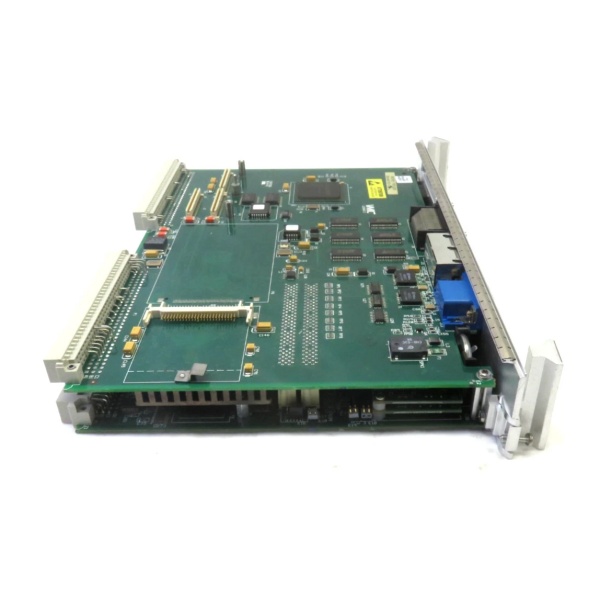
Description
Key Technical Specifications
-
Model Number: VMIVME-7765
-
Manufacturer: GE (legacy VMIC), later Abaco Systems
-
CPU: Pentium III 500 MHz or Core-i7 2.x GHz (build-option)
-
Memory: 512 MB DDR SDRAM soldered, 8 MB boot flash
-
Cache: 32 K L1, 512 K L2 (P-III) / 4-6 MB L3 (i7)
-
Ethernet: 1× 10/100BASE-TX (P-III) or 2× GbE (i7)
-
PMC: One 32-bit 33/66 MHz PCI-X site for I/O or FPGA mezzanine
-
Video: Integrated SVGA 2 MB (P-III) or integrated graphics (i7)
-
USB: 2× USB 1.1 front (P-III) or 2× USB 3.0 front (i7)
-
Serial: 2× RS-232/422/485 front; optional second via P2
-
VME: A32/A24/A16, D32/D16, VME64 master & slave, full interrupt support
-
Power: +5 V @ 4 A (P-III) or 15 W typical (i7)
-
Environment: -40 … +70 °C operating, 10 g vibration, 50 g shock
-
BIT: On-board memory, temperature, voltage tests; front-panel FAIL LED

VMIVME-7765
Field Application & Problem Solved
Power-plant DCS racks hate CPU upgrades. When your 233 MHz Pentium III SBC starts missing scan deadlines you still need the VME I/O to live on, but management won’t fund a full rip-and-replace. Drop in a VMIVME-7765 and you just gave the crate a modern brain: Core-i7 boots VxWorks or Linux, talks TCP/IP to the new HMI, and keeps the old analog & digital cards doing the real work.
Power-plant DCS racks hate CPU upgrades. When your 233 MHz Pentium III SBC starts missing scan deadlines you still need the VME I/O to live on, but management won’t fund a full rip-and-replace. Drop in a VMIVME-7765 and you just gave the crate a modern brain: Core-i7 boots VxWorks or Linux, talks TCP/IP to the new HMI, and keeps the old analog & digital cards doing the real work.
I’ve used the 7765 as a drop-in upgrade in a nuclear balance-of-plant node: original 500 MHz P-III locked up weekly; swapped to the 7765-760, kept the VMIVME-3113A A/D and -2232 relay cards, and the NRC loved the “like-for-like” argument—no safety re-analysis required
. Core value: recycle the I/O, upgrade the compute, and still meet seismic/vibe specs without external fans.
Installation & Maintenance Pitfalls (Expert Tips)
CPU speed is build-option
Order the correct suffix (-510 = 500 MHz P-III, -760 = 1.6 GHz i7, -860 = 2.2 GHz i7). If you plug a -860 into a 5 V-only crate the i7 won’t start—verify backplane voltage before you button up.
Order the correct suffix (-510 = 500 MHz P-III, -760 = 1.6 GHz i7, -860 = 2.2 GHz i7). If you plug a -860 into a 5 V-only crate the i7 won’t start—verify backplane voltage before you button up.
PMC power is limited
The PMC site supplies +3.3 V @ 7 A and +5 V @ 2 A. A hot-rodded FPGA mezzanine can pull 12 A on 3.3 V and brown-out the CPU. Verify rail load in the mezz manual or the board will reboot under scan.
The PMC site supplies +3.3 V @ 7 A and +5 V @ 2 A. A hot-rodded FPGA mezzanine can pull 12 A on 3.3 V and brown-out the CPU. Verify rail load in the mezz manual or the board will reboot under scan.
Thermal interface is critical
The i7 heat-sink uses a copper vapor-chamber; if you remove it for access, re-apply fresh phase-change pad (P/N 332-007765-901). Skip the pad and the CPU throttles at 85 °C—looks like a “mystery scan overrun.”
The i7 heat-sink uses a copper vapor-chamber; if you remove it for access, re-apply fresh phase-change pad (P/N 332-007765-901). Skip the pad and the CPU throttles at 85 °C—looks like a “mystery scan overrun.”
VME64x keying is mandatory
The board uses 3.3 V VME64x pins. If your crate is classic 5 V only, install the supplied keying plug or you’ll short 3.3 V to 5 V and blow the regulator on first insertion.
The board uses 3.3 V VME64x pins. If your crate is classic 5 V only, install the supplied keying plug or you’ll short 3.3 V to 5 V and blow the regulator on first insertion.
Front-panel FAIL LED is latched
FAIL LED stays on until you read the BIT register. If your scan task only polls data, the LED remains lit and the next fault is masked. Read the status byte every scan and clear the flags—takes one extra D08 cycle.
FAIL LED stays on until you read the BIT register. If your scan task only polls data, the LED remains lit and the next fault is masked. Read the status byte every scan and clear the flags—takes one extra D08 cycle.
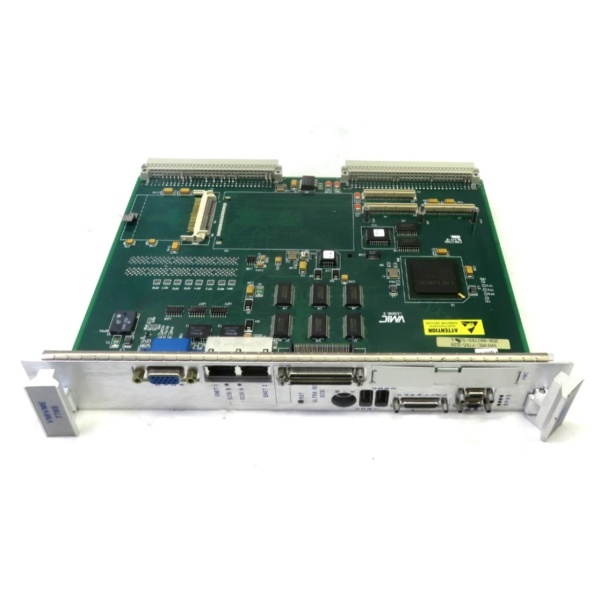
VMIVME-7765
Technical Deep Dive & Overview
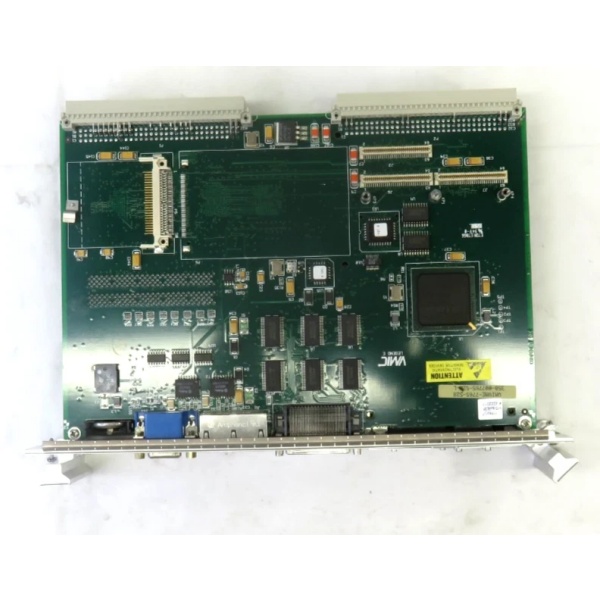
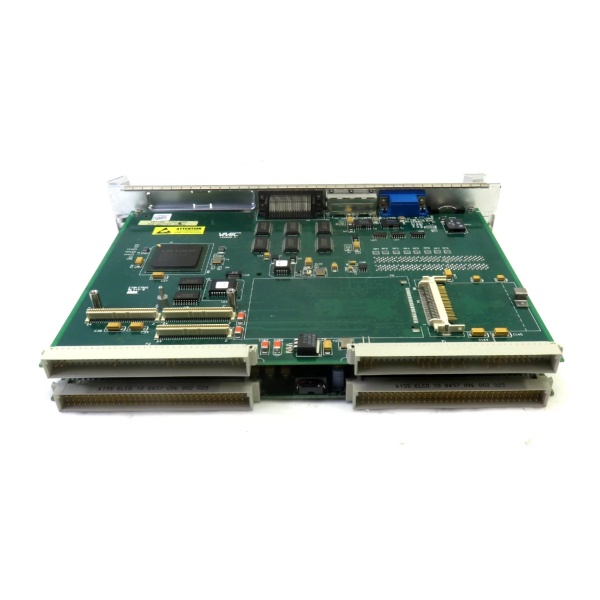
The 7765 is a 6U VME64 SBC that behaves like a PC on a board. The CPU sits on a mezzanine card (Pentium III or Core-i7) plugged into a custom carrier; the carrier holds DDR memory, GbE, USB, and a Tundra Universe II VME bridge. A 22V10 PLD qualifies VME cycles, asserts DTACK, and routes interrupts. Because the board is purely hardware-defined, there’s no firmware to corrupt—just deterministic boot and scan times, even when the turbine room hits 70 °C and 8 g vibration.
The 7765 is a 6U VME64 SBC that behaves like a PC on a board. The CPU sits on a mezzanine card (Pentium III or Core-i7) plugged into a custom carrier; the carrier holds DDR memory, GbE, USB, and a Tundra Universe II VME bridge. A 22V10 PLD qualifies VME cycles, asserts DTACK, and routes interrupts. Because the board is purely hardware-defined, there’s no firmware to corrupt—just deterministic boot and scan times, even when the turbine room hits 70 °C and 8 g vibration.