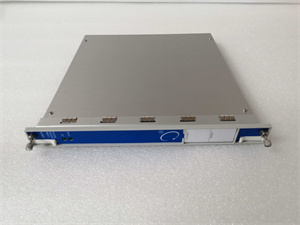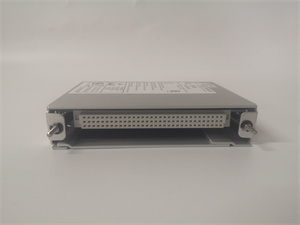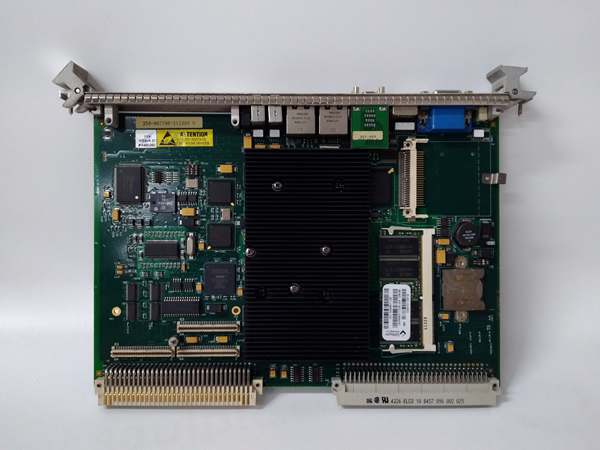
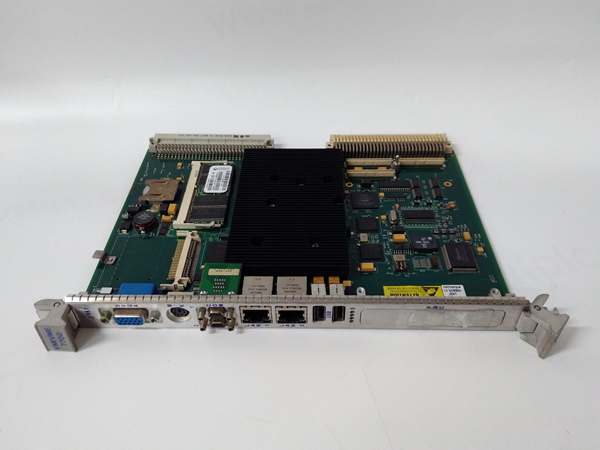
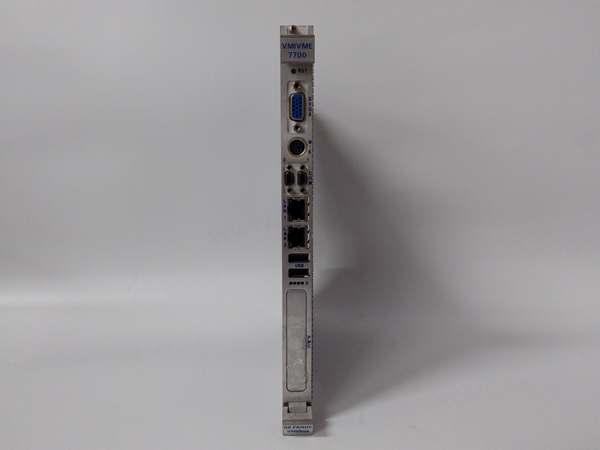
Description
Key Technical Specifications
-
Model Number: VMIVME-7751
-
Manufacturer: GE (ex-VMIC), later Abaco Systems
-
CPU: Intel Pentium III 233 MHz (early rev) or Core-i7 2.x GHz (late rev)
-
Memory: 32 MB soldered, 128 MB SDRAM via 168-pin DIMM; 8 MB boot flash
-
Cache: 32 K L1, 512 K L2 (P-III)
-
Ethernet: 1× 10/100BASE-TX (P-III) or 2× GbE (i7)
-
PMC: One 32-bit 33/66 MHz PCI-X site for I/O or FPGA mezzanine
-
Video: 64-bit PCI SVGA 2 MB SGRAM (P-III) or integrated graphics (i7)
-
USB: 2× USB 1.1 front (P-III) or 2× USB 3.0 (i7)
-
Serial: 1× RS-232 front; optional second via P2
-
VME: A16/A24/A32, D08/D16/D32, VME64x, full interrupt support
-
Power: +5 V @ 3 A (P-III) or 15 W typical (i7)
-
Temp: 0 – 55 °C commercial, –20 – +70 °C industrial; –40 – +85 °C rugged option

GE VMIVME-7700RC
Field Application & Problem Solved
Power plants hate replacing DCS racks. When your 1990s VAX-based operator station finally dies you still need the VME I/O to live on, but management won’t fund a full rip-and-replace. Slip in a VMIVME-7751 and you just gave the crate a modern brain: Pentium III boots VxWorks or Linux, talks TCP/IP to the new HMI, and keeps the old analog & digital cards doing the real work.
Power plants hate replacing DCS racks. When your 1990s VAX-based operator station finally dies you still need the VME I/O to live on, but management won’t fund a full rip-and-replace. Slip in a VMIVME-7751 and you just gave the crate a modern brain: Pentium III boots VxWorks or Linux, talks TCP/IP to the new HMI, and keeps the old analog & digital cards doing the real work.
I’ve used the 7751 as a drop-in upgrade in a nuclear balance-of-plant node: original 68040 CPU locked up weekly; swapped to the 7751, kept the VMIVME-3123 A/D and -2232 relay cards, and the NRC loved the “like-for-like” argument—no safety re-analysis required.
Core value: recycle the I/O, upgrade the compute. One slot buys you Ethernet, USB, and a PMC site for an FPGA or fiber card, so you can bridge legacy VME to modern networks without touching field wiring.
Installation & Maintenance Pitfalls (Expert Tips)
DIMM seating is altitude-sensitive
The 168-pin socket loosens after cold-soak at –10 °C. If the board boots once then throws RAM parity errors, pull the DIMM and re-seat with a thumb-press. I’ve seen techs chase “bad CPUs” for an hour when it was just altitude creep.
The 168-pin socket loosens after cold-soak at –10 °C. If the board boots once then throws RAM parity errors, pull the DIMM and re-seat with a thumb-press. I’ve seen techs chase “bad CPUs” for an hour when it was just altitude creep.
PMC cards draw +12 V—check the rail
A hot-rodded FPGA mezzanine can pull 2 A on +12 V. The 7751 only specs 500 mA. Before you plug in that 4-channel 400 MHz A/D PMC, verify the rail can source it or the CPU will brown-out and reboot under scan.
A hot-rodded FPGA mezzanine can pull 2 A on +12 V. The 7751 only specs 500 mA. Before you plug in that 4-channel 400 MHz A/D PMC, verify the rail can source it or the CPU will brown-out and reboot under scan.
Ethernet boot delay trips watchdogs
Default BIOS waits 30 s for PXE; if your vxWorks image starts at 20 s the board resets. Disable PXE in setup or move it to last boot device; saves random “CPU won’t come ready” calls at 3 a.m.
Default BIOS waits 30 s for PXE; if your vxWorks image starts at 20 s the board resets. Disable PXE in setup or move it to last boot device; saves random “CPU won’t come ready” calls at 3 a.m.
USB front panel is not isolated
The front USB shell ties to digital ground. If you plug in a flash drive while the laptop charger is on a different ground, you’ll inject 60 V and fry the south-bridge. Use an isolated USB hub or power everything from the same strip.
The front USB shell ties to digital ground. If you plug in a flash drive while the laptop charger is on a different ground, you’ll inject 60 V and fry the south-bridge. Use an isolated USB hub or power everything from the same strip.
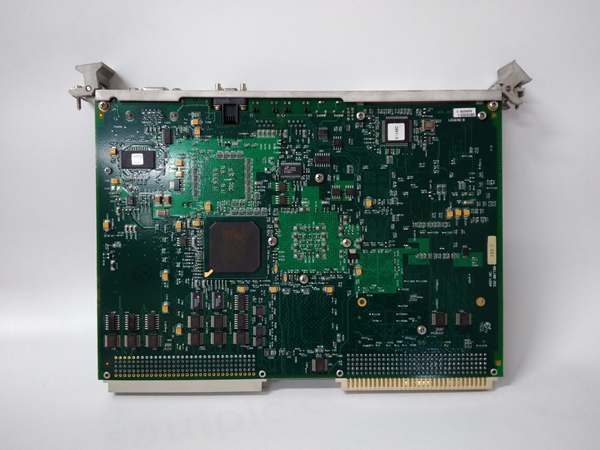
GE VMIVME-7700RC
Heat sink clip snaps
The Pentium III heat sink uses a plastic clip that gets brittle. When it breaks the CPU hits 85 °C and throttles. Keep spare clips in the kit (P/N 332-007751-001) and swap them during every outage—five-cent part saves a $3 k board.
The Pentium III heat sink uses a plastic clip that gets brittle. When it breaks the CPU hits 85 °C and throttles. Keep spare clips in the kit (P/N 332-007751-001) and swap them during every outage—five-cent part saves a $3 k board.
Technical Deep Dive & Overview
The 7751 is a single-slot VME slave that behaves like a PC on a board. Early revisions run a Pentium III at 233 MHz with 32-bit PCI bridging to VME; later spins drop in a Core-i7 with DDR4 and PCIe-to-VME translation. Both use the same 6U form factor and keep the PMC site, so you can mix processor generations without rewiring crates.
The 7751 is a single-slot VME slave that behaves like a PC on a board. Early revisions run a Pentium III at 233 MHz with 32-bit PCI bridging to VME; later spins drop in a Core-i7 with DDR4 and PCIe-to-VME translation. Both use the same 6U form factor and keep the PMC site, so you can mix processor generations without rewiring crates.