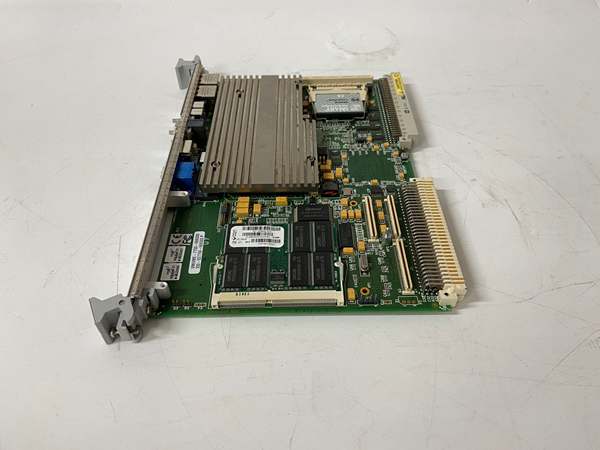
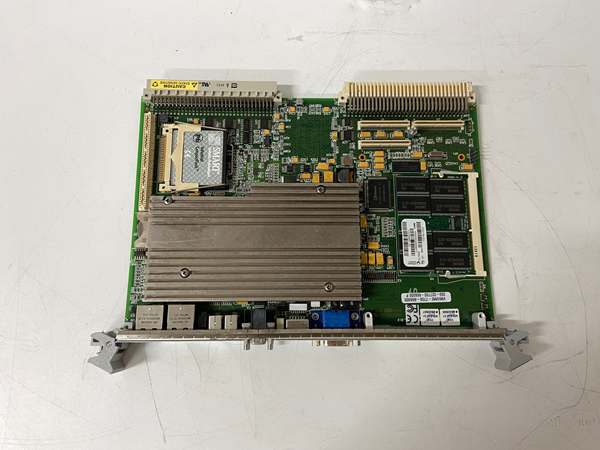
Description
Hard Numbers: Technical Specifications
- Processor: Intel Pentium III, 1.26 GHz with 512KB Advanced Transfer Cache
- Memory: 512 MB PC133 SDRAM (via single SODIMM slot)
- Bus Interface: VMEbus (Rev. C.1 compliant, A32/D32)
- Ethernet: Dual 10/100BaseTX RJ-45 Ports
- Graphics: Internal AGP SVGA Controller with 4MB Display Cache
- Storage: IDE Drive Support (FlashDisk/HDD)
- Serial Ports: 2x RS-232 (DB-9)
- Expansion: 1x PCI PMC Site (64-bit)
- Bridge: Transparent PCI-to-VME Bus Bridge
- Operating Temp: 0°C to +55°C (Commercial/Industrial grade)
- Cooling: Passive (Fanless) heatsink design
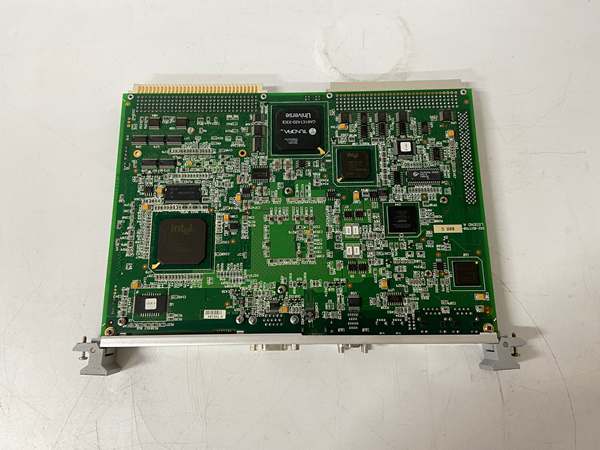
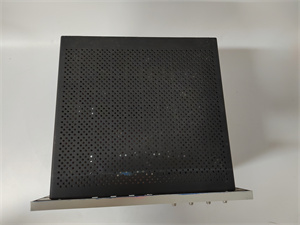
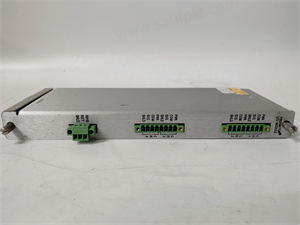
VMIVME-7750
The Real-World Problem It Solves
Legacy industrial systems and older turbine control architectures (like early Mark VIe iterations) often rely on the VMEbus standard but require x86 compatibility to run specialized DOS, VxWorks, or early Windows NT/XP based control algorithms. This board provides a ruggedized, fanless x86 computing platform that withstands electrical noise and vibration without the mechanical failure points of commercial PCs.
Where you’ll typically find it:
- In legacy GE turbine control cabinets requiring a Pentium III class VME host controller.
- Industrial automation lines running real-time operating systems (RTOS).
- Defense and aerospace applications needing a high-reliability, passive-cooled SBC.
It bridges the gap between old-school VME hardware and familiar Pentium-level x86 processing power.
Hardware Architecture & Under-the-Hood Logic
This board integrates a full Pentium III PC into a 6U VME form factor using the Intel 815E chipset running at a 133 MHz front-side bus. A standout feature is its Transparent PCI-to-VME Bridge, which allows the board to seamlessly map VMEbus addresses into the PCI memory space.
- System Initialization: The BIOS probes the SODIMM for 512MB of SDRAM and initializes the IDE interface for the connected boot device.
- Bus Arbitration: The PCI-to-VME bridge handles all VME protocol arbitration, enabling the CPU to treat VMEbus I/O and memory as standard PCI resources. This allows the board to act as a System Controller or a peripheral CPU in multi-CPU VME systems.
- Graphics & Networking: Unlike many headless industrial SBCs, this unit includes an AGP SVGA controller with dedicated DRAM for human-machine interface (HMI) tasks, alongside dual 10/100BaseTX Ethernet ports for redundant network communication.
Field Service Pitfalls: What Rookies Get Wrong
SODIMM Fragility in High-Vibration Zones
Rookies forget that the 512MB RAM on this board is often on a removable SODIMM module rather than soldered onboard (unlike newer generations). Vibration can cause the module to creep out of its socket, leading to intermittent memory errors or boot failures.
- Field Rule: Apply industrial-grade anti-vibration compound (like conformal coating or specified adhesive) to the edges of the SODIMM once the system is commissioned and stable.
Ignoring the PCI-to-VME Addressing
When integrating this board into a multi-CPU VME crate, rookies fail to configure the PCI-to-VME bridge address windows correctly. This causes the board to either lock up the VME backplane or fail to see other VME modules.
- Quick Fix: Verify the DIP switch or BIOS settings for the VME A16/A24/A32 address decoding. Ensure no other master on the backplane is using the same address ranges to avoid bus contention.
Passive Cooling Limitations
Because this unit relies entirely on a passive heatsink (no fan), rookies pack the adjacent VME slots with high-power boards, starving the 7750 of cool air. The Pentium III will thermally throttle or shut down if ambient temps exceed 55°C.
- Field Rule: Maintain at least a 1-slot ventilation gap around the 7750 in high-temperature environments, or install a rack-level exhaust fan to pull air across the heatsink fins.
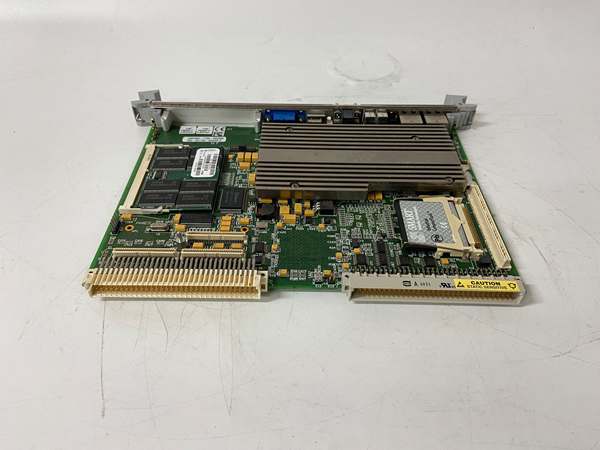
VMIVME-7750
Commercial Availability & Pricing Note
Please note: The listed price is for reference only and is not binding. Final pricing and terms are subject to negotiation based on current market conditions and availability.