Description
Key Technical Specifications
-
Model Number: VMIVME-7700RC
-
Manufacturer: GE Fanuc / VMIC (General Electric)
-
Processor: Intel Ultra-Low-Voltage Celeron 400 MHz or 650 MHz
-
Chipset: Intel 815E, 100 MHz front-side bus
-
Memory: Up to 512 MB PC-100 SDRAM (144-pin SODIMM)
-
Storage: 1 GB bootable CompactFlash on secondary IDE (optional)
-
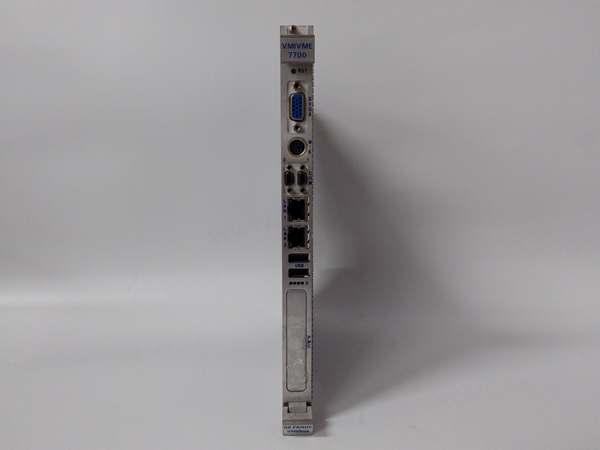
Ethernet: Dual 10/100 Base-TX (Intel 82559) front-panel RJ-45
-
Serial: 2 × RS-232/422/485 (front-panel DB-9)
-
USB: 2 × USB 1.1 (front-panel)
-
Expansion: One PMC site (PCI mezzanine) for additional I/O or comms
-
VME Bus: VME64x compliant, transparent PCI-to-VME bridge
-
Power: +5 V only from VME back-plane; < 5 W typical
-
Operating Temperature: –40 °C…+85 °C board-level (no fan)
-
Form Factor: 6U single-slot Eurocard
-
Weight: 1.25 lb (0.57 kg)
-
Status: Factory discontinued – new & tested spares available

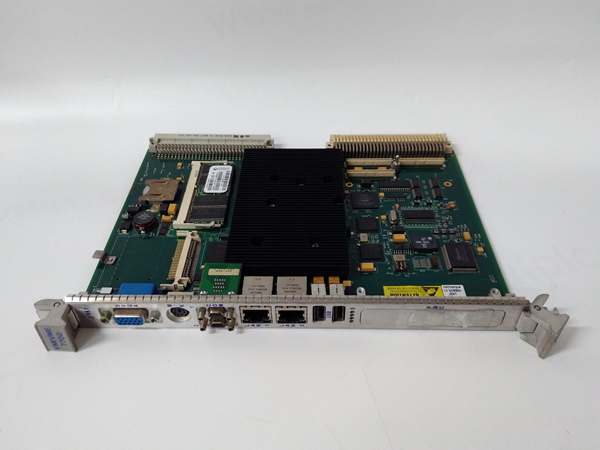
GE VMIVME-7700RC
Field Application & Problem Solved
In the field the biggest headache is finding a VME processor that will live at 70 °C inside a turbine cabinet without melting or requiring a fan. The VMIVME-7700RC solves that by running a 650 MHz ULV Celeron at < 5 W and surviving –40…+85 °C with nothing but a heat-sink. You’ll typically find one per 6U crate on EX2100 or LS2100 retrofits—one board replaces the old Pentium III card, boots off CF, and still gives you dual Ethernet for Modbus-TCP back to the DCS. Core value: it collapses a fan-less CPU, dual NIC, and PMC expansion into one 6U card you can swap while the turbine is on turning gear
In the field the biggest headache is finding a VME processor that will live at 70 °C inside a turbine cabinet without melting or requiring a fan. The VMIVME-7700RC solves that by running a 650 MHz ULV Celeron at < 5 W and surviving –40…+85 °C with nothing but a heat-sink. You’ll typically find one per 6U crate on EX2100 or LS2100 retrofits—one board replaces the old Pentium III card, boots off CF, and still gives you dual Ethernet for Modbus-TCP back to the DCS. Core value: it collapses a fan-less CPU, dual NIC, and PMC expansion into one 6U card you can swap while the turbine is on turning gear
.
Installation & Maintenance Pitfalls (Expert Tips)
CF Card Seat Cracks with Vibration
The CompactFlash socket is SMT; after a year at 5 g the solder joints crack and the board won’t boot. Visually inspect the socket under a microscope at every major—if you see a ring crack, reflow or replace the card before you lose the boot image.
The CompactFlash socket is SMT; after a year at 5 g the solder joints crack and the board won’t boot. Visually inspect the socket under a microscope at every major—if you see a ring crack, reflow or replace the card before you lose the boot image.
ULV Celeron Throttles at 85 °C
The die shuts down at 85 °C board temp; if your cabinet fan fails the CPU drops to 400 MHz and the control loop slows. Add a 24 VDC muffin fan or monitor board temp in ToolboxST.
The die shuts down at 85 °C board temp; if your cabinet fan fails the CPU drops to 400 MHz and the control loop slows. Add a 24 VDC muffin fan or monitor board temp in ToolboxST.
PMC Card Adds 2 W – Count It in Thermal Budget
If you populate the PMC site with a comms card the total power climbs to 7 W. At 70 °C ambient the heat-sink hits 90 °C and the CPU throttles. Either de-rate the cabinet or add airflow.
If you populate the PMC site with a comms card the total power climbs to 7 W. At 70 °C ambient the heat-sink hits 90 °C and the CPU throttles. Either de-rate the cabinet or add airflow.
Spare Lead-Time Is 6-8 Weeks – Keep One on the Shelf
Factory stock is gone; new & tested spares are available but not overnight. If you crack a BGA or burn the 5 V rail you’ll be down until the part arrives—keep one in stores or you’ll discover the weakness during the next grid event
Factory stock is gone; new & tested spares are available but not overnight. If you crack a BGA or burn the 5 V rail you’ll be down until the part arrives—keep one in stores or you’ll discover the weakness during the next grid event
.
GE VMIVME-7700RC
Technical Deep Dive & Overview
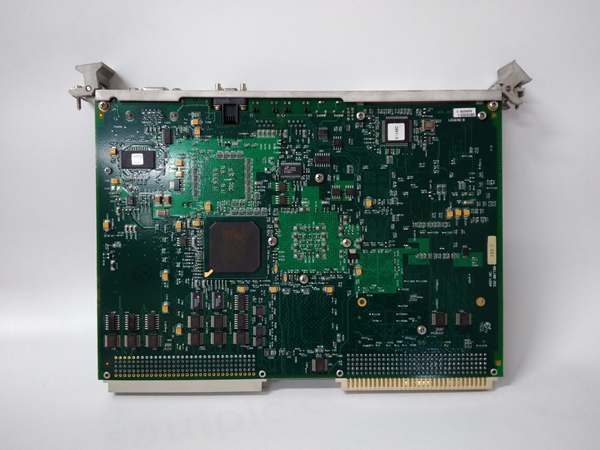
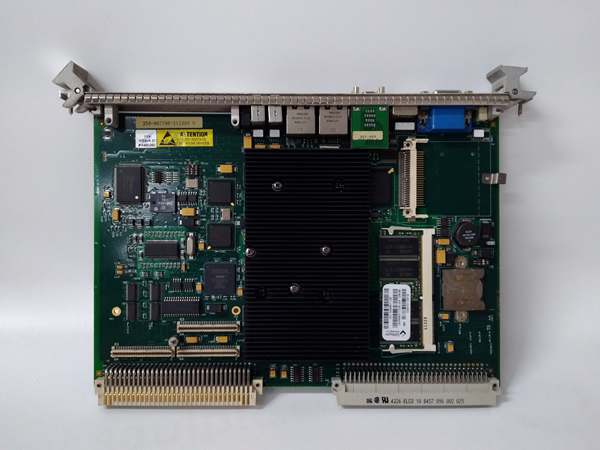
Internally the card is a 6-layer board built around the Intel 815E chipset. The ULV Celeron sits at one end, the 815E north-bridge feeds a 100 MHz FSB to 512 MB SDRAM, and the south-bridge drives dual Ethernet, IDE-CF, and the PCI-to-VME bridge. The whole assembly runs off +5 V only—no ±12 V required—and the heat-sink fins are bonded to the card frame. Lose the 5 V rail and the CPU shuts down, drops the VME grant, and the crate throws “CPU TIMEOUT” within 50 ms. Swap takes two minutes: pull the old card, slide the new one in until the ejectors latch, and the crate boots off CF—no software reload required
Internally the card is a 6-layer board built around the Intel 815E chipset. The ULV Celeron sits at one end, the 815E north-bridge feeds a 100 MHz FSB to 512 MB SDRAM, and the south-bridge drives dual Ethernet, IDE-CF, and the PCI-to-VME bridge. The whole assembly runs off +5 V only—no ±12 V required—and the heat-sink fins are bonded to the card frame. Lose the 5 V rail and the CPU shuts down, drops the VME grant, and the crate throws “CPU TIMEOUT” within 50 ms. Swap takes two minutes: pull the old card, slide the new one in until the ejectors latch, and the crate boots off CF—no software reload required
.