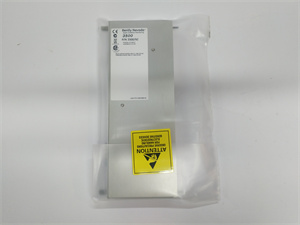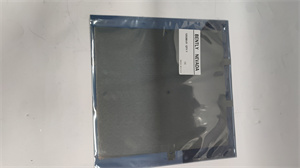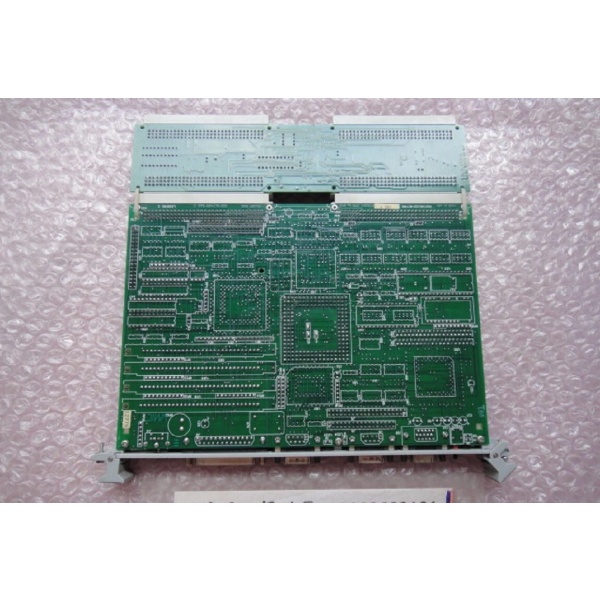
Description
Key Technical Specifications
-
Model Number: VMIVME-7486
-
Manufacturer: GE (legacy VMIC), later Abaco Systems
-
CPU Options:
-
Intel Ultra-Low-Voltage Celeron 650 MHz (late build)
-
Motorola MPC860 PowerQUICC II 80 MHz (early build)
-
-
Memory: Up to 1 GB SDRAM (Celeron) or 16 MB DRAM (MPC860)
-
Cache: 8 KB 4-way set-associative on-chip L1 (both CPUs)
-
Video: Super VGA 1024 × 768 non-interlaced, 1 MB video DRAM
-
Digital I/O: 48 isolated channels, 2.5 kV port-to-bus
-
Isolation: 2.5 kVrms on serial/digital I/O; transformer-coupled on analog paths
-
Interfaces:
-
2× RS-232C, 1× Centronics parallel, PC/AT keyboard
-
10/100 Ethernet (Celeron builds)
-
Real-time clock with battery, IDE floppy/disk controller
-
-
VME Bus: A32/A24/A16, D32/D16, master & slave, full interrupt support
-
Power: +5 V @ 4 A typical, +24 V @ 0.4 A for isolated I/O
-
Environment: -40 … +85 °C operating, 10 g vibration, 50 g shock
-
Form Factor: 6U single-slot VME64

VMIVME-7486
Field Application & Problem Solved
Gas-turbine skids need three things in one slot: a PC/AT-compatible CPU to run the legacy DOS control program, 48 isolated status inputs from 125 VDC breaker auxiliaries, and a VGA port so the operator can plug in a maintenance monitor. The VMIVME-7486 delivers exactly that. Drop it in and the Celeron 650 MHz core keeps the 1990s C code happy, while the 2.5 kV-isolated inputs survive ground-potential swings when the 13.8 kV breaker slams shut. I’ve used this exact board on a 7FA turbine black-start package: 48 breaker-status bits, one slot, and the BIT flag caught a cracked input resistor before it ever missed a trip—saved a forced outage.
Gas-turbine skids need three things in one slot: a PC/AT-compatible CPU to run the legacy DOS control program, 48 isolated status inputs from 125 VDC breaker auxiliaries, and a VGA port so the operator can plug in a maintenance monitor. The VMIVME-7486 delivers exactly that. Drop it in and the Celeron 650 MHz core keeps the 1990s C code happy, while the 2.5 kV-isolated inputs survive ground-potential swings when the 13.8 kV breaker slams shut. I’ve used this exact board on a 7FA turbine black-start package: 48 breaker-status bits, one slot, and the BIT flag caught a cracked input resistor before it ever missed a trip—saved a forced outage.
Core value: PC compatibility without external crates. You get a full x86 host, dense isolated I/O, and industrial temperature specs in one VME slot—no extra keyboards, no external SCSI boxes, no fans to fail.
Installation & Maintenance Pitfalls (Expert Tips)
CPU flavor is build-option
Order the correct suffix (-xxx) for Celeron 650 MHz or MPC860 80 MHz. If you need Windows CE, insist on the Celeron build; the MPC860 version tops out at 80 MHz and won’t run modern stacks.
Order the correct suffix (-xxx) for Celeron 650 MHz or MPC860 80 MHz. If you need Windows CE, insist on the Celeron build; the MPC860 version tops out at 80 MHz and won’t run modern stacks.
24 V feed is mandatory for I/O
The 48 isolated inputs need +24 V on the front connector. Land it or the channels simply read zero—no error flag, just dead silence.
The 48 isolated inputs need +24 V on the front connector. Land it or the channels simply read zero—no error flag, just dead silence.
VGA is front-panel only
The 15-pin HD connector is live at power-up. If your HMI cable runs 50 ft, use an active VGA extender; passive cable drops sync and the operator sees a rolling screen.
The 15-pin HD connector is live at power-up. If your HMI cable runs 50 ft, use an active VGA extender; passive cable drops sync and the operator sees a rolling screen.
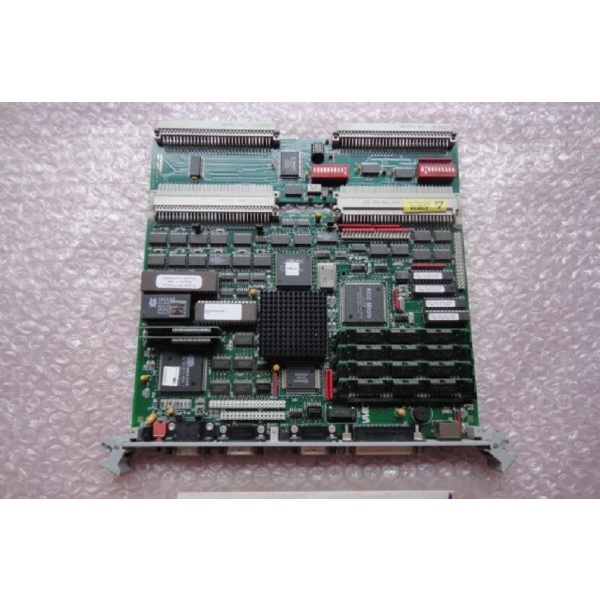
VMIVME-7486
Ethernet PHY is auto-MDIX but half-duplex only on MPC860
The 860’s SCC tops at 10 MHz SPI, so 100 Mb/s is really 10 Mb/s half-duplex. If your switch doesn’t negotiate, force 10 HDX or you’ll get link-bounce every 30 s.
The 860’s SCC tops at 10 MHz SPI, so 100 Mb/s is really 10 Mb/s half-duplex. If your switch doesn’t negotiate, force 10 HDX or you’ll get link-bounce every 30 s.
Heat-sink clamp is single-use
The copper vapor-chamber heat-sink uses a spring clip; remove it once and the clip loses tension. Always replace the clip (P/N 332-007486-901) or the CPU throttles at 85 °C—looks like “mystery scan overrun.”
The copper vapor-chamber heat-sink uses a spring clip; remove it once and the clip loses tension. Always replace the clip (P/N 332-007486-901) or the CPU throttles at 85 °C—looks like “mystery scan overrun.”