Description
Key Technical Specifications
-
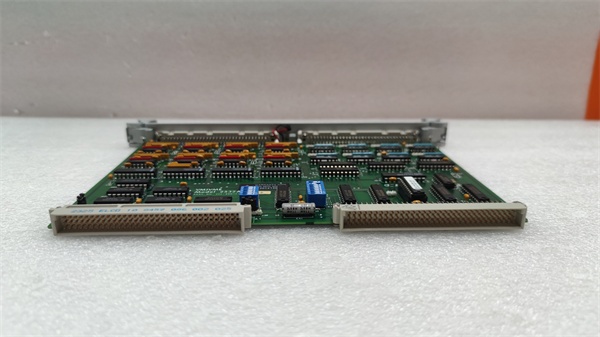
Model Number: VMIVME-5521
-
Manufacturer: GE (legacy VMIC), later Abaco Systems
-
Processor: 80386SX ISA bus CPU embedded on module
-
Bus Interface: ISA (PC/AT) on one side, VME64 A32/A24/A16, D08/D16/D32 on the other
-
Windows: Three independent address windows (rotary-switch selectable) appear in ISA memory space
-
Master/Slave: Can be VME master or slave, jumper-selectable
-
Interrupts: VME IRQ 1-7 forwarded to ISA IRQ; NMI routing available
-
Connectors: ISA edge finger (ATX version) or cable adapter (VME version); 96-pin DIN for VME
-
Power: +5 V @ 1.5 A from ISA slot; VME side powered by crate
-
Form Factor: 6U single-slot VME slave or full-length ISA card (VMIATX-5521)
-
Temp: 0 – 55 °C operating

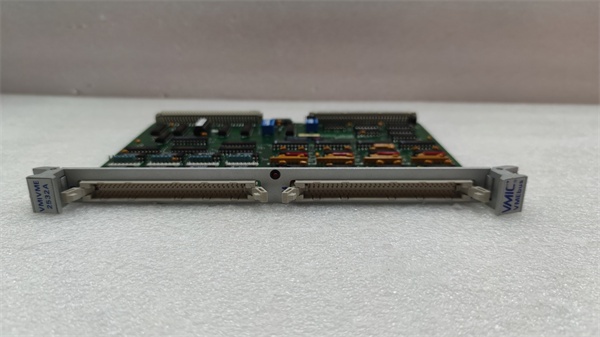
GE VMIVME-2532A
Field Application & Problem Solved
Plants still run 486 ISA boxes for HMI—cheap, stable, already paid for. Problem: the DCS I/O lives in a VME crate 20 ft away and you can’t stuff a VME CPU in the PC. Slip a VMIVME-5521 into the VME rack and the matching VMIATX-5521 into the ISA slot, run a 50-conductor cable between them, and the 486 now owns the entire VME backplane. The three rotary-select windows let you map A16 control cards at ISA 0xD0000, A24 data buffers at 0xE00000, and still leave room for VGA. I’ve used this exact bridge on a coal-feeder HMI retrofit: kept the 486, added a VMIVME-3113A ADC, and the operator never knew the bus changed. Core value: recycle the PC, keep the VME I/O, no software rewrite—DOS program just peeks and pokes the same addresses it always did.
Plants still run 486 ISA boxes for HMI—cheap, stable, already paid for. Problem: the DCS I/O lives in a VME crate 20 ft away and you can’t stuff a VME CPU in the PC. Slip a VMIVME-5521 into the VME rack and the matching VMIATX-5521 into the ISA slot, run a 50-conductor cable between them, and the 486 now owns the entire VME backplane. The three rotary-select windows let you map A16 control cards at ISA 0xD0000, A24 data buffers at 0xE00000, and still leave room for VGA. I’ve used this exact bridge on a coal-feeder HMI retrofit: kept the 486, added a VMIVME-3113A ADC, and the operator never knew the bus changed. Core value: recycle the PC, keep the VME I/O, no software rewrite—DOS program just peeks and pokes the same addresses it always did.
Installation & Maintenance Pitfalls (Expert Tips)
Rotary switch sets ISA window
Windows are selected with a front-panel knob. If your BIOS already claims 0xD0000, rotate to 0xE00000 before you power up—otherwise the ISA BIOS and the bridge collide and the PC hangs on boot.
Windows are selected with a front-panel knob. If your BIOS already claims 0xD0000, rotate to 0xE00000 before you power up—otherwise the ISA BIOS and the bridge collide and the PC hangs on boot.
Cable length is limited
Use the supplied 3 ft ribbon. Stretch it to 6 ft and you’ll see VME DTACK reflections; stretch it to 10 ft and random IRQ7 fires every time the fluorescent ballast blinks. Keep it short or buy the shielded round cable kit.
Use the supplied 3 ft ribbon. Stretch it to 6 ft and you’ll see VME DTACK reflections; stretch it to 10 ft and random IRQ7 fires every time the fluorescent ballast blinks. Keep it short or buy the shielded round cable kit.
Master/slave jumper matters
Bridge ships slave. If the PC needs to initiate VME cycles, leave it slave. If the VME crate must DMA into ISA memory, move the jumper to master—otherwise the VME card never gets bus grant and DMA times out.
Bridge ships slave. If the PC needs to initiate VME cycles, leave it slave. If the VME crate must DMA into ISA memory, move the jumper to master—otherwise the VME card never gets bus grant and DMA times out.
IRQ steering is manual
VME IRQ 1-7 are hard-wired to ISA IRQ 5, 9, 10, 11, 12, 14, 15. If your mouse already lives on IRQ12, relocate the VME source or you’ll chase phantom mouse clicks every time a breaker status bit changes.
VME IRQ 1-7 are hard-wired to ISA IRQ 5, 9, 10, 11, 12, 14, 15. If your mouse already lives on IRQ12, relocate the VME source or you’ll chase phantom mouse clicks every time a breaker status bit changes.
GE VMIVME-2532A
Firmware is in the 386SX
No flash, no updates, no field corruption—nice—but that also means no 32-bit PCI bursts. Accept the 16-bit ISA ceiling (≈ 5 MB/s) or upgrade the whole PC; the bridge can’t make the bus go faster.
No flash, no updates, no field corruption—nice—but that also means no 32-bit PCI bursts. Accept the 16-bit ISA ceiling (≈ 5 MB/s) or upgrade the whole PC; the bridge can’t make the bus go faster.
Technical Deep Dive & Overview
The 5521 is basically a 386SX glue chip on a board. The CPU sits on the ISA side, maps three programmable windows into ISA memory space, and bit-bangs VME cycles across a 50-conductor cable. A 22V10 PLD handles data steering, IRQ translation, and DTACK hand-off so the PC thinks it’s talking to slow ISA memory while the VME cards see a standard master. Because the bridge is entirely hardware-defined, there’s no driver to load—just peek and poke the window and the 386SX does the rest.
The 5521 is basically a 386SX glue chip on a board. The CPU sits on the ISA side, maps three programmable windows into ISA memory space, and bit-bangs VME cycles across a 50-conductor cable. A 22V10 PLD handles data steering, IRQ translation, and DTACK hand-off so the PC thinks it’s talking to slow ISA memory while the VME cards see a standard master. Because the bridge is entirely hardware-defined, there’s no driver to load—just peek and poke the window and the 386SX does the rest.