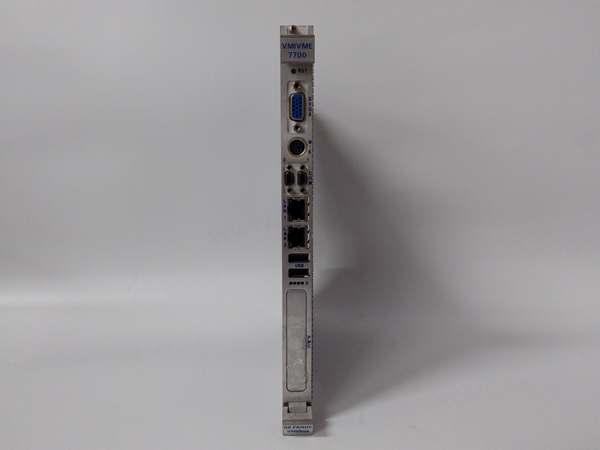
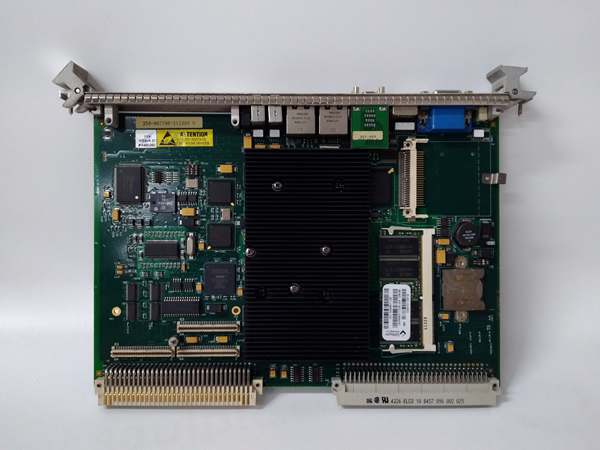
Description
Key Technical Specifications
-
Model Number: VMIVME-4512
-
Manufacturer: GE Fanuc / VMIC (General Electric)
-
Channels: 64 open-collector outputs, grouped as 8 × 8-bit ports
-
Output Rating: 5-55 VDC, 600 mA sink per channel (max)
-
Isolation: 2 kV basic channel-to-bus; 500 VDC channel-to-channel
-
Data Path: 64-bit VME64x slave; 8-/16-/32-bit burst cycles
-
Protection: Clamp diodes for inductive fly-back, thermal shutdown, surge-current shutdown
-
Built-in-Test: BIT flag per channel; 10 ms response time
-
Fiber Option: SFP cage supports 300 m multi-mode or 10 km single-mode for remote I/O
-
Reflective-Memory Ready: ≤2.1 µs latency when paired with VMIC reflective-memory network
-
Operating Temperature: –40 °C…+85 °C (military-grade)
-
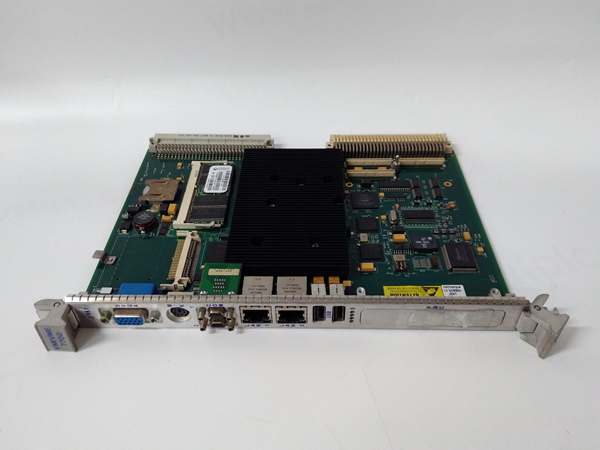
Form Factor: 6U double-Eurocard VME64x
-
Status: Factory discontinued – new & tested spares available

GE VMIVME-7700RC
Field Application & Problem Solved
In the field the biggest headache is driving dozens of 24-48 VDC loads—contactors, brake solenoids, stack lights—without frying the back-plane or missing a command. The board solves that by giving you 64 open-collector outputs that can sink 600 mA at 55 VDC—enough to pull in a 5 A relay coil directly. Add the SFP fiber option and you can place the card 10 km away from the CPU, perfect for remote turbine skids or mine-site substations. Core value: it collapses 64 HV drivers, fly-back diodes, surge protection, and optional fiber I/O into one 6U card you can swap while the unit is on turning gear
In the field the biggest headache is driving dozens of 24-48 VDC loads—contactors, brake solenoids, stack lights—without frying the back-plane or missing a command. The board solves that by giving you 64 open-collector outputs that can sink 600 mA at 55 VDC—enough to pull in a 5 A relay coil directly. Add the SFP fiber option and you can place the card 10 km away from the CPU, perfect for remote turbine skids or mine-site substations. Core value: it collapses 64 HV drivers, fly-back diodes, surge protection, and optional fiber I/O into one 6U card you can swap while the unit is on turning gear
.
Installation & Maintenance Pitfalls (Expert Tips)
TTL Inputs Hate 24 V—Use a Divider
The control side is 5 V TTL; land 24 V on a data line and you’ll blow the buffer. Use the VMIC screw-terminal adapter with 4.7 kΩ / 1 kΩ dividers or add your own on the field strip.
The control side is 5 V TTL; land 24 V on a data line and you’ll blow the buffer. Use the VMIC screw-terminal adapter with 4.7 kΩ / 1 kΩ dividers or add your own on the field strip.
Channel-to-Channel Isolation Is 500 V – Don’t Ground Both Ends
If you tie the load return to a different ground you’ll circulate current and the BIT flag will flicker. Ground the load returns at one point only—preferably at the card common.
If you tie the load return to a different ground you’ll circulate current and the BIT flag will flicker. Ground the load returns at one point only—preferably at the card common.
Clamp Diodes Save Relays – Don’t Disable Them
The on-board fly-back diodes are there for a reason. If you disable them to speed up release time you’ll arc the driver and the channel goes low-impedance. Leave the diodes in circuit or add external zeners.
The on-board fly-back diodes are there for a reason. If you disable them to speed up release time you’ll arc the driver and the channel goes low-impedance. Leave the diodes in circuit or add external zeners.
Fiber SFP Must Be Seated – Dust Kills the Link
The SFP cage will collect dust if left uncapped; signal drops 6 dB and you’ll chase “remote I/O fault” that isn’t there. Cap the SFP whenever the cable is removed for more than an hour.
The SFP cage will collect dust if left uncapped; signal drops 6 dB and you’ll chase “remote I/O fault” that isn’t there. Cap the SFP whenever the cable is removed for more than an hour.
Spare Lead-Time Is 6-8 Weeks – Keep One on the Shelf
Factory stock is gone; new & tested spares are available but not overnight. If you burn a driver or crack a layer you’ll be down until the part arrives—keep one in stores or you’ll discover the weakness during the next grid event
Factory stock is gone; new & tested spares are available but not overnight. If you burn a driver or crack a layer you’ll be down until the part arrives—keep one in stores or you’ll discover the weakness during the next grid event
.
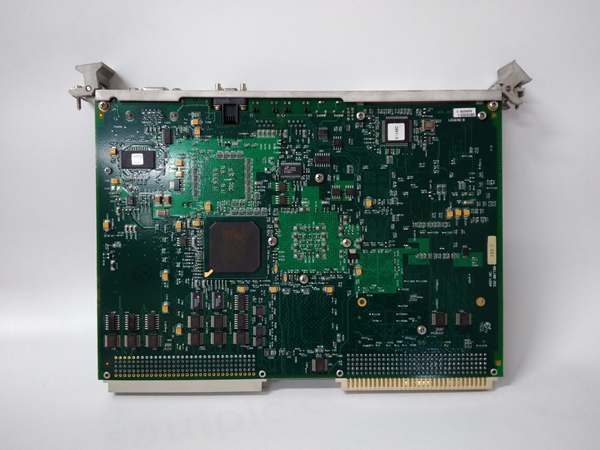
GE VMIVME-7700RC
Technical Deep Dive & Overview
Internally the card is 64 open-collector MOSFETs bolted to a VME64x slave interface. Each output sinks up to 600 mA when the gate is pulled low; the on-board thermal sensor shuts down the bank if die temp exceeds 125 °C. An opto-coupler drives the gate and reports BIT status; lose the opto and the CPU throws “OUTPUT FLT” even if the MOSFET is fine. No firmware—pure hardware—so you can swap it without reloading parameters; just remember to torque the front-panel screws or the connector will walk out on the first vibration cycle
Internally the card is 64 open-collector MOSFETs bolted to a VME64x slave interface. Each output sinks up to 600 mA when the gate is pulled low; the on-board thermal sensor shuts down the bank if die temp exceeds 125 °C. An opto-coupler drives the gate and reports BIT status; lose the opto and the CPU throws “OUTPUT FLT” even if the MOSFET is fine. No firmware—pure hardware—so you can swap it without reloading parameters; just remember to torque the front-panel screws or the connector will walk out on the first vibration cycle
.