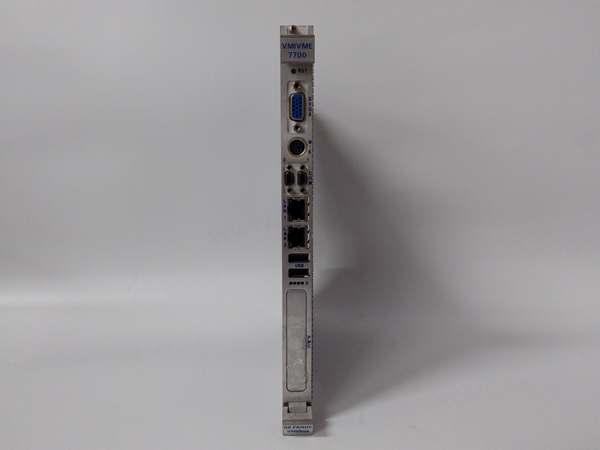
Description
Key Technical Specifications
-
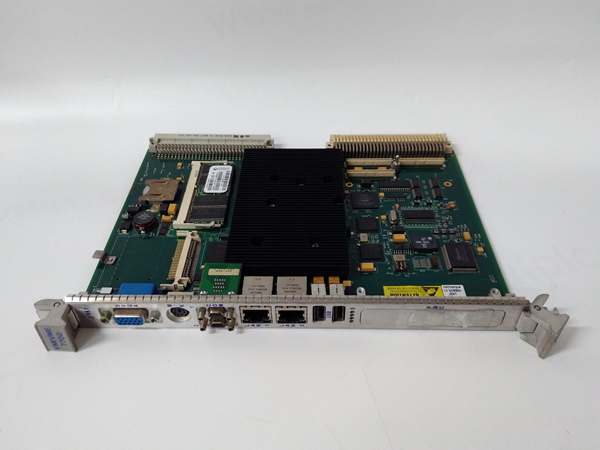
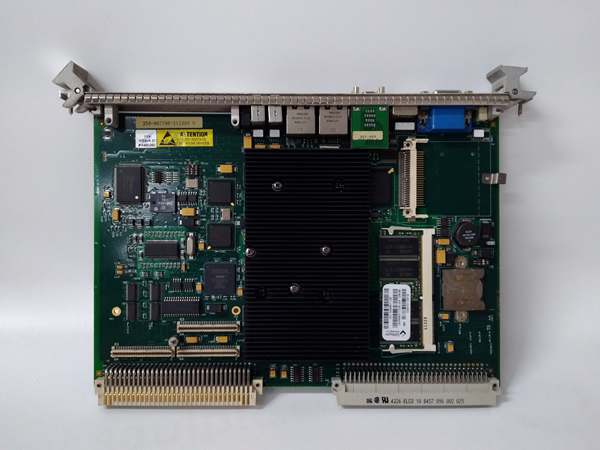
Model Number: VMIVME-2232
-
Manufacturer: GE (legacy VMIC)
-
Relay Type: 32× electromechanical Form-C, socketed
-
Contact Rating: 60 W, 50 VA max; 2 A switch, 3 A carry; 250 VAC / 220 VDC max
-
Isolation: 1 500 Vrms coil-to-contact, 500 V channel-to-channel
-
Operate Time: 4 ms max pull-in, 3 ms max release (resistive load)
-
Data Transfer: 8-, 16-, 32-bit VME D16 slave access
-
Built-In-Test: On-board sense circuit flags coil open / contact weld
-
Connector: Front-panel 96-pin DIN 41612, optional rear I/O via P2
-
Power: +5 V @ 1 A (all coils energized), +12 V @ 50 mA for BIT
-
Form Factor: 6U single-slot VME, A16/A24 address space
-
MTBF: > 200 kh @ 40 °C (MIL-HDBK-217F, ground benign)

GE VMIVME-7700RC
Field Application & Problem Solved
In a coal-fired plant the DCS outputs live on 24 VDC solid-state cards that can source maybe 0.5 A. That’s fine for pilot lights, but the main fuel-oil trip solenoid wants 2 A at 125 VDC and the ignitor transformer contactor needs 3 A at 120 VAC. You can’t drive those loads directly without frying the controller—and you sure don’t want to add a panel full of ice-cube relays that will weld shut the first time the solenoid coil shorts.
In a coal-fired plant the DCS outputs live on 24 VDC solid-state cards that can source maybe 0.5 A. That’s fine for pilot lights, but the main fuel-oil trip solenoid wants 2 A at 125 VDC and the ignitor transformer contactor needs 3 A at 120 VAC. You can’t drive those loads directly without frying the controller—and you sure don’t want to add a panel full of ice-cube relays that will weld shut the first time the solenoid coil shorts.
Plug a VMIVME-2232 into the VME rack and you get 32 true Form-C contacts rated for real power. Each relay is socketed, field-replaceable in under a minute, and the on-board BIT tells you if the coil is open or the contacts are welded before you try to reset the trip. I’ve used this board to interpose burner-management trips, fan damper motors, even 480 V pump starters (through a bigger contactor)—the 1.5 kV isolation keeps the DCS ground clean when the field side takes a lightning hit.
Core value: one slot replaces thirty-two interposing relays, saves panel space, and gives you diagnostic bits you can trend. That means no more “ghost trips” because a relay coil failed high-impedance and the contact never moved.
Installation & Maintenance Pitfalls (Expert Tips)
Socket orientation matters
The relays are keyed, but the socket can still accept a relay 180° out if you force it. Pin 1 is marked with a white dot—line it up or the coil will short and you’ll blow the on-board 1 A fuse. Check it once, check it again before you close the door.
The relays are keyed, but the socket can still accept a relay 180° out if you force it. Pin 1 is marked with a white dot—line it up or the coil will short and you’ll blow the on-board 1 A fuse. Check it once, check it again before you close the door.
BIT is only as good as your load
Built-in-Test senses coil continuity and back-EMF, not contact resistance. A relay that’s carrying pitted contacts can still pass BIT. If your circuit is safety-critical, schedule a contact-resistance check every outage—50 mΩ rise is the warning flag.
Built-in-Test senses coil continuity and back-EMF, not contact resistance. A relay that’s carrying pitted contacts can still pass BIT. If your circuit is safety-critical, schedule a contact-resistance check every outage—50 mΩ rise is the warning flag.
Snubbers on DC coils are mandatory
The board ships without MOV or diode protection. A 125 VDC solenoid will dump 1 kV back into the contacts and weld them in three months. Add an external 1 kV, 150 V MOV or a 1N4007 across the load, not the coil, or you’ll be replacing relays at every turnaround.
The board ships without MOV or diode protection. A 125 VDC solenoid will dump 1 kV back into the contacts and weld them in three months. Add an external 1 kV, 150 V MOV or a 1N4007 across the load, not the coil, or you’ll be replacing relays at every turnaround.
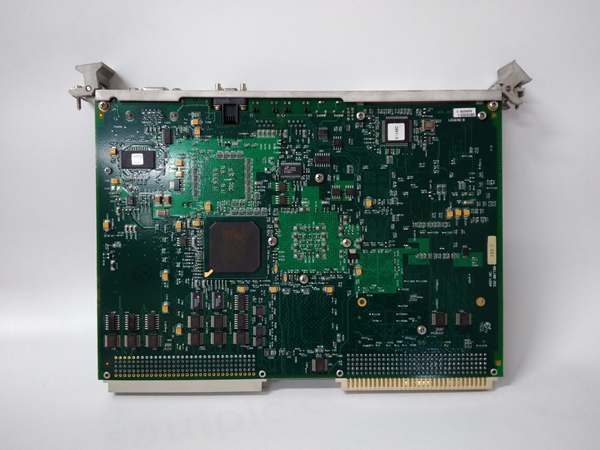
GE VMIVME-7700RC
Watch the 3 A carry limit
Carry current is continuous with contacts closed; switch current is when they move. A pump starter that pulls 2.8 A running but 12 A inrush will eat contacts fast. Size an interposing contactor for the motor load and let the 2232 drive the contactor coil—don’t make it carry motor current.
Carry current is continuous with contacts closed; switch current is when they move. A pump starter that pulls 2.8 A running but 12 A inrush will eat contacts fast. Size an interposing contactor for the motor load and let the 2232 drive the contactor coil—don’t make it carry motor current.
Front-panel screws back out
Mill vibration loosens the 96-pin jack-screws. Six months later you get random “relay failed to operate.” Hit them with a 3 mm hex and Loctite 222 during commissioning—takes two minutes, saves a 2 a.m. callout.
Mill vibration loosens the 96-pin jack-screws. Six months later you get random “relay failed to operate.” Hit them with a 3 mm hex and Loctite 222 during commissioning—takes two minutes, saves a 2 a.m. callout.
Technical Deep Dive & Overview
The 2232 is basically a 32-bit VME write register driving ULN2803 darlington arrays that energize individual relay coils. A 22V10 PLD decodes the address, asserts DTACK, and latches the data; a second read-only register returns the BIT status. Each relay is a Potter & Brumfield K10-type socketed device with a 1 kV coil-to-contact barrier, so you can mix AC and DC circuits on the same board without sneak paths.
The 2232 is basically a 32-bit VME write register driving ULN2803 darlington arrays that energize individual relay coils. A 22V10 PLD decodes the address, asserts DTACK, and latches the data; a second read-only register returns the BIT status. Each relay is a Potter & Brumfield K10-type socketed device with a 1 kV coil-to-contact barrier, so you can mix AC and DC circuits on the same board without sneak paths.