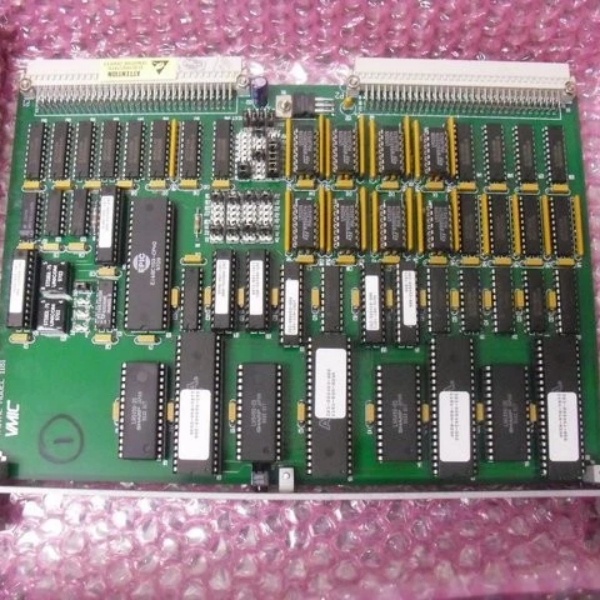
Description
Key Technical Specifications
-
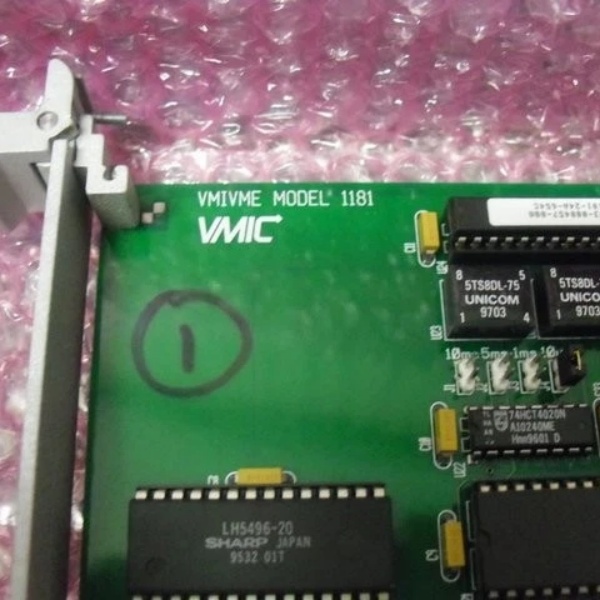
Model Number: VMIVME-1181-000
-
Manufacturer: GE Fanuc / VMIC (General Electric)
-
Function: 32-bit digital input with change-of-state interrupt capability
-
Input Channels: 32 TTL/CMOS compatible lines (5 V logic)
-
Interrupt Logic: COS detection on rising, falling, or both edges; interrupt posted to VME bus
-
Isolation: 2 kV optical isolation channel-to-bus
-
Data Path: 32-bit parallel read; VME64x P2 slave interface
-
Throughput: > 1 MHz aggregate (burst)
-
Connectors: Front-panel 50-pin DIN (screw-terminal or ribbon options)
-
Built-in-Test: BIT flag per channel; 10 ms response time
-
Power: +5 VDC from VME back-plane; < 3 W typical
-
Operating Temperature: 0 °C to +60 °C (no fan required)
-
Form Factor: Standard 6U VME64x single-slot
-
Status: Factory discontinued – new & tested spares available

GE VMIVME-1181
Field Application & Problem Solved
In the field the biggest headache is catching high-speed contact changes—valve limit switches, breaker auxiliaries, or turbine trip inputs—without polling dozens of bits. The board solves that by generating a VME interrupt the instant any input changes state. You’ll typically find one per 6U crate on Mark-V or Mark-VI retrofits where the CPU needs to see every contact transition in real time. Core value: it collapses 32 opto-isolated inputs, COS logic, and BIT status into one card you can swap while the turbine is on turning gear
In the field the biggest headache is catching high-speed contact changes—valve limit switches, breaker auxiliaries, or turbine trip inputs—without polling dozens of bits. The board solves that by generating a VME interrupt the instant any input changes state. You’ll typically find one per 6U crate on Mark-V or Mark-VI retrofits where the CPU needs to see every contact transition in real time. Core value: it collapses 32 opto-isolated inputs, COS logic, and BIT status into one card you can swap while the turbine is on turning gear
.
Installation & Maintenance Pitfalls (Expert Tips)
TTL Inputs Hate 24 V—Use a Divider
The lines are 5 V TTL; land 24 VDC on a pin and you’ll blow the buffer. Use the VMIC screw-terminal adapter with 4.7 kΩ / 1 kΩ dividers or add your own on the field strip.
The lines are 5 V TTL; land 24 VDC on a pin and you’ll blow the buffer. Use the VMIC screw-terminal adapter with 4.7 kΩ / 1 kΩ dividers or add your own on the field strip.
Front-Panel Connector Works Loose
The 50-pin header is held by two screws; if you forget to tighten them vibration walks the plug out and you’ll chase random “I/O fault” alarms. Torque screws to 0.4 Nm and tug-test the cable.
The 50-pin header is held by two screws; if you forget to tighten them vibration walks the plug out and you’ll chase random “I/O fault” alarms. Torque screws to 0.4 Nm and tug-test the cable.
No Fan Means Keep the Crate Clean
The board is rated 0-60 °C with no fan. If your VME crate ingests paper-mill dust the heat-sink fins clog and the opto LEDs dim. Blow the crate out every outage or you’ll chase phantom zeros.
The board is rated 0-60 °C with no fan. If your VME crate ingests paper-mill dust the heat-sink fins clog and the opto LEDs dim. Blow the crate out every outage or you’ll chase phantom zeros.
Spare Lead-Time Is 6-8 Weeks—Keep One on the Shelf
Factory stock is gone; new & tested spares are available but not overnight. If you crack a buffer or burn a pin you’ll be down until the part arrives—keep one in stores or you’ll discover the weakness during the next grid event
Factory stock is gone; new & tested spares are available but not overnight. If you crack a buffer or burn a pin you’ll be down until the part arrives—keep one in stores or you’ll discover the weakness during the next grid event
.
GE VMIVME-1181
Technical Deep Dive & Overview
Internally the card is a 32-bit opto-isolator array bolted to a VME64x slave interface. Each input drives an LED that feeds a phototransistor; the collector pulls the data line low when the field contact is closed. The COS logic latches any transition and posts an IRQ to the VME bus. Lose the 5 V rail and the card goes dark, the CPU reads all zeros, and the turbine trips on “digital I/O fault.” Swap takes two minutes: pull the old card, slide the new one in until the ejectors latch, and the CPU sees the field again—no software reload required
Internally the card is a 32-bit opto-isolator array bolted to a VME64x slave interface. Each input drives an LED that feeds a phototransistor; the collector pulls the data line low when the field contact is closed. The COS logic latches any transition and posts an IRQ to the VME bus. Lose the 5 V rail and the card goes dark, the CPU reads all zeros, and the turbine trips on “digital I/O fault.” Swap takes two minutes: pull the old card, slide the new one in until the ejectors latch, and the CPU sees the field again—no software reload required
.