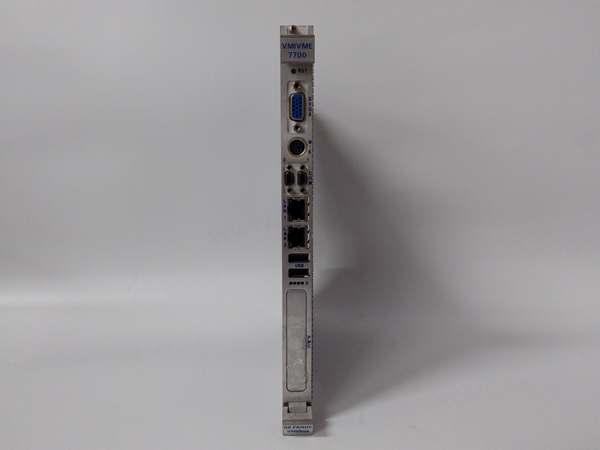
Description
Key Technical Specifications
-
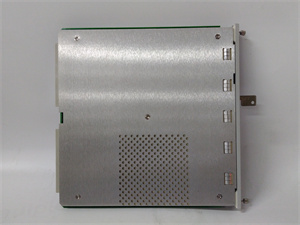
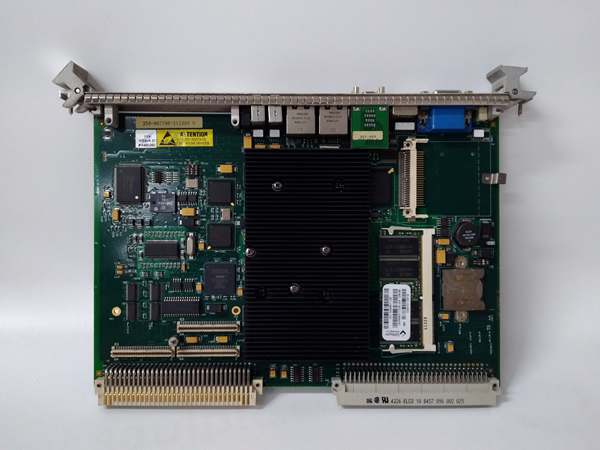
Model Number: VMIVME-1150-133
-
Manufacturer: GE Fanuc / VMIC (General Electric)
-
Function: 64-bit optically coupled digital input board for VME64x systems
-
Input Channels: 64 TTL/CMOS compatible lines (5 V logic)
-
Isolation: 2 kV optical isolation channel-to-logic
-
Input Voltage Range: 0-5 V TTL (high-voltage tolerant front-end optional)
-
Data Path: 64-bit parallel read; VME64x slave interface
-
Throughput: > 1 MHz aggregate (burst)
-
Connectors: Front-panel 50-pin header (screw-terminal or ribbon options)
-
Power: +5 VDC from VME back-plane; < 3 W typical
-
Operating Temperature: –40 °C…+70 °C (no fan required)
-
Form Factor: Standard 6U VME64x single-slot
-
Status: Factory discontinued – new & tested spares available
Field Application & Problem Solved
In turbine cabinets the biggest headache is landing dozens of 24 VDC status signals—oil pressure, limit switches, breaker aux—without pulling copper cables all the way back to the CPU. The board solves that by sitting in the VME crate: each input is opto-isolated, so you can land field 24 V on the front screw terminal, the LED confirms the bit, and the CPU reads all 64 lines in one VME cycle. You’ll typically find one per 6U crate on Mark-V or Mark-VI retrofits where density matters more than speed. Core value: it collapses 64 opto-isolators, high-voltage tolerance, and VME64x DMA into one card you can swap while the unit is on turning gear
In turbine cabinets the biggest headache is landing dozens of 24 VDC status signals—oil pressure, limit switches, breaker aux—without pulling copper cables all the way back to the CPU. The board solves that by sitting in the VME crate: each input is opto-isolated, so you can land field 24 V on the front screw terminal, the LED confirms the bit, and the CPU reads all 64 lines in one VME cycle. You’ll typically find one per 6U crate on Mark-V or Mark-VI retrofits where density matters more than speed. Core value: it collapses 64 opto-isolators, high-voltage tolerance, and VME64x DMA into one card you can swap while the unit is on turning gear
.
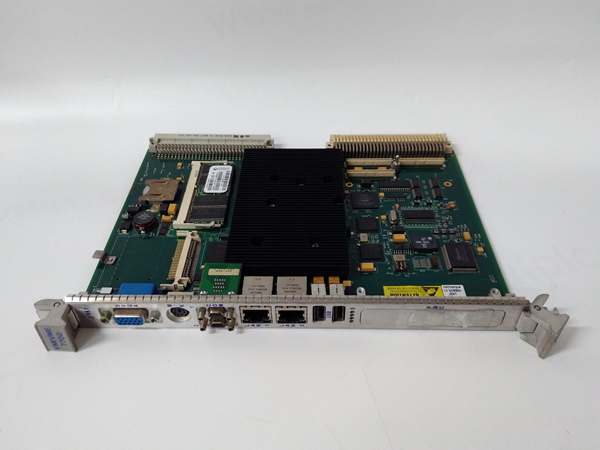
GE VMIVME-7700RC
Installation & Maintenance Pitfalls (Expert Tips)
24 V on a TTL Pin Blows the Buffer
Inputs are 5 V TTL; land 24 VDC without a divider and you’ll fry the front end. Use the VMIC screw-terminal adapter with 4.7 kΩ / 1 kΩ dividers or add your own on the field strip.
Inputs are 5 V TTL; land 24 VDC without a divider and you’ll fry the front end. Use the VMIC screw-terminal adapter with 4.7 kΩ / 1 kΩ dividers or add your own on the field strip.
Front-Panel Connector Works Loose
The 50-pin header is held by two screws; if you forget to tighten them vibration walks the plug out and you’ll chase random “I/O fault” alarms. Torque screws to 0.4 Nm and tug-test the cable.
The 50-pin header is held by two screws; if you forget to tighten them vibration walks the plug out and you’ll chase random “I/O fault” alarms. Torque screws to 0.4 Nm and tug-test the cable.
No Fan Means Keep the Crate Clean
The board is rated –40…+70 °C with no fan. If your VME crate ingests paper-mill dust the heat-sink fins clog and the opto LEDs dim. Blow the crate out every outage or you’ll chase phantom zeros.
The board is rated –40…+70 °C with no fan. If your VME crate ingests paper-mill dust the heat-sink fins clog and the opto LEDs dim. Blow the crate out every outage or you’ll chase phantom zeros.
Spare Lead-Time Is 6-8 Weeks—Keep One on the Shelf
Factory stock is gone; new & tested spares are available but not overnight. If you crack a buffer or burn a pin you’ll be down until the part arrives—keep one in stores or you’ll discover the weakness during the next grid event
Factory stock is gone; new & tested spares are available but not overnight. If you crack a buffer or burn a pin you’ll be down until the part arrives—keep one in stores or you’ll discover the weakness during the next grid event
.
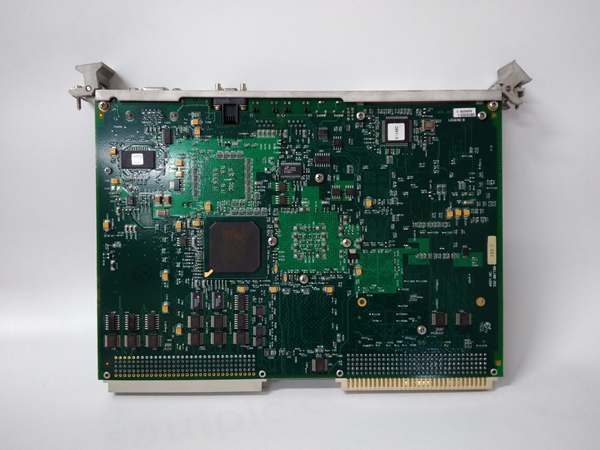
GE VMIVME-7700RC
Technical Deep Dive & Overview
Internally the card is a 64-channel opto-isolator array bolted to a VME64x slave interface. Each input drives an LED that feeds a phototransistor; the collector pulls the data line low when the field contact is closed. The VME master reads all 64 bits in one 64-bit cycle—no polling, no missed edges. Lose the 5 V rail and the card goes dark, the CPU reads all zeros, and the turbine trips on “digital I/O fault.” Swap takes two minutes: pull the old card, slide the new one in until the ejectors latch, and the CPU sees the field again—no software reload required
Internally the card is a 64-channel opto-isolator array bolted to a VME64x slave interface. Each input drives an LED that feeds a phototransistor; the collector pulls the data line low when the field contact is closed. The VME master reads all 64 bits in one 64-bit cycle—no polling, no missed edges. Lose the 5 V rail and the card goes dark, the CPU reads all zeros, and the turbine trips on “digital I/O fault.” Swap takes two minutes: pull the old card, slide the new one in until the ejectors latch, and the CPU sees the field again—no software reload required
.