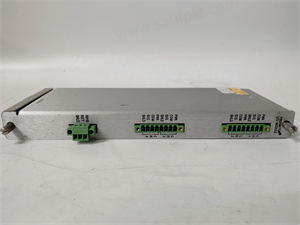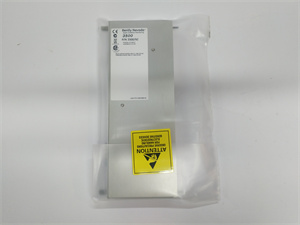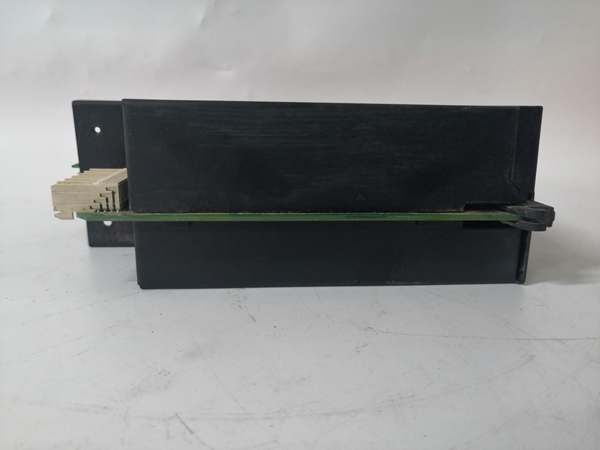
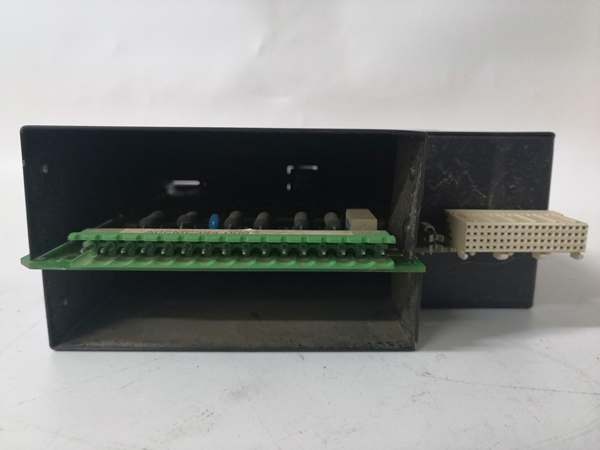
Description
Hard-Numbers: Technical Specifications
- Contact Configuration: 6× Form-A normally open dry relay contacts
- Continuous Contact Rating: 5A @ 250VAC, 5A @ 30VDC resistive
- Inductive Load Rating: 3A max for coil and solenoid circuits
- Operating Temperature: -40°C to +70°C sealed cabinet rating
- Isolation Rating: 2500Vrms field-to-backplane galvanic isolation
- Power Draw: 3.6W maximum, backplane supplied power
- Cycle Rating: 50,000 mechanical operations light duty
- Hot Swap: Live insert/remove with temporary output inhibit
- Termination: Screw-style field terminals, 14–22 AWG wire compatible
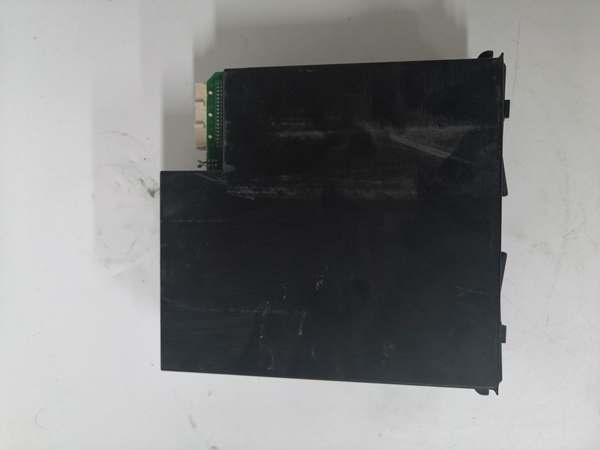
UR-9AH
The Real-World Problem It Solves
High-grade heavy-duty relay modules add unnecessary cost for basic alarm and indicator circuits. Solid-state outputs lack physical dry contacts for legacy hardwired interlock schemes.
Where you’ll typically find it:
- Distribution substation relay cabinets for horn, beacon, and remote alarm outputs
- Power plant auxiliary MCC racks for non-critical equipment status signaling
- Pulp and paper mill process switchgear with simple machine interlock logic
Bottom line: It delivers cost-effective dry contact outputs for non-trip loads, cutting excess hardware cost on basic control builds.
Hardware Architecture & Under-the-Hood Logic
URRLH uses opto-coupled isolation between backplane logic and relay drive circuits. No heavy-duty transient suppression, built strictly for light-duty control tasks.
- Digital command data from the main CPU crosses isolated opto buffers to block ground noise.
- Low-current driver circuits energize onboard miniature relay coils on command.
- Hard-wired Form-A contacts close to switch external control power and alarm circuits.
- Basic flyback diodes suppress minor coil transient voltage inside the module.
- Simplified status feedback transmits contact state data back to the UR backplane.
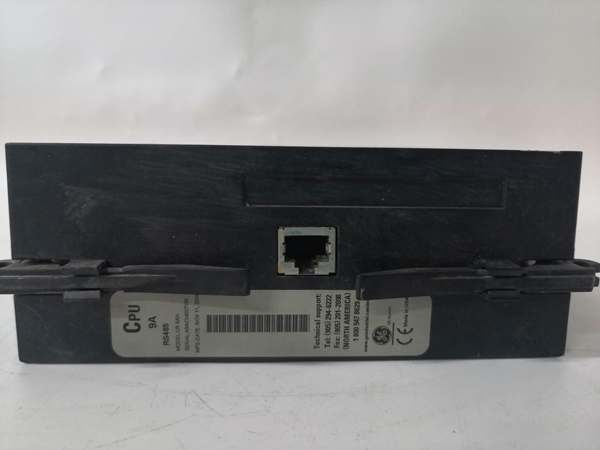
UR-9AH
Field Service Pitfalls: What Rookies Get Wrong
Specing Heavy Inductive Loads to Light-Duty RelaysTechs route breaker coils and large solenoids to URRLH contacts. Low cycle rating and weak surge protection pit and weld contacts fast.
- Field Rule: Restrict URRLH to alarms, lamps, and low-power interlocks; use URRHH for trip coils and heavy inductive loads.
Neglecting Common Point WiringMultiple outputs tied to a single un-fused common rail create single-point failure risks. A shorted field wire takes down every output on the module.
- Quick Fix: Install individual inline fuses per circuit; separate alarm and interlock common feeds.
Assuming Identical Performance to URRHHTechnicians swap URRLH and URRHH interchangeably during replacement. Lower current ratings lead to overheating and premature board failure under matched loads.
- Field Rule: Confirm part number before swap; label light-duty vs heavy-duty output modules inside every cabinet.
Commercial Availability & Pricing Note
Please note: The listed price is for reference only and is not binding. Final pricing and terms are subject to negotiation based on current market conditions and availability.