Description
Product Introduction
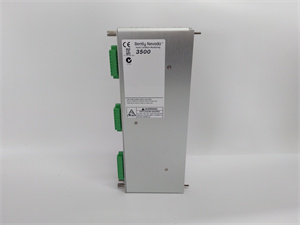
The GE is a high-performance UCSB (Universal Control Safety Bridge) controller designed as the computational core for Mark VIe turbine control systems. It mounts vertically to a metal backplate, running the QNX Neutrino RTOS to handle complex gas and steam turbine sequencing without lag.
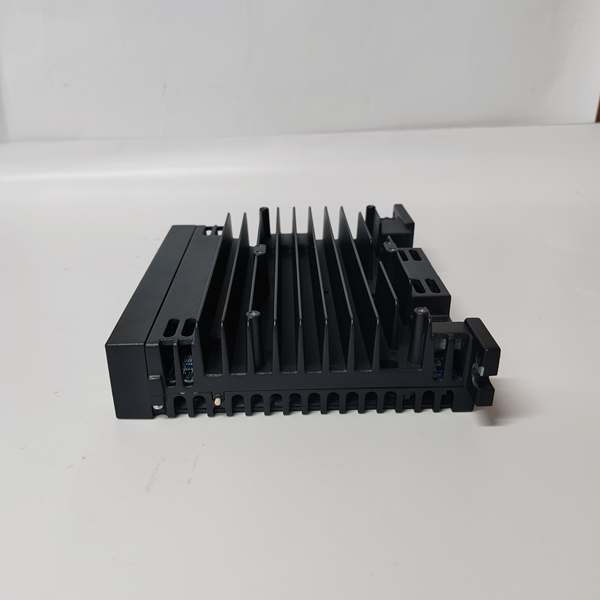
This revision (H4A) utilizes a 1066 MHz Intel EP80579 processor, doubling the throughput of older H1A units in heavy math loops. It is fanless, relying on convection through the front heat sinks. Scan times for critical protection logic typically hold under 10 ms, even with 500+ I/O tags mapped—well, technically it depends on your ToolboxST project complexity, but the headroom is significant.
GE IS420UCSBH4A
Key Technical Specifications
- Processor: Intel EP80579 @ 1066 MHz
- Memory: 256 MB DDR2 SDRAM (ECC Enabled)
- Storage: Onboard Flash (Holds OS & App Code)
- Operating System: QNX Neutrino (Real-Time)
- Power Input: 18-32 Vdc (Supports 24 Vdc / 28 Vdc Redundant)
- Power Consumption: ~17.3 W (Nominal), ~28.7 W (Peak)
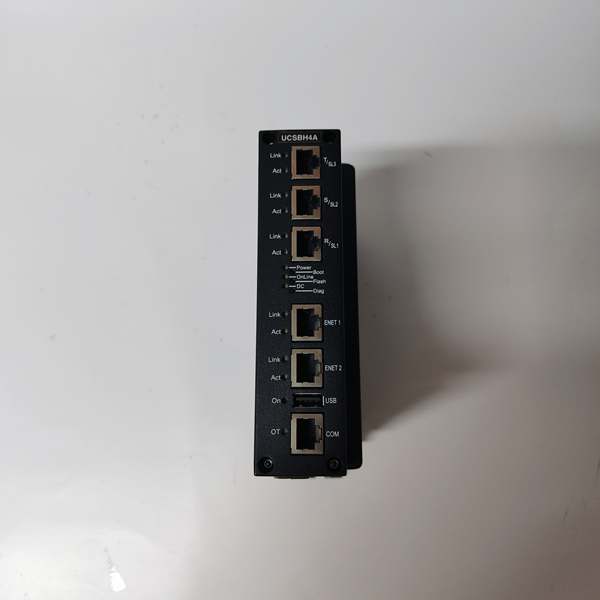
- Network Ports: 3 x RJ45 (IONet), 2 x RJ45 (Control Net)
- Local I/O: 2 x Hall Effect Inputs, 2 x Analog In, 4 x DIO
- Operating Temp: -30 °C to +65 °C
- Cooling: Passive (Fanless Aluminum Heatsink)
- Certifications: UL E207685 (Class I Div 2), ATEX/IECEx
Quality Control Process (Engineer’s Perspective)
- Incoming Verification: Match the GE serial to the shipping docs. Inspect the 100+ pin backplane connector for bent pins—common issue in pulled units. Check the heatsink fins for caked-on oil mist.
- Live Functional Test: Seat on a test baseplate with 24 Vdc. Boot to “Active” status. We run a 48-hour stress script executing PID loops; CPU load must stay below 40% at 65 °C ambient.
- Electrical Parameter Test: Back-probe the 24 Vdc input with a Fluke 115 under full load. Ripple shouldn’t exceed 50 mV p-p. Check the 5V/3.3V rail stability on the SDRAM lines.
- Firmware Verification: Read the BIOS and OS version via ToolboxST. Photograph the unit’s MAC address label on the rear—critical for asset tracking in redundant triplets.
- Final QC & Packaging: Clean the edge connector pins with contact cleaner. Static bag it with desiccant. Label “QC Passed – 48hr Burn-in OK” with the date.
Replacement Pitfall Guide
❗ CompactFlash Identity: The CF card behind the front panel isthe controller’s identity. Swapping the GE hardware but keeping the old CF card moves the IP and node ID. Swapping CF cards between controllers without re-addressing confuses the TMR voting logic.
❗ Firmware Mismatch: Mixing H4A hardware with an older v4.x project file often works, but v5.x+ enables specific H4A instructions. Forcing a v5 project onto an H1A unit causes “Illegal Opcode” crashes on startup.
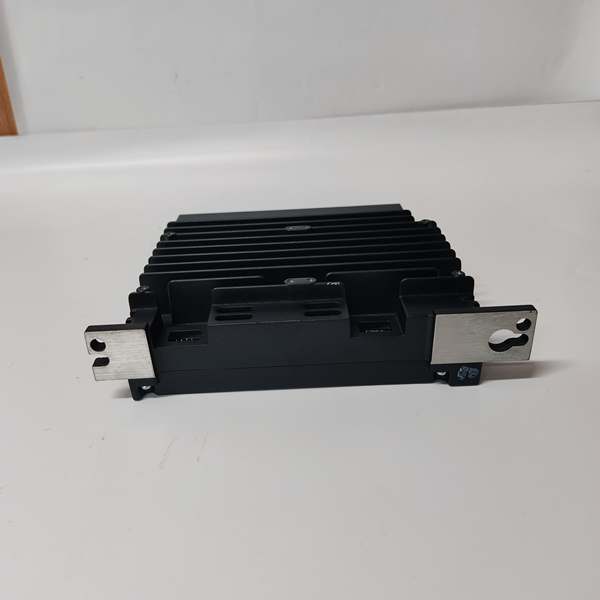
❗ Baseplate Seating: The 100-pin connector is delicate. “Half-seated” units pass POST but drop IONet packets under vibration. Push firmly until the plastic clips audibly snap—check the visual alignment markers.
❗ Redundant Power Wiring: The unit accepts 24 Vdc and 28 Vdc. In turbine enclosures, accidentally landing 125 Vdc on the 28 Vdc input terminal cooks the onboard regulator instantly. Double-check the P1/P2 terminal labels.
❗ ESD to Memory: The SDRAM is sensitive. Discharge to the cabinet frame before handling the CF card or the module—though your mileage may vary on shop floor grounding practices.
Keep these in mind and you’ll cut 90% of rework time.
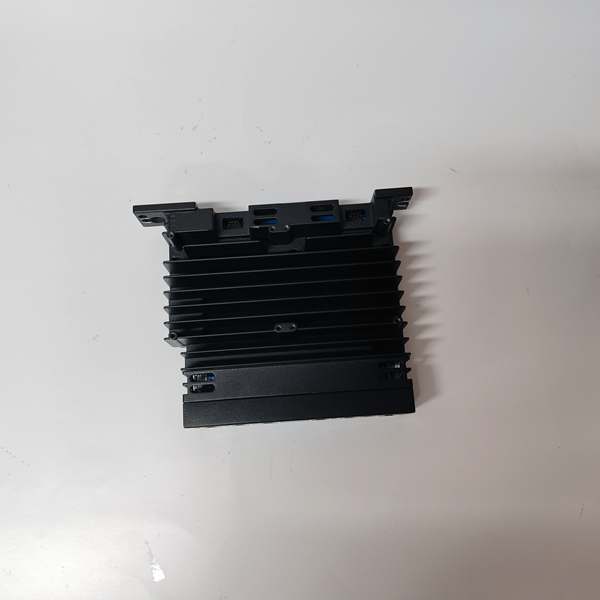
GE IS420UCSBH4A
Compatibility Matrix & Benchmarks
- GE → GE IS420UCSBH1A : Needs Adaptation — H4A has faster CPU; verify project code compiles for EP80579 arch.
- GE → GE IS420UCSCH1A : Incompatible — UCSC is quad-core; requires project migration and different baseplate.
- GE → Mark VIe I/O Packs (IS220 Series) : Direct — Native IONet communication.
- Logic Scan: < 10 ms (Complex turbine sequence, 500+ tags)
- Boot Time: ~45 seconds (To “Running” state with app load)
- IONet Throughput: 100 Mbps (Deterministic, redundant pairs)