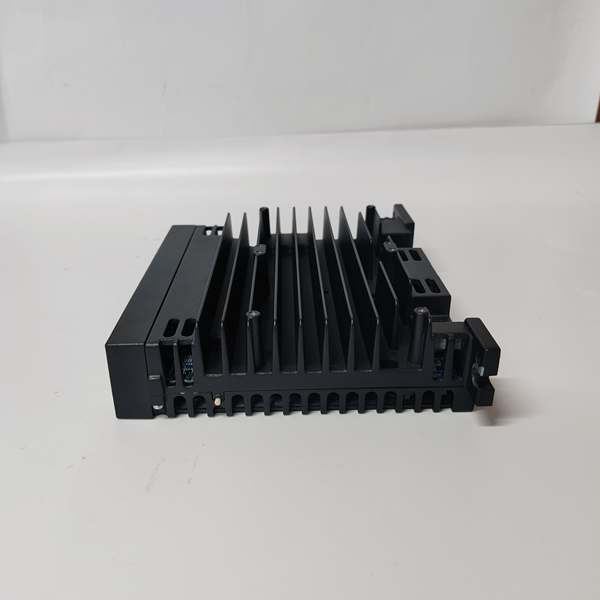
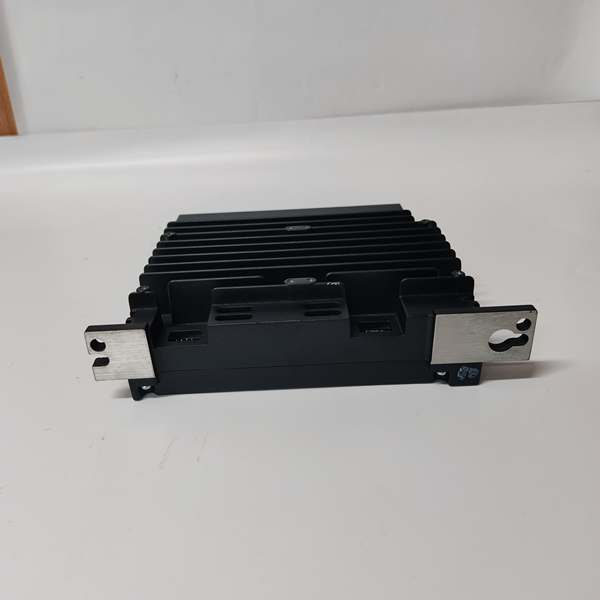
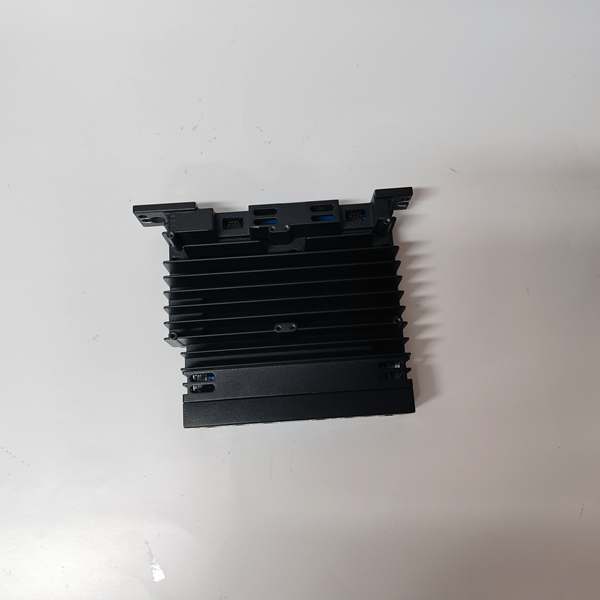
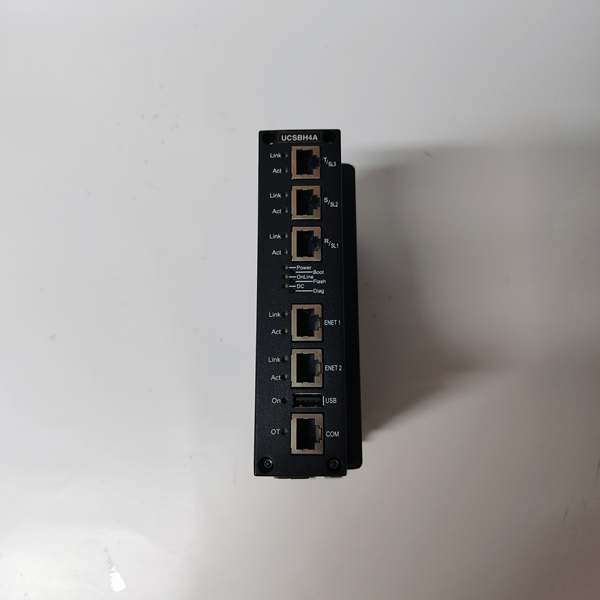
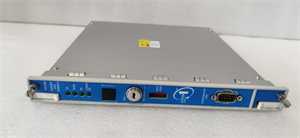
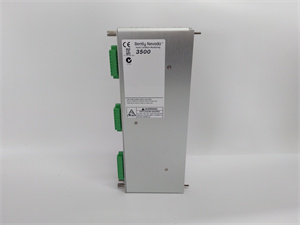
Hardware Type: Universal Control System Block (UCSB) – embedded controller
Key Feature: 1066 MHz Intel EP80579 processor with 256 MB DDR2, QNX real-time OS, and 5× IONet Ethernet ports for distributed I/O communication
Primary Field Use: Core control processor for Mark VIe gas/steam turbine control systems, executing control algorithms and managing I/O packs via IONet
Operating System: QNX Neutrino real-time multitasking OS
Power Supply: 18-36 VDC, 12W nominal, 28.7W peak
Ethernet: 5× 100 Mbps IONet ports (RJ45)
Serial Ports: 2× RS-232/RS-485
Redundancy: Supports redundant UCSB configuration with <50ms switchover
ECC Memory: Yes (error-correcting code)
Cooling: Natural convection (no fan)
Mounting: Panel mount with 5mm bracket thickness
Operating Temperature: -30°C to +65°C (-22°F to 149°F)
Storage Temperature: -40°C to +85°C
Weight: 0.907 kg (2 lbs)
to 2.4 lbs
Dimensions: 180 × 110 × 60 mm
or 233 × 168 × 43 mm
(conflicting)
Certifications: UL, CE, CSA
GE IS420UCSBH4A
The Real-World Problem It Solves
You know the scenario: legacy Mark VI systems with VME backplanes that require specialized hardware and complex cabling, or compact controllers that can’t handle the I/O density of a modern combined-cycle plant. The IS420UCSBH4A eliminates these constraints with a standalone embedded controller that runs QNX real-time OS on an Intel EP80579, communicates with distributed I/O packs via five IONet Ethernet ports, and mounts directly to the panel without a VME chassis. No backplane, no specialized power supplies, no fan failures—just deterministic turbine control with built-in redundancy support.
Where you’ll typically find it:
Mark VIe control panels for Frame 7/9 gas turbines in combined-cycle power plants
EX2100e excitation control systems as the primary control processor
Distributed control nodes in petrochemical plants requiring SIL-rated reliability
Bottom line: It replaces legacy VME-based controllers with a compact, Ethernet-native control platform that reduces wiring complexity while maintaining the deterministic performance needed for turbine protection and control.
Hardware Architecture & Under-the-Hood Logic
The IS420UCSBH4A is a standalone embedded controller—not a VME board, not a PLC, but a dedicated industrial computer designed for turbine control. It runs the entire control application (speed control, fuel scheduling, protection logic) locally while communicating with field I/O via IONet, GE’s proprietary industrial Ethernet protocol. The controller mounts directly to the panel and connects to I/O packs (like IS420PUAAH1A) through standard CAT5e cables rather than ribbon cables or VME backplanes.
Signal flow and processing logic:
Control Execution: The 1066 MHz EP80579 runs the Mark VIe control application under QNX, executing PID loops, sequencing, and protection logic with deterministic cycle times
I/O Communication: Five IONet Ethernet ports (100 Mbps) connect to distributed I/O packs—each port can handle multiple I/O packs via daisy-chain or star topology
Data Processing: The controller processes analog inputs (4-20mA, RTD, TC), discrete inputs, and drive outputs through the I/O packs, maintaining real-time synchronization
Redundancy Management: In redundant configurations, two UCSB controllers run in hot-standby with <50ms switchover, synchronized via dedicated IONet links
HMI Interface: One IONet port typically connects to the operator interface (HMI) running CIMPLICITY or ToolboxST for monitoring and configuration
GE IS420UCSBH4A
Field Service Pitfalls: What Rookies Get Wrong
Confusing This with a Standard PLC Rookies see “controller” and treat this like a Rockwell or Siemens PLC—trying to program it with standard ladder logic tools or expecting Modbus TCP as the native protocol. It’s not. The IS420UCSBH4A runs a proprietary QNX-based real-time OS with GE’s ToolboxST configuration software. You don’t “program” it in the traditional sense; you configure control blocks and download the compiled application.
Field Rule: Use only GE ToolboxST (version 6.0 or later) for configuration. The controller communicates via IONet (GE’s protocol), not standard Ethernet/IP. Verify the IONet network is isolated from plant LANs—mixing traffic causes deterministic timing violations and control jitter.
Ignoring the IONet Cable Quality IONet is industrial Ethernet, but rookies use cheap CAT5e patch cables from the office supply closet. In a turbine control cabinet with VFDs and high-voltage ignition transformers, unshielded cables pick up noise that causes I/O communication faults, false trips, or erratic control.
Quick Fix: Use only shielded CAT5e or CAT6 cables with metal RJ45 connectors. Ground the shield at one end (controller side) to the panel ground. Verify cable runs are separate from 480V power cables—minimum 12 inches separation, or use grounded conduit. If the I/O packs show “Comm Fault” intermittently, swap in a known-good shielded cable first before replacing hardware.
Forgetting the 24VDC Power Requirements The IS420UCSBH4A requires 18-36 VDC at 12W nominal (28.7W peak during startup). Rookies connect it to a standard 24VDC plant power supply shared with solenoids and relays. Voltage sags from inductive loads cause the controller to reset or hang.
Field Rule: Dedicate a 24VDC power supply for the UCSB and critical I/O packs. Use a UPS-backed supply if available—turbine controls must survive brief power interruptions. Verify voltage at the controller terminals under load (not open-circuit); if you see <18VDC during solenoid energization, your power supply is undersized or your wiring is too long. The controller has no internal battery backup—if power fails, the controller stops.