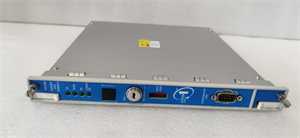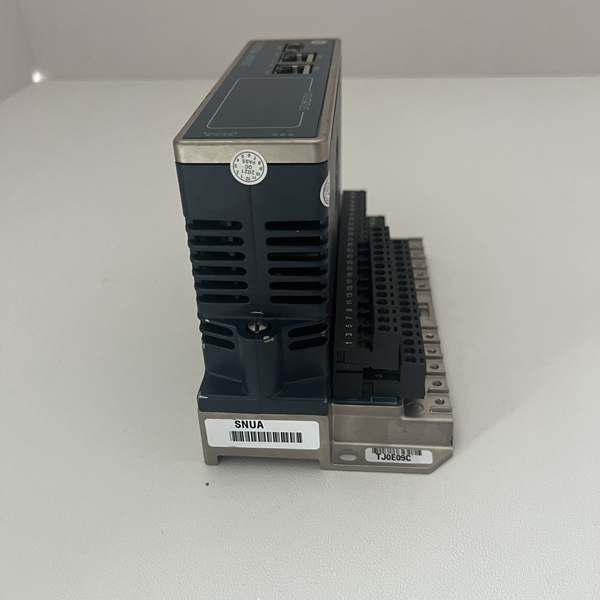
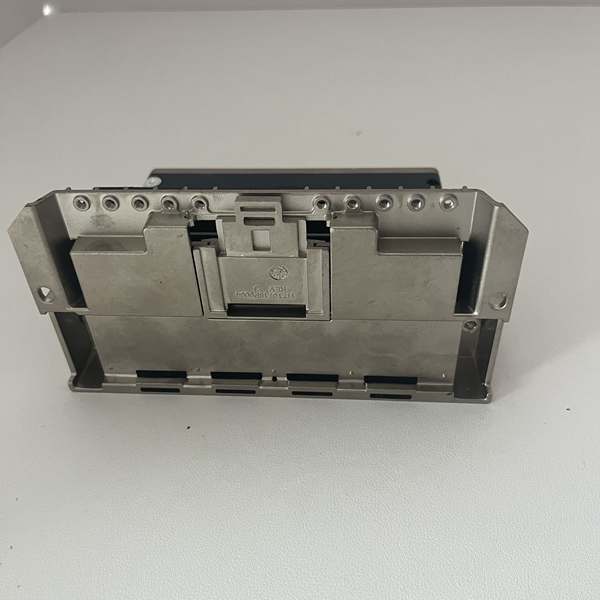
Description
Hard-Numbers: Technical Specifications
- Channel Count: 16 × simplex configurable channels
- Input Types: Thermocouple, RTD, ±5/±10V, 4–20mA (HART), pulse, discrete
- Output Types: 0–20mA current (HART), discrete
- Network Ports: 2 × 100 Mbps IONet (RJ45)
- Isolation Rating: 2500 Vrms field-to-backplane
- Power Input: 18–32 VDC redundant
- Power Draw: 8.1 W quiescent + 0.02–0.68 W/channel
- Operating Temp: -40°C to +70°C (-40°F to +158°F)
- Scan Rate: 10 ms frame rate
- Accuracy: Better than 0.1% full-scale
- Environmental: Class I Div 2, Zone 2, G3 conformal coating
- Firmware: ControlST v07.02.00C or later required
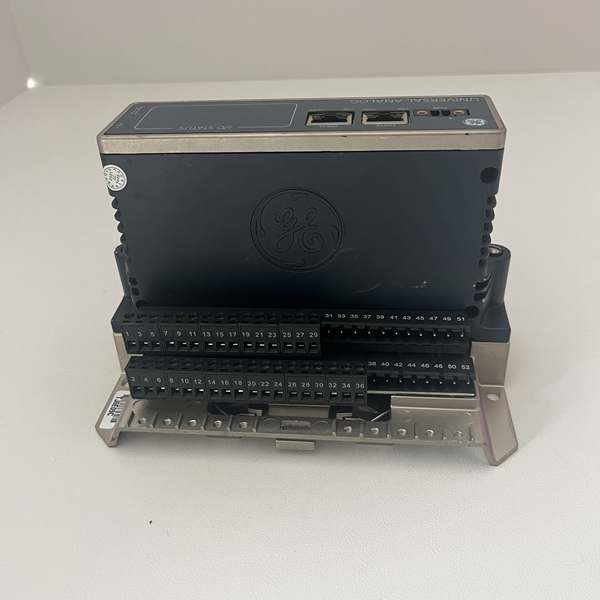
GE IS420PUAAH1A
The Real-World Problem It Solves
Plant BOP systems use mixed signal types, forcing cabinets to hold multiple dedicated I/O cards. This module consolidates all signals into one pack, slashing cabinet space and simplifying spare parts management.
Where you’ll typically find it:
- Power plant boiler and feedwater control systems
- Refinery process BOP monitoring panels
- Offshore platform utility and auxiliary equipment loops
Bottom line: It replaces 3–4 specialized cards with one universal module.
Hardware Architecture & Under-the-Hood Logic
Built with a dedicated BPPC processor and isolated channel ASICs. No shared controller resources; all signal conditioning runs locally.
- Field signals route to independent isolated transceivers per channel.
- On-board ADC/DAC converts analog signals to digital values.
- Microprocessor validates data and applies channel-specific scaling.
- Dual IONet ports transmit processed data to Mark VIe controllers.
- Front-panel LEDs show channel status, activity, and fault conditions.
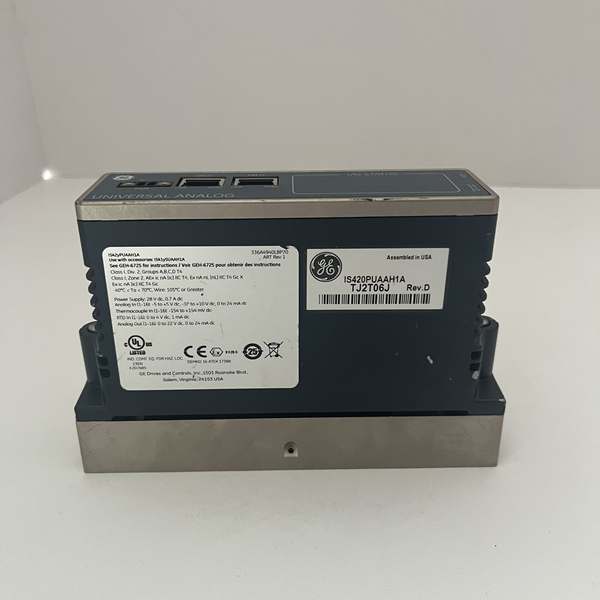
GE IS420PUAAH1A
Field Service Pitfalls: What Rookies Get Wrong
Channel Configuration MismatchRookies assign wrong signal types (e.g., RTD to TC terminals). Causes open-loop errors and frozen process values.
- Field Rule: Verify channel type in ToolboxST before field wiring; label terminals clearly.
Ground Loop Isolation FailureConnecting field shields to both cabinet and field grounds creates circulating currents. Corrupts low-level signals (TC/mV).
- Quick Fix: Terminate shield only at the I/O pack; float field-side ground.
Overloading Current Output ChannelsDriving high-resistance loads (over 750Ω) causes voltage drop and output inaccuracy. Leads to underperforming control valves.
- Field Rule: Keep 4–20mA loop resistance ≤ 500Ω; use external signal boosters for long runs.
Commercial Availability & Pricing Note
Please note: The listed price is for reference only and is not binding. Final pricing and terms are subject to negotiation based on current market conditions and availability.