Description
Product Introduction
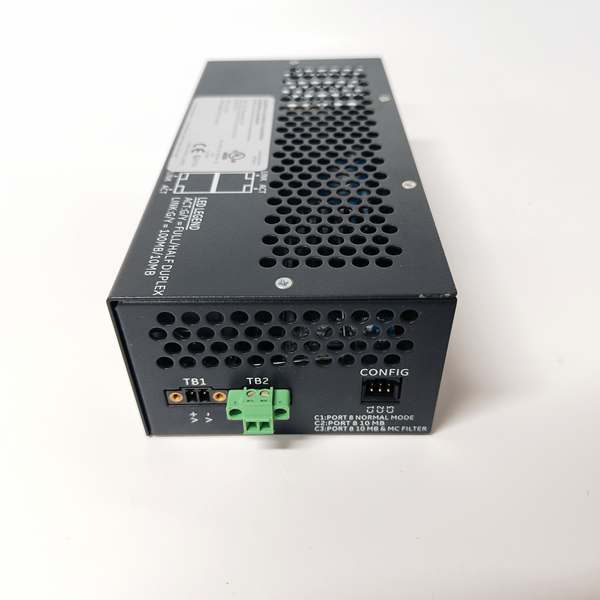
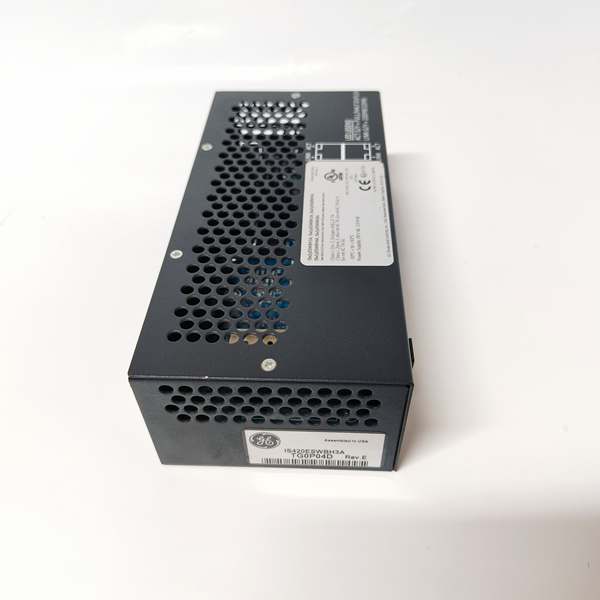
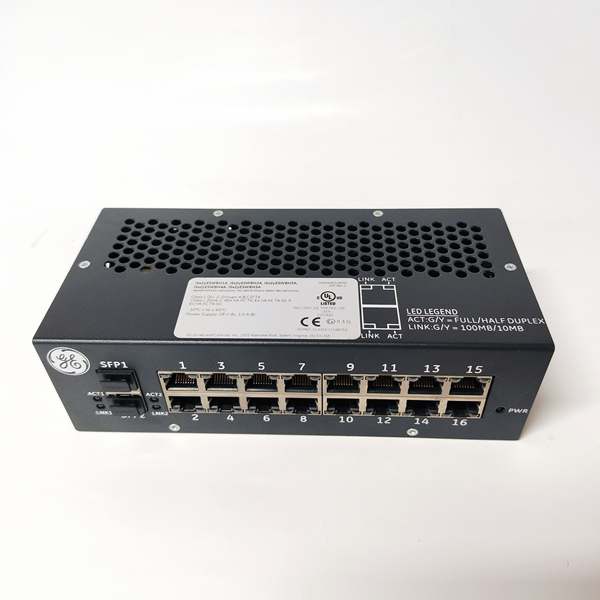
The GE is a 16-port unmanaged Ethernet switch designed specifically for the Mark VIe turbine control architecture, handling high-density I/O communication without the latency of managed protocols. It mounts via DIN rail or panel screws, pushing packets via hardware-based forwarding with sub-millisecond latency across the backplane.
This “H3A” variant skips fiber ports entirely, focusing on 16 copper RJ45 connections for local rack consolidation. It draws roughly 8 W typical, shedding heat passively through the aluminum housing—no fans to fail in dusty turbine compartments. The ASIC handles IONet multicasting natively, keeping controller synchronization within 100 µs .
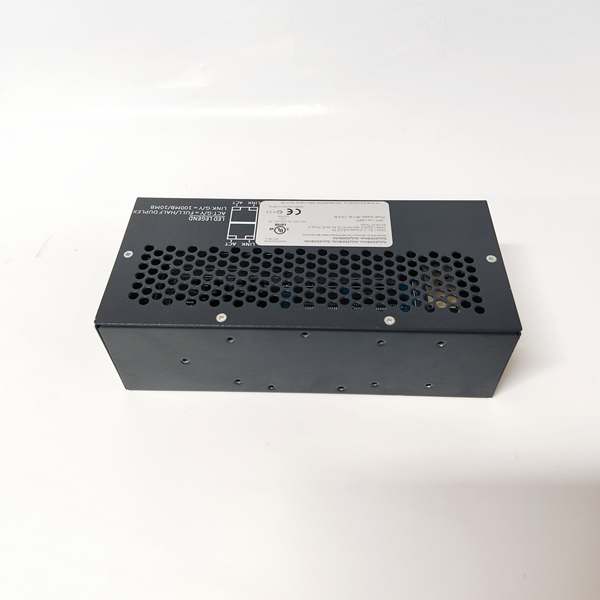
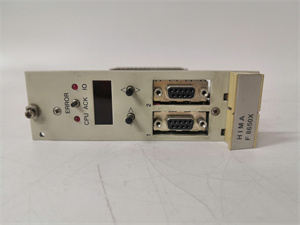
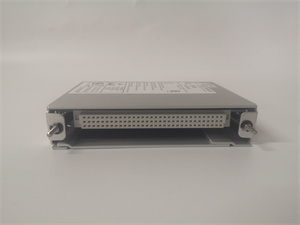
GE IS420ESWBH3A
Key Technical Specifications
- Port Count: 16 x 10/100Base-TX RJ45 (Auto-MDIX)
- Fiber Ports: None (Copper-only variant)
- Power Input: 24 Vdc / 28 Vdc (Dual Redundant, Diode-OR’d)
- Current Draw: ~0.33 A @ 24 Vdc (8 W Typical)
- Buffer Size: 256 KB Minimum
- MAC Table: 4K Entries
- Isolation: 1500 Vrms (Port-to-Backplane)
- Temp Range: -40 °C to +70 °C
- Mounting: DIN Rail (BVP1/BVP4 Clips) or Panel Mount
- Cooling: Convection (Fanless)
- Coating: G3 Conformal Coating (Corrosion Resistant)
Quality Control Process (Engineer’s Perspective)
- Incoming Verification: Match the serial sticker to the GE silkscreen. Inspect the 16 RJ45 ports for bent pins—common after rough shipping. Check the heatsink fins for caked oil mist from prior turbine duty.
- Live Functional Test: Power up via redundant 24 Vdc taps. Flood ports 1-16 with 64-byte frames for 24 hrs. We monitor LED blink rates; packet loss must stay at zero to maintain IONet determinism.
- Electrical Parameter Test: Back-probe the TB1/TB2 terminals with a Fluke 115. Megger the port shields to chassis at 500 V; isolation must hold >10 MΩ to survive switchyard transients.
- Firmware Verification: Check the hardware revision via ToolboxST. Photograph the DIP switch bank (port mirroring/storm control)—well, technically most config is soft, but HW rev dictates buffer memory.
- Final QC & Packaging: Verify clip tension on the BVP1 rails. Bag in anti-static foam. Label “QC Passed – 24hr Flood Test” with the date.
Replacement Pitfall Guide
❗ Redundant Wiring: Both power terminals (TB1/TB2) must feed from isolated sources. Landing both on the same 24 Vdc PSU negates the diode-OR redundancy—lose that one supply and the rack goes dark.
❗ Port Mirroring Default: Factory config often mirrors Port 1 to Port 16. Plugging an HMI or laptop into Port 16 without disabling mirroring floods the link with duplicate traffic, tripping IONet watchdog timers.
❗ Mounting Clips: Perpendicular DIN rail mounts require BVP4 clips. Using standard BVP1 clips sideways creates resonance; vibration cracks solder joints on the RJ45 magnetics within 6 months.
❗ Unused Port Noise: Leaving all 16 ports active invites broadcast storms from faulty field devices. Disable unused ports via DIP or ToolboxST to keep latency deterministic during peak turbine load.
❗ ESD to PHY: The RJ45 transformers are sensitive. Discharge to the cabinet frame before patching cables—though your mileage may vary in high-static turbine halls.
Keep these in mind and you’ll cut 90% of rework time.
GE IS420ESWBH3A
Compatibility Matrix & Benchmarks
- GE → GE IS420ESWBH1A : Direct — H1A is 8-port; H3A adds density without config changes
- GE → GE IS420ESWAH3A : Needs Adaptation — “A” series usually 8-port; verify port count requirements
- GE → Commercial Unmanaged Switch : Incompatible — Lacks IONet timing tolerance and 28 Vdc input range
- Forwarding Latency: < 1 ms (Hardware Cut-Through)
- Sync Jitter: < 100 µs (IONet Multicast)
- Throughput: 10/100 Mbps Wire-Speed (Per Port)