Description
Product Introduction
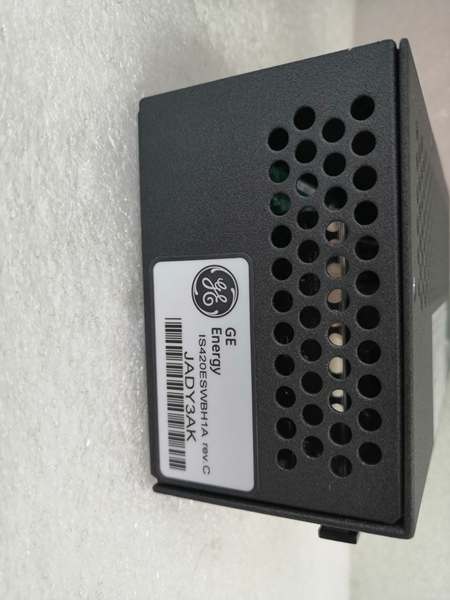
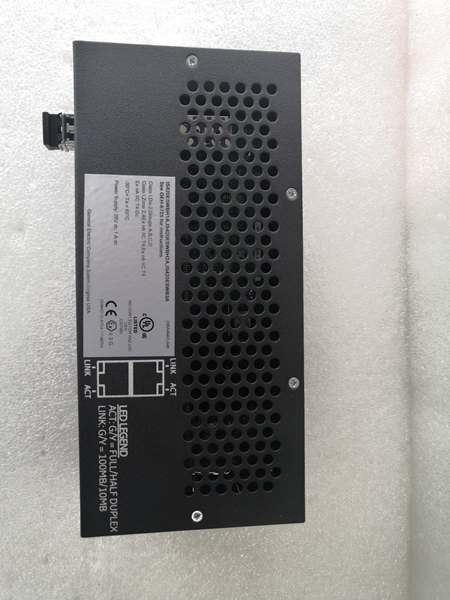
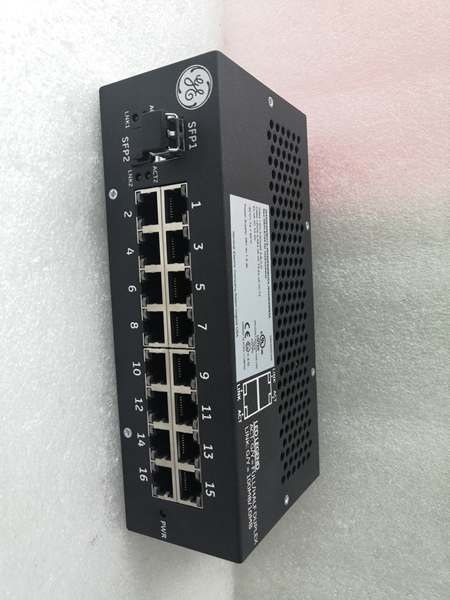
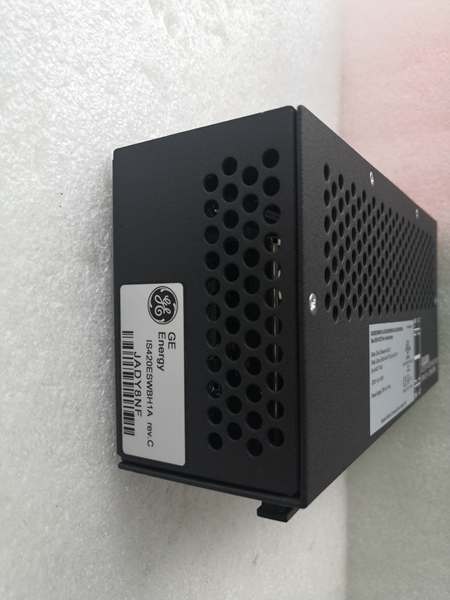
The GE is an unmanaged Ethernet switch built for the Mark VIe turbine control architecture, providing 16 copper ports for local I/O packs and a single multimode fiber port for upstream links. It handles IONet deterministic traffic at wire speed, ensuring controller synchronization stays within 100 µs jitter.
This “H1A” variant includes the LC-style fiber uplink, differentiating it from the H3A (copper-only) model. The unit is fanless, relying on aluminum convection cooling to survive -40 to 70 °C ambient temps in turbine compartments. Store-and-forward switching handles 256 KB of buffer per the hardware design .
GE IS420ESWBH1A
Key Technical Specifications
- Copper Ports: 16 x 10/100Base-TX (RJ45, Auto-MDIX)
- Fiber Ports: 1 x 100Base-FX Multimode (LC Connector, verify reach with OEM datasheet)
- Power Input: 24 Vdc / 28 Vdc (Redundant, Diode-OR’d)
- Current Draw: ~0.65 A @ 24 Vdc (15 W Typical)
- Buffer Size: 256 KB (Minimum)
- MAC Table: 4K Entries
- Isolation: 1500 Vrms (Port-to-Chassis)
- Temp Range: -40 °C to +70 °C
- Mounting: DIN Rail (BVP1/BVP4 Clip) or Panel Mount
- Cooling: Convection (Fanless Aluminum Housing)
- Coating: G3 Conformal Coating (Corrosion Resistant)
Quality Control Process (Engineer’s Perspective)
- Incoming Verification: Match the serial sticker to the GE silkscreen. Inspect the 16 RJ45 ports for bent pins—shipping impacts love to tweak port 1. Check the LC fiber cage for dust caps.
- Live Functional Test: Power up on redundant 24 Vdc feeds. Flood ports 1-16 with 64-byte frames for 24 hrs. We monitor the fiber link LED; packet loss must be zero to keep IONet deterministic under load.
- Electrical Parameter Test: Back-probe TB1/TB2 with a Fluke 115. Megger the port shields to chassis at 500 V; resistance >10 MΩ prevents ground loop noise from tripping the turbine protection.
- Firmware Verification: Check the hardware revision via ToolboxST. Photograph the DIP bank (Port Mirroring/Storm Control)—well, technically most config is soft, but HW rev dictates buffer behavior.
- Final QC & Packaging: Verify BVP1 clip tension. Bag in anti-static foam with desiccant. Label “QC Passed – 24hr Flood Test” with the date.
Replacement Pitfall Guide
❗ Fiber vs Copper: The GE has one LC fiber port. Swapping a copper-only H3A into a fiber-run slot leaves you with no uplink—check the port count before racking.
❗ Redundant Power Phasing: Both TB1 and TB2 expect 24/28 Vdc. Landing both on the same PSU string defeats the diode-OR redundancy; use separate battery feeds to survive a single string failure.
❗ Port 16 Mirror: Factory default often mirrors Port 1 to 16. Plugging a laptop or HMI there without disabling mirroring in ToolboxST floods the IONet with duplicates, causing “Sync Lost” alarms.
❗ DIN Clip Selection: Vertical mount needs the BVP4 clip (259B2451). Using the standard BVP1 horizontally in a vertical slot vibrates the micro-USB header loose within a month.
❗ ESD to PHY: RJ45 magnetics are sensitive. Discharge to the DIN rail before patching—though your mileage may vary in high-static turbine bays.
Keep these in mind and you’ll cut 90% of rework time.
GE IS420ESWBH1A
Compatibility Matrix & Benchmarks
- GE → GE IS420ESWBH3A : Needs Adaptation — H3A is copper-only; requires fiber media converter if replacing H1A.
- GE → GE IS420ESWAH1A : Needs Adaptation — ESWB is 16-port; ESWA is 8-port; requires patch panel rewire.
- GE → Mark VIe I/O Packs (IS220/IS210) : Direct — Native IONet communication partner.
- Forwarding Latency: < 1 ms (Store-and-Forward)
- Sync Jitter: < 100 µs (IONet Multicast, typical)
- Throughput: 10/100 Mbps Wire-Speed (Per Port)