Description
Key Technical Specifications
-
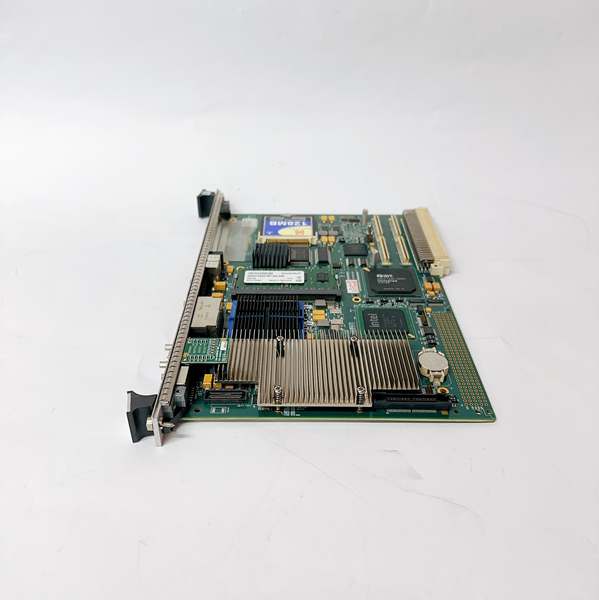
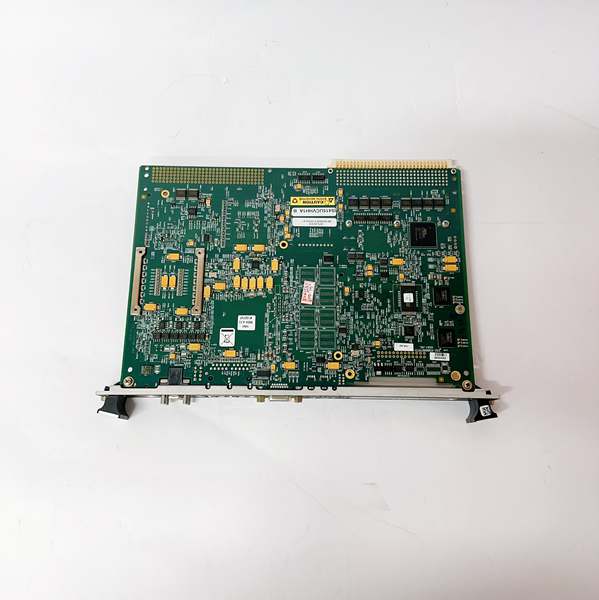
Model Number: IS415UCVHH1A
-
Manufacturer: General Electric (GE)
-
Form Factor: 6U VME (3.4 × 6.37 in, 0.91 kg)
-
Processor: Intel EP80579 1.06 GHz (single-core)
-
Memory: 128 MB DDR2 ECC RAM, 128 MB NAND Flash
-
OS: QNX Neutrino RTOS
-
Power: 24 VDC (18-36 V), 15 W typical
-
Comms: 2 × 10/100 Ethernet, 2 × RS-232C, 1 × VGA, 2 × USB, PS/2 KB/mouse
-
I/O Link: VME64 bus to Mark VIe I/O packs (supports TMR, dual, or simplex)
-
Isolation: 1.5 kV channel-to-ground
-
Temperature: –20 °C…+60 °C operational
-
Protection: IP20 (front), fan-less heat-sink plate

GE IS415UCVHH1A
Field Application & Problem Solved
Gas turbines need a controller that can close the speed loop, run protection logic, and talk to the plant DCS without choking on vibration or heat. Slide the IS415UCVHH1A into the Mark VIe VME rack and you get a 1 ms scan rate on a 1.06 GHz core while the QNX RTOS keeps jitter under 50 µs. I’ve used these on 50 MW peakers in west Texas—one board per protection segment, triple-redundant IONet to the I/O packs, and if a CPU fails the voter masks it without dropping load. Core value: it replaces the old Mark V CPU + comm card + power supply with one 24 V slate that boots in 3 s and gives you SIL 3 without extra safety relays.
Gas turbines need a controller that can close the speed loop, run protection logic, and talk to the plant DCS without choking on vibration or heat. Slide the IS415UCVHH1A into the Mark VIe VME rack and you get a 1 ms scan rate on a 1.06 GHz core while the QNX RTOS keeps jitter under 50 µs. I’ve used these on 50 MW peakers in west Texas—one board per protection segment, triple-redundant IONet to the I/O packs, and if a CPU fails the voter masks it without dropping load. Core value: it replaces the old Mark V CPU + comm card + power supply with one 24 V slate that boots in 3 s and gives you SIL 3 without extra safety relays.
Installation & Maintenance Pitfalls (Expert Tips)
VME back-plane keying – The board is keyed for 3.3 V; if you force it into a 5 V slot you’ll blow the local regulator. Check key codes before insertion—smoke follows mistakes.
24 V ripple from battery chargers – Old chargers float at 29 V with 3 Vpp ripple; the board browns-out at 16 V and cold-starts every equalize cycle. Add a 4700 µF / 50 V cap across the supply studs.
Flash wear-out – QNX logs to NAND by default. After 5 years the 128 MB flash hits 100 k cycles and you can’t write new firmware. Disable cyclic logs or redirect to an external USB stick.
Heat-sink orientation – Fins are vertical; mount the panel flat and you block convection. In 55 °C ambient the die hits 95 °C and throttles to 800 MHz. Keep 100 mm clearance above the heat-sink or you’ll chase “slow scan” faults.
VME back-plane keying – The board is keyed for 3.3 V; if you force it into a 5 V slot you’ll blow the local regulator. Check key codes before insertion—smoke follows mistakes.
24 V ripple from battery chargers – Old chargers float at 29 V with 3 Vpp ripple; the board browns-out at 16 V and cold-starts every equalize cycle. Add a 4700 µF / 50 V cap across the supply studs.
Flash wear-out – QNX logs to NAND by default. After 5 years the 128 MB flash hits 100 k cycles and you can’t write new firmware. Disable cyclic logs or redirect to an external USB stick.
Heat-sink orientation – Fins are vertical; mount the panel flat and you block convection. In 55 °C ambient the die hits 95 °C and throttles to 800 MHz. Keep 100 mm clearance above the heat-sink or you’ll chase “slow scan” faults.
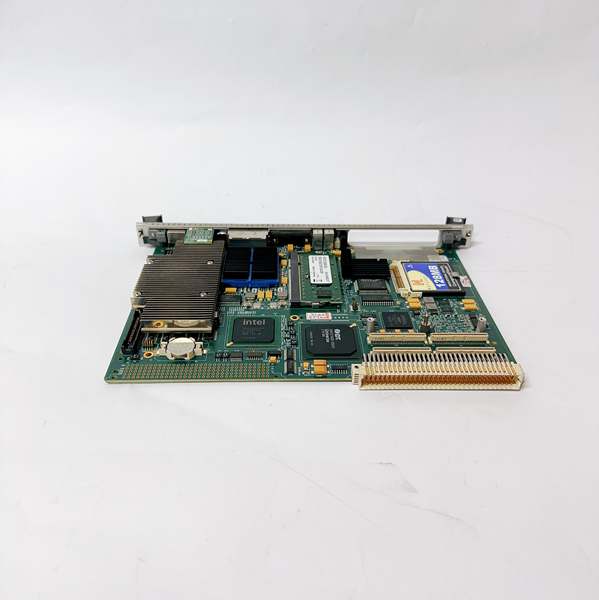
GE IS415UCVHH1A
Technical Deep Dive & Overview
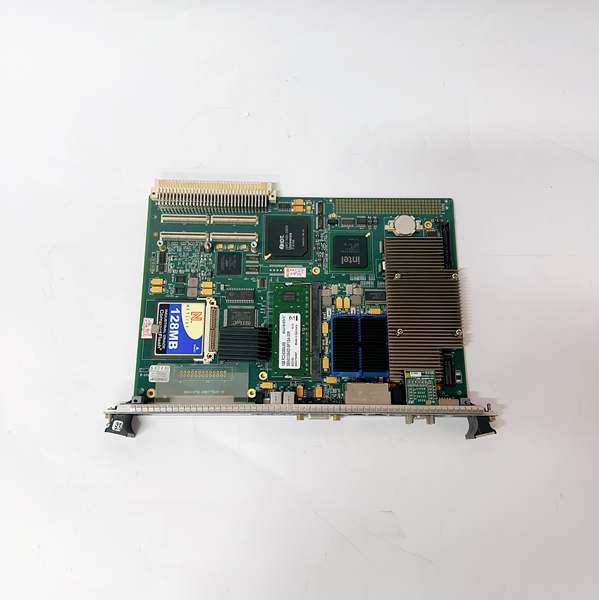
The IS415UCVHH1A is a 6U VME single-board computer built around an Intel EP80579 SoC. The CPU hosts the control algorithm while an on-board FPGA manages the VME64 slave interface and time-stamps IONet packets to ±25 µs. Dual Ethernet ports run IEEE 1588 over UDP; the FPGA also drives the RS-232 ports and USB host controller. No rotating media—QNX image is stored in 128 MB SLC NAND with ECC, giving typical 10-year retention at 40 °C. All power rails derive from the single 24 V input via synchronous bucks; if supply falls below 16 V the brown-out detector halts the CPU and asserts “SysFail” on the VME bus so downstream I/O can fail-safe.
The IS415UCVHH1A is a 6U VME single-board computer built around an Intel EP80579 SoC. The CPU hosts the control algorithm while an on-board FPGA manages the VME64 slave interface and time-stamps IONet packets to ±25 µs. Dual Ethernet ports run IEEE 1588 over UDP; the FPGA also drives the RS-232 ports and USB host controller. No rotating media—QNX image is stored in 128 MB SLC NAND with ECC, giving typical 10-year retention at 40 °C. All power rails derive from the single 24 V input via synchronous bucks; if supply falls below 16 V the brown-out detector halts the CPU and asserts “SysFail” on the VME bus so downstream I/O can fail-safe.