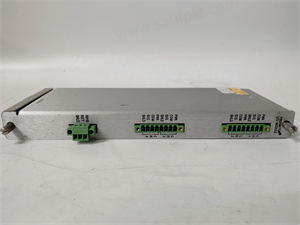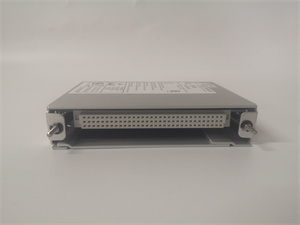
Description
Hard-Numbers: Technical Specifications
- Signal Type: Analog (voltage/current/RTD/thermocouple)
- Channel Count: 32× TMR analog input channels
- Isolation Rating: 2500 VDC channel-to-backplane
- Input Ranges: 4–20mA, 0–5V, 0–10V, RTD 100Ω, Type J/K/T thermocouple
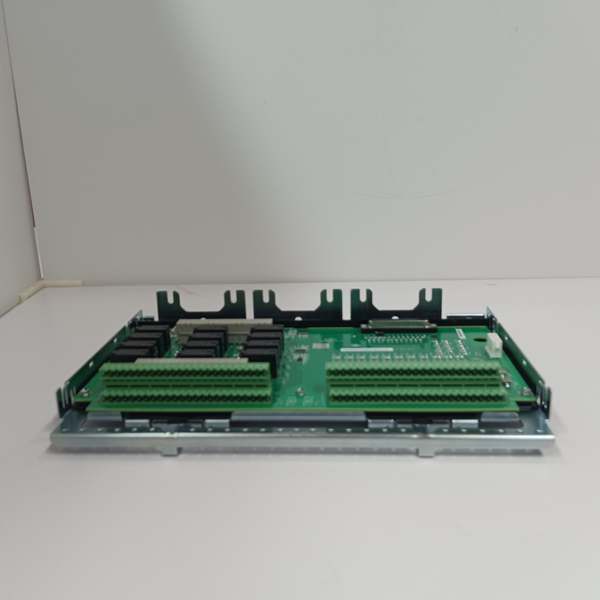
- Termination: Screw terminal, 14–22 AWG wire compatible
- Operating Temperature: -30°C to +65°C
- Power Draw: Passive (no on-board power)
- Backplane Interface: 2× high-density PCB connectors
- Dimensions: 178 × 144 × 25 mm
- Weight: 0.45 kg
- Certifications: UL, CE, Class I Div 2, ATEX
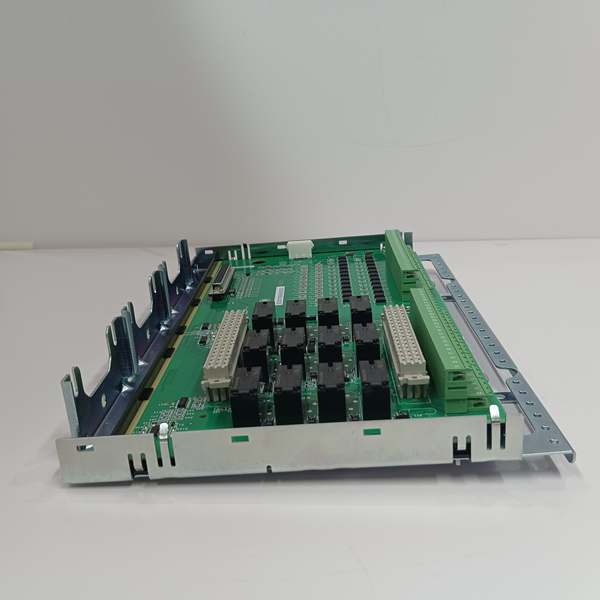
The Real-World Problem It Solves
Turbine control systems rely on unconditioned analog sensor wiring that introduces noise and ground loops. Single-channel failures risk bad control readings and turbine trips. provides TMR termination, signal filtering, and surge protection to stabilize analog inputs.
Where you’ll typically find it:
- Mark VIe gas/steam turbine control cabinets
- Power plant analog sensor I/O termination panels
- Offshore drilling turbine control rooms
Bottom line: Eliminates analog signal noise and supports TMR voting for reliable turbine control.
Hardware Architecture & Under-the-Hood Logic
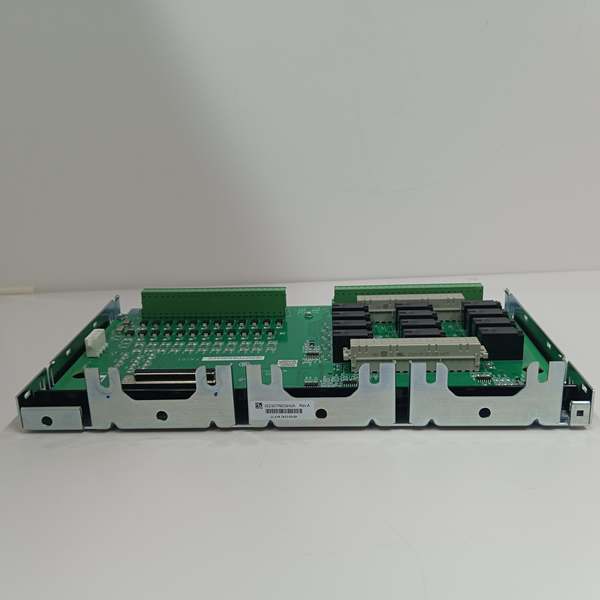
is a passive terminal board with no microprocessor. It interfaces directly with Mark VIe PCAA core analog modules via backplane connectors.
- Field analog sensors (RTD, TC, 4–20mA) wire to screw terminals.
- On-board RC filters suppress EMI and high-frequency noise.
- Surge diodes protect against voltage transients and ESD events.
- Triple channels route R/S/T signals to three independent analog modules.
- Backplane connectors pass conditioned signals to Mark VIe controller cores.
- LED indicators show channel power and fault status for quick visual checks.
Field Service Pitfalls: What Rookies Get Wrong
Improper Shield GroundingTechs ground shields at both ends, creating ground loops and noisy analog readings.
- Field Rule: Ground shield only at the terminal board end; leave field end floating.
Mismatched Wire GaugeUsing undersized wire (24 AWG+) on long runs causes voltage drop and inaccurate readings.
- Quick Fix: Use 18–22 AWG shielded cable for analog runs >50ft.
Crossing Analog/High-Voltage WiresRouting analog cables next to 480V AC power lines induces heavy interference.
- Field Rule: Maintain ≥6in separation; use grounded metal trunking for analog bundles.
Skipping TMR Channel LabelingUnlabeled R/S/T channels lead to miswiring and voting faults.
- Quick Fix: Label each terminal with R/S/T designation; verify with multimeter before power-up.
Commercial Availability & Pricing Note
Please note: The listed price is for reference only and is not binding. Final pricing and terms are subject to negotiation based on current market conditions and availability.