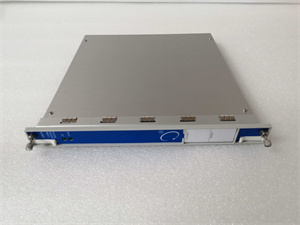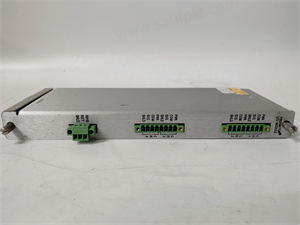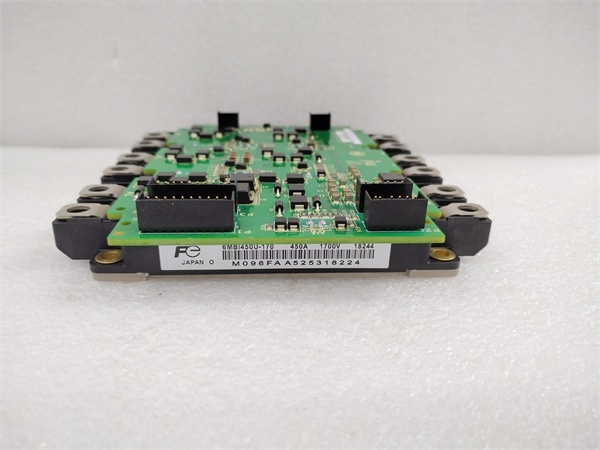
Description
Hard-Numbers: Technical Specifications
- Input Voltage: Triple redundant 28 VDC (R, S, T sources)
- Output Channels: 12× fused 28VDC (4/R, 4/S, 4/T); 3× unfused auxiliary outputs
- Per-Channel Rating: 2A max per fused output
- Isolation Rating: 2500 VDC field-to-backplane
- Operating Temperature: -30°C to +65°C
- Power Draw: Passive, <3W total for logic
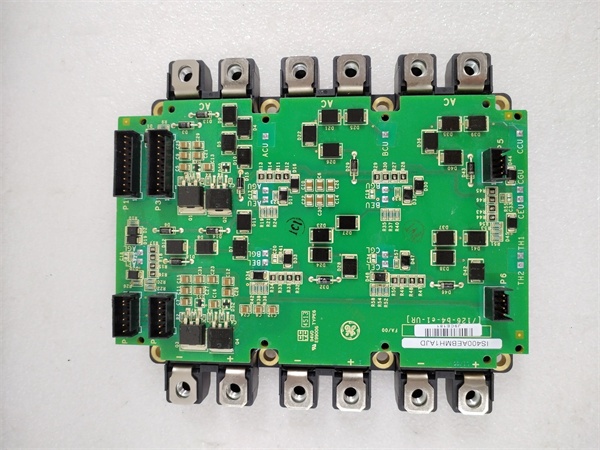
- Form Factor: IS400 series standard
- Mounting: Backplane / DIN-rail compatible
- Certifications: UL, CE, Class I Div 2, RoHS
- Protection: On-board PTC resettable fuses
The Real-World Problem It Solves
Dense I/O racks in turbine controls suffer unprotected 28V power runs. Single-channel shorts take down entire I/O banks; redundant feeds are missing. centralizes distribution with R/S/T redundancy and per-channel PTC protection, containing faults locally.
Where you’ll typically find it:
- Mark VIe gas/steam turbine control I/O cabinets
- Power plant DCS distributed I/O nodes
- Offshore platform remote I/O panels
Bottom line: Eliminates cascading power faults and ensures uninterrupted power to critical turbine control components.
Hardware Architecture & Under-the-Hood Logic
is a passive distribution module with no on-board microprocessor. It routes triple-redundant 28VDC inputs to segmented outputs via PTC fuses, supporting TMR (Triple Modular Redundancy) architectures.
- R, S, T 28VDC inputs feed three isolated power buses through dedicated terminals.
- Each bus splits to 4 fused outputs for I/O packs; auxiliary taps provide unregulated 28VDC.
- PTC fuses auto-reset after fault clearance, minimizing downtime.
- Front LEDs indicate power presence per bus for quick visual diagnosis.
- Backplane connector integrates with Mark VIe I/O chassis for seamless installation.
Field Service Pitfalls: What Rookies Get Wrong
Ignoring R/S/T Bus SegregationTechs cross-connect R-output to S-input devices, causing ground loops and phantom faults.
- Field Rule: Label all cables; strictly segregate R/S/T power paths to avoid cross-talk.
Overloading Single Bus SegmentLoading 6+ I/O packs on one segment causes voltage drop and PTC nuisance trips.
- Quick Fix: Balance loads evenly (≤4 per segment); avoid mixing high-current and low-current loads on the same bus.
Poor Cable Routing & EMIRunning power cables near high-current AC lines induces noise, triggering false faults.
- Field Rule: Separate 28VDC power cables from AC lines by ≥6 inches; use shielded cable for sensitive signals.
Skipping Input FusingOmitting main input fuses risks board trace burnout during feeder short circuits.
- Quick Fix: Install 10A fast-blow fuses on each R/S/T input feed to provide primary protection.
Commercial Availability & Pricing Note
Please note: The listed price is for reference only and is not binding. Final pricing and terms are subject to negotiation based on current market conditions and availability.