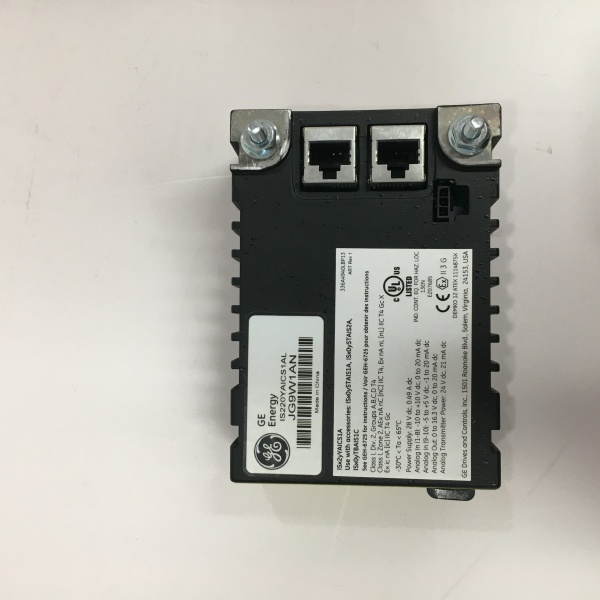
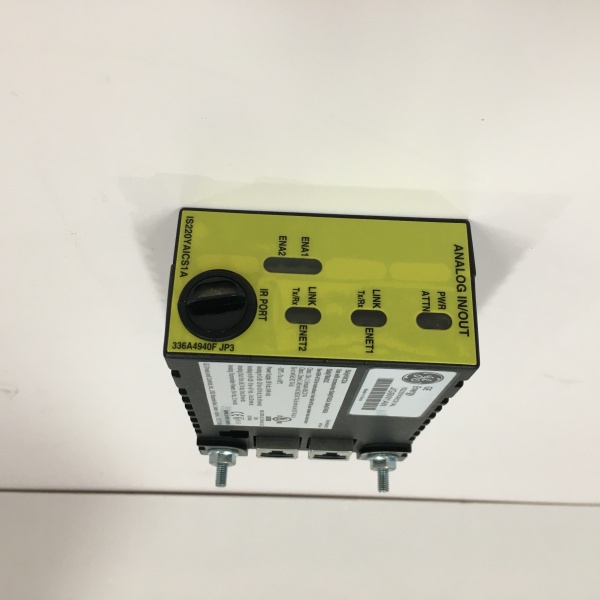
Description
Hard-Numbers: Technical Specifications
- Protocol Support: Redundant IONet 10/100Mbps Ethernet (RJ45)
- Output Channels: 12 Form C relay outputs
- Contact Rating: 2A @ 30VDC / 1A @ 120VAC
- Isolation Rating: 2500 VAC RMS field-to-backplane
- Power Draw: 9 W max @ 28 VDC
- Operating Temperature: -30°C to +65°C
- Response Time: ~6 ms (command to output)
- Safety Rating: IEC 61508 SIL 3 capable
- Certifications: UL, CE, ATEX Zone 2, Class I Div 2
- Terminal Board Compatibility: TRLYS1B, TRLYS1D, TRLYS1F
- Dimensions: 138 x 86 x 56 mm
- Weight: 0.36 kg (0.8 lbs)
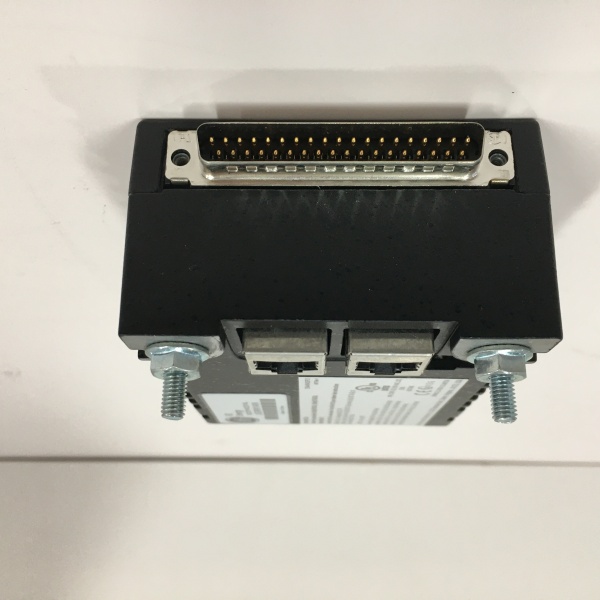
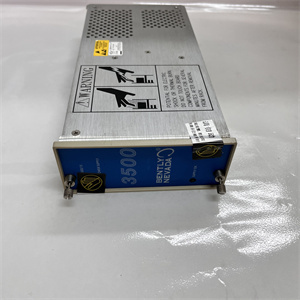
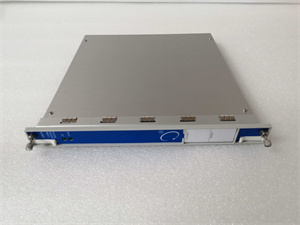
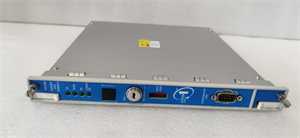
GE IS220YAICS1A
The Real-World Problem It Solves
Safety systems fail when output modules cannot reliably trip critical components. Unverified outputs or stuck relays lead to unplanned outages and safety risks. provides SIL-rated outputs with built-in feedback to ensure command execution in critical turbine safety loops.Where you’ll typically find it:
- Turbine emergency shutdown (ESD) solenoid control
- Safety valve actuation and trip relay circuits
- Burner management and fuel shutoff valve controlBottom line: delivers verifiable, fault-tolerant output control for SIL 3 safety functions.
Hardware Architecture & Under-the-Hood Logic
uses a dedicated safety processor with dual signal paths. Each relay has independent drive and continuous status feedback loops.
- Controller sends output command over redundant IONet.
- On-board SIL processor validates command integrity.
- Dual drive circuits energize selected relay coil.
- Contact state and coil current feed back to diagnostics.
- Processor cross-verifies command vs. actual output state.
- Faults trigger immediate alarm and fault code generation.
- 12 front-panel LEDs indicate active output status (yellow).
Field Service Pitfalls: What Rookies Get Wrong
Overloading Relay ContactsRookies exceed 2A DC/1A AC ratings. Causes contact welding and stuck outputs, bypassing safety functions.
- Field Rule: Derate to 50% for inductive loads; use interposing relays for high-current devices.Shared Return WiringRunning multiple output returns in a single conductor induces cross-talk. Causes false triggering and unreliable state detection.
- Quick Fix: Use dedicated twisted-pair wiring per output; isolate returns at the terminal block.Skipping Feedback VerificationIgnoring coil/contact status feedback. Leads to undetected open coils or broken wiring in safety loops.
- Field Rule: Enable all diagnostic alarms; verify feedback matches commanded state during commissioning.
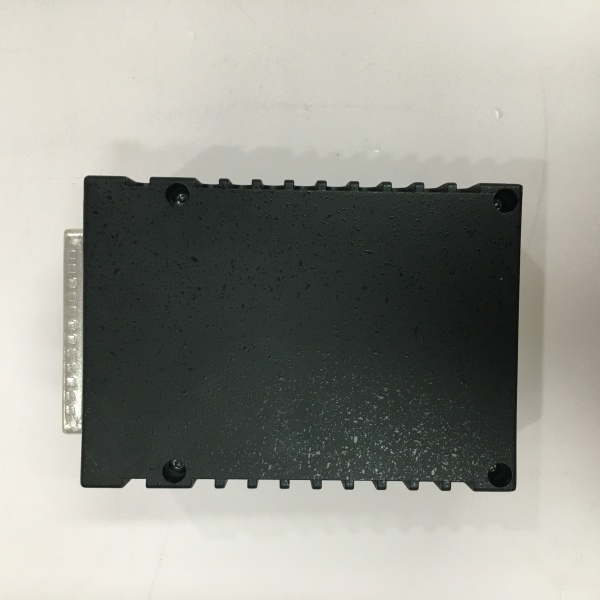
Commercial Availability & Pricing Note
Please note: The listed price is for reference only and is not binding. Final pricing and terms are subject to negotiation based on current market conditions and availability.