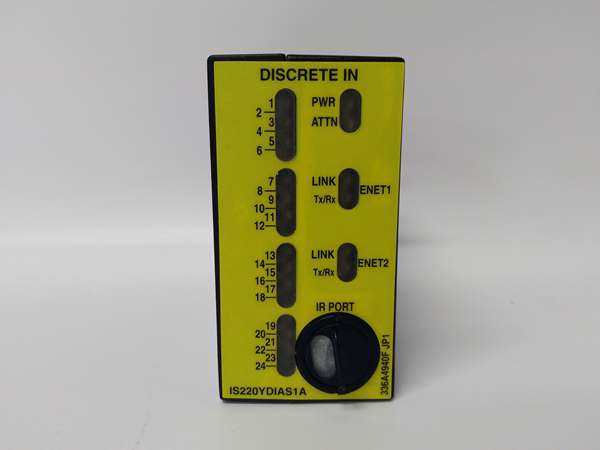
Description
Hard-Numbers: Technical Specifications
- Protocol Support: Redundant IONet 10/100Mbps Ethernet
- Input Channels: 32 dry contact inputs (source/sink configurable)
- Input Voltage: 18–32 VDC (nominal 28 VDC)
- Isolation Rating: 2500 VAC RMS field-to-backplane
- Power Draw: 8.5 W max @ 24 VDC
- Operating Temperature: -35°C to +65°C
- Safety Rating: IEC 61508 SIL 3 capable
- Hazardous Location: Class I Div 2, Zone 2
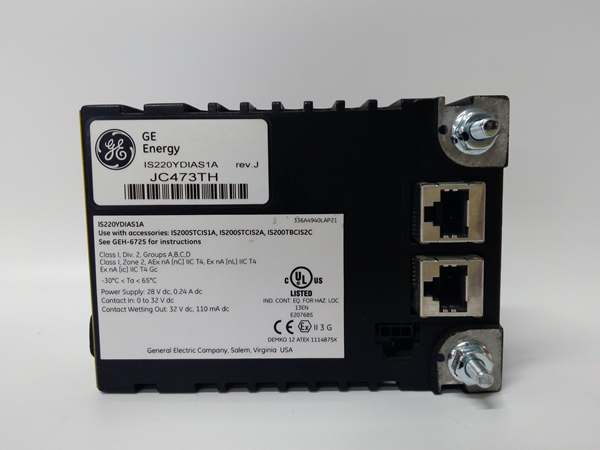
- Terminal Board Compatibility: IS200STCIS1A/2A, IS400TBCIS2C
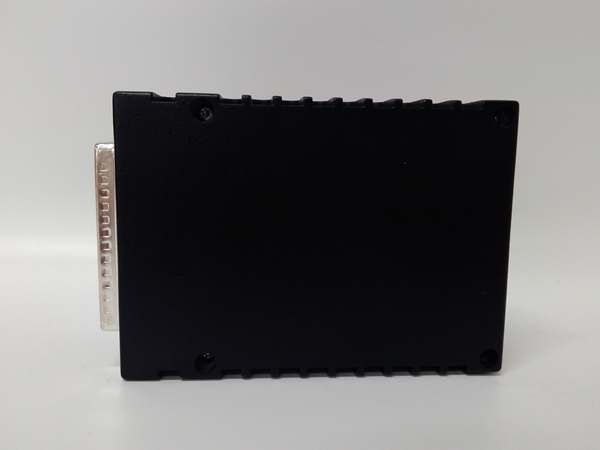
- Dimensions: 138 x 86 x 56 mm
- Weight: 0.9 kg (2 lbs)
- Certifications: UL, CE, ATEX
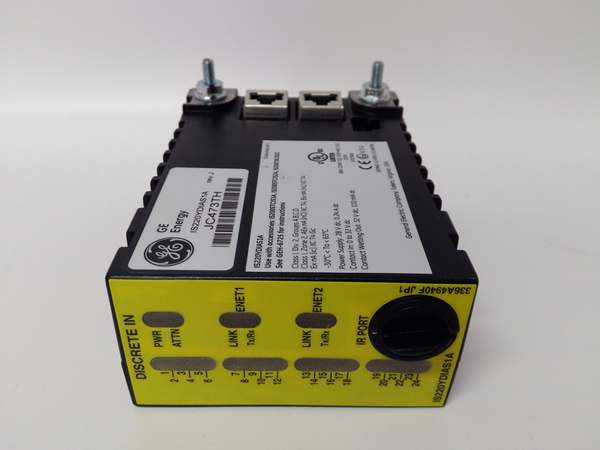
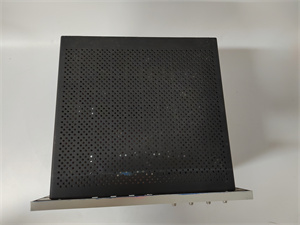
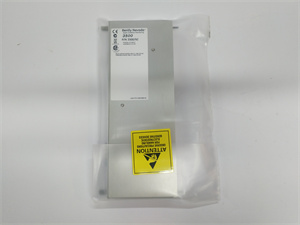
GE IS220YDIAS1A
The Real-World Problem It Solves
Safety systems fail when noise or ground loops corrupt discrete input signals. False trips or missed interlocks cause costly unplanned outages. delivers SIL-rated isolation to eliminate signal errors in safety-critical turbine control.
Where you’ll typically find it:
- Turbine overspeed and emergency shutdown (ESD) interlocks
- Fire & gas detection system input monitoring
- Safety valve position and limit switch feedback
Bottom line: ensures reliable, fault-tolerant discrete signal acquisition for SIL 3 safety loops.
Hardware Architecture & Under-the-Hood Logic
integrates a dedicated safety processor with redundant signal paths. All channels use isolated optocouplers and redundant ADCs for cross-verification.
- Field contacts wire to STCIS terminal blocks.
- Signals pass through dual 2500V isolation barriers.
- On-board SIL 3 processor scans inputs at 0.5ms intervals.
- Dual-channel cross-comparison validates all input states.
- Faults trigger immediate diagnostics and controller alerts.
- Data transmits over redundant IONet to safety controller.
- Self-tests verify isolation, power, and logic integrity continuously.
Field Service Pitfalls: What Rookies Get Wrong
SIL Loop Grounding MisconfigurationRookies ground safety inputs at both ends. Creates ground loops that invalidate SIL ratings and induce noise.
- Field Rule: Use single-point grounding at the terminal block; field end must remain ungrounded.
Non-Shielded Cable in Safety RunsRunning safety wiring alongside 480V power cables induces EMI. Causes intermittent false trips in critical interlocks.
- Quick Fix: Use double-shielded cable; ground only one end; maintain 30cm separation from power conductors.
Improper Wetting Current SelectionUsing low-wetting sources on old, oxidized contacts. Results in stuck-open states and missed safety conditions.
- Field Rule: Set minimum 8mA wetting current per channel; clean or replace high-resistance contacts.
Commercial Availability & Pricing Note
Please note: The listed price is for reference only and is not binding. Final pricing and terms are subject to negotiation based on current market conditions and availability.