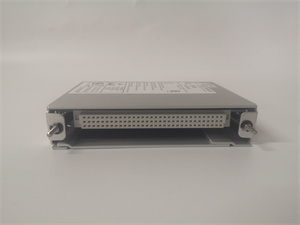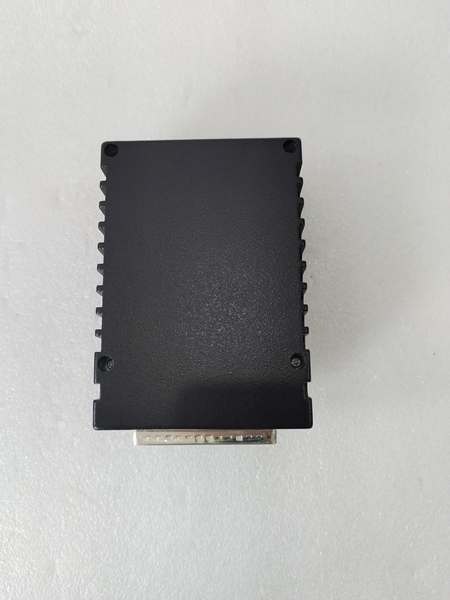
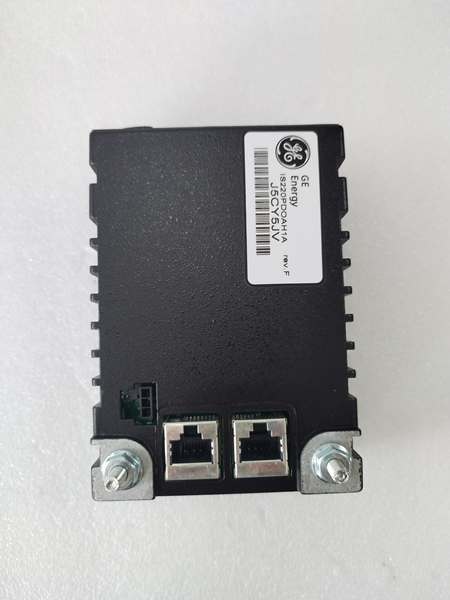
Description
Hard-Numbers: Technical Specifications
- Protocol Support: Redundant IONet 10/100Mbps Ethernet
- Port Count: 2× RJ45, 1× DC-37 field connector
- Input Channels: 13 total (8 vibration, 4 proximity, 1 keyphasor)
- Sensor Support: Proximitors, accelerometers (ch1-3), Velomitors
- Isolation Rating: 2500 VAC RMS field-to-backplane
- Probe Power: -24 VDC, 12 mA per channel
- Power Requirements: 18–36 VDC, 4W max draw
- Operating Temperature: -30°C to +65°C
- Common-Mode Voltage: 5 VDC min
- Frame Rates: 3.125, 6.25, 12.5, 25, 50, 100 Hz
- Hazardous Rating: Class I Div 2, Zone 2
- Weight: 0.80 kg
- Dimensions: 158.75 × 107.95 × 30 mm
- Firmware: Auto-reconfigurable from controller
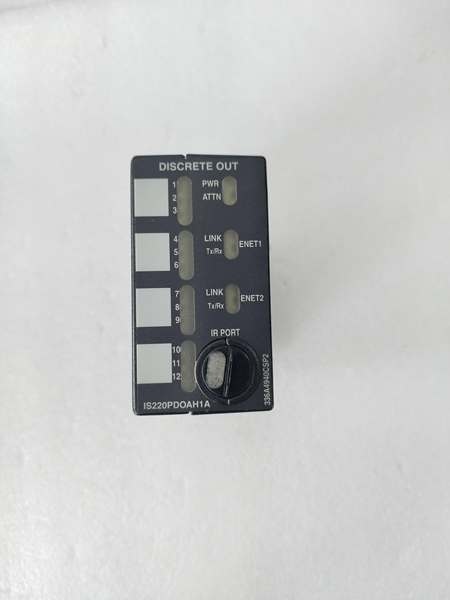
IS220PDOAH1A
The Real-World Problem It Solves
Generic I/O modules lack the signal conditioning and isolation needed for low-level vibration signals. They introduce noise and drift, leading to inaccurate machinery health data. provides dedicated, isolated signal paths for vibration and proximity probes, ensuring stable readings in high-electrical-noise environments.
Where you’ll typically find it:
- Gas turbine shaft radial/bearing vibration monitoring
- Steam turbine axial position and thrust protection
- Compressor train critical speed and vibration analysis
Bottom line: delivers reliable, high-fidelity vibration data to meet API 670 and ISO 10816 machinery protection standards.
Hardware Architecture & Under-the-Hood Logic
is a self-contained processor module with isolated front-end signal conditioning. It processes raw sensor data independently before sending values to the main controller.
- Vibration/proximity signals enter 13 differential input channels.
- On-board DAC performs bias adjustment to center signals in the A/D range.
- Dedicated processor digitizes and filters raw waveforms.
- Calculates gap voltage, vibration amplitude, and phase relative to keyphasor.
- Dual Ethernet ports transmit processed data to the Mark VIe controller.
- Built-in diagnostics verify channel health and probe integrity.
- Configuration parameters auto-load from the controller on power-up.
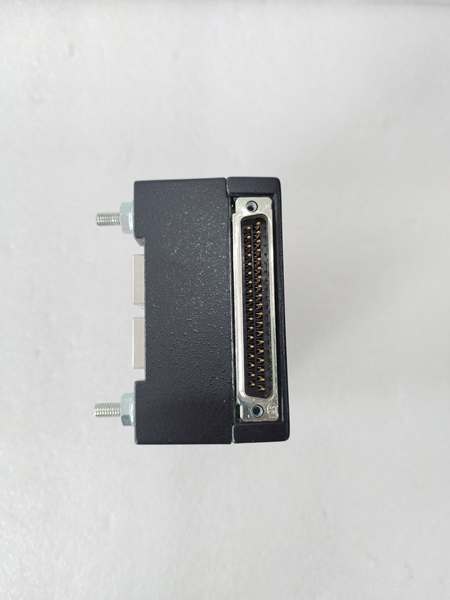
IS220PDOAH1A
Field Service Pitfalls: What Rookies Get Wrong
Probe Power Polarity ReversedSwapping ±24VDC probe power wires damages internal signal conditioning circuits. Results in dead channels and blown fuses.
- Field Rule: Verify probe power polarity with a DMM before connecting; use color-coded wiring per GE drawing.
Inadequate Cable Shield GroundingGrounding shields at both ends creates ground loops that induce 50/60Hz noise, corrupting low-level vibration signals.
- Quick Fix: Terminate shield only at the TVBA terminal board; leave the sensor end ungrounded.
Loose DC-37 Connector PinsUnder-torqued field connectors cause intermittent signal loss and false “Probe Fail” alarms during cabinet vibration.
- Field Rule: Torque all connector screws to 0.5 N·m (4.4 lb·in); re-torque after initial 24-hour run-in.
Commercial Availability & Pricing Note
Please note: The listed price is for reference only and is not binding. Final pricing and terms are subject to negotiation based on current market conditions and availability.