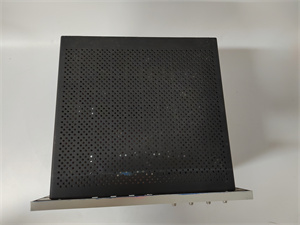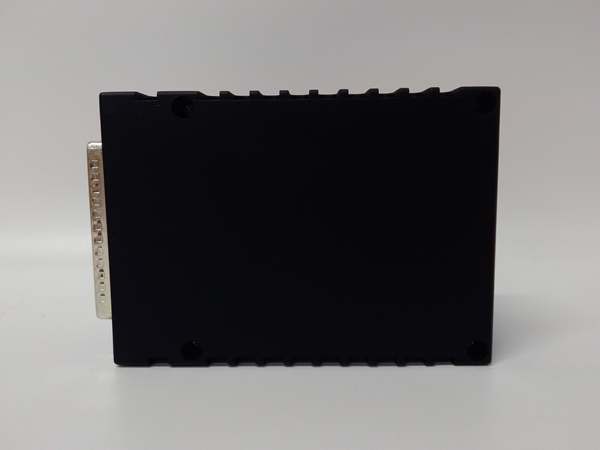
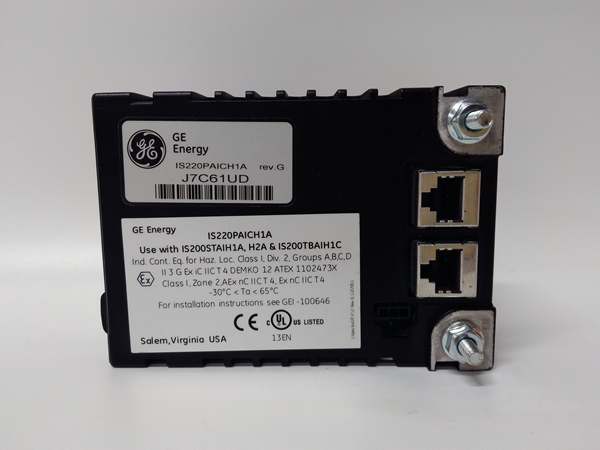
Description
Hard-Numbers: Technical Specifications
- Protocol Support: Redundant IONet 100Mbps Ethernet
- Port Count: 2× RJ45, 1× DC‑62 field connector
- Input Types: TC, RTD, ±10V, 4–20 mA (per-channel software configurable)
- Isolation Rating: 2500 VAC RMS field‑to‑backplane
- Resolution: 16‑bit ADC
- Power Requirements: 24 VDC, 8.0 W max draw
- Operating Temperature: -30°C to +70°C
- Common‑Mode Rejection: 120 dB @ 50/60 Hz
- Hazardous Rating: Class I Div 2, Zone 2, ATEX/IECEx
- Weight: 0.70 kg
- Dimensions: 158.75 × 107.95 × 30 mm
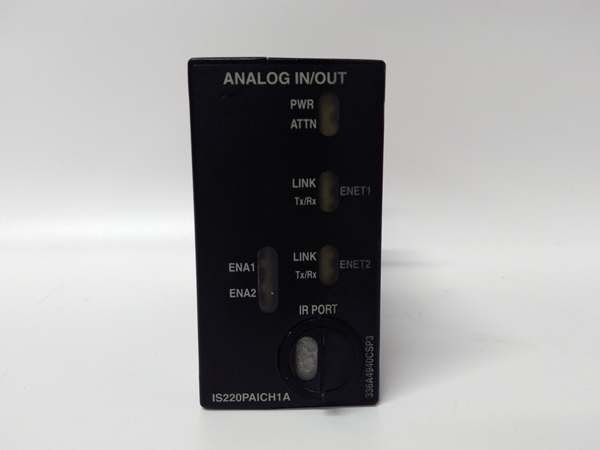
IS220PAICH1A
The Real-World Problem It Solves
Plants stock multiple dedicated I/O cards for TC, RTD, voltage, and current signals. This creates excess inventory, complex wiring, and longer outage times during swaps. eliminates the need for separate specialized modules by supporting all common field signals in one hardware form factor.
Where you’ll typically find it:
- Turbine lube oil pressure and temperature monitoring
- Feedwater and steam flow transmitter loops
- Auxiliary system 4–20 mA and RTD temperature inputs
Bottom line: reduces spare part count and speeds up field installation by supporting nearly any analog sensor type.
Hardware Architecture & Under-the-Hood Logic
uses a dedicated on-board processor and fully isolated analog front‑end. No jumpers are required; signal type is set entirely through software.
- Field signals terminate at the DC‑62 connector to the TTUR terminal block.
- Each channel runs through galvanic isolation to block ground loops.
- On-board conditioning circuitry adapts to TC, RTD, voltage, or mA based on configuration.
- 16‑bit ADC digitizes the conditioned signal.
- Local processor linearizes inputs and applies cold‑junction compensation for TCs.
- Data transmits over redundant IONet to the Mark VIe controller.
- Internal diagnostics detect opens, shorts, and out‑of‑range conditions.
Field Service Pitfalls: What Rookies Get Wrong
Unmatched Input ConfigurationTechs set a channel to TC but wire an RTD, or vice versa. Readings peg high/low and trigger false alarms.
- Field Rule: Verify input type in ToolboxST before field wiring; label each channel clearly at the terminal block.
Ground Loops From Unguarded ShieldingShields grounded at both the sensor and cabinet create noise that drifts 4–20 mA and TC readings.
- Quick Fix: Terminate cable shields only at the TTUR terminal board; float the field end.
Excessive Lead Wire ResistanceLong, small‑gauge RTD wires exceed resistance limits and cause temperature under‑reading.
- Field Rule: Use 24 AWG wire minimum and keep total lead length under 300 meters for RTD channels.
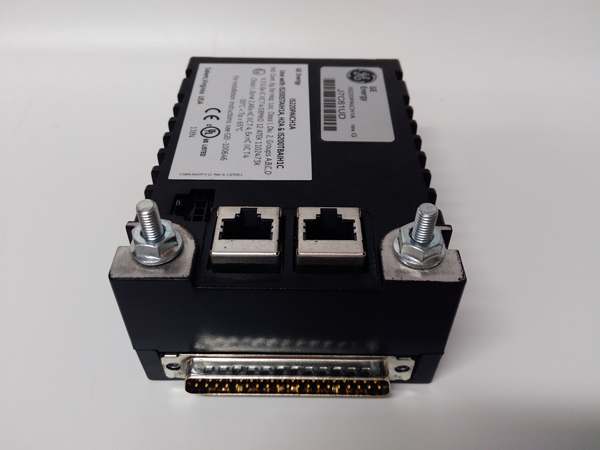
IS220PAICH1A
Commercial Availability & Pricing Note
Please note: The listed price is for reference only and is not binding. Final pricing and terms are subject to negotiation based on current market conditions and availability.