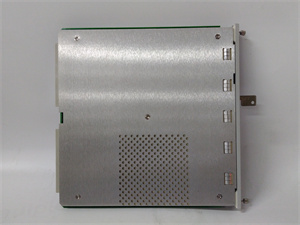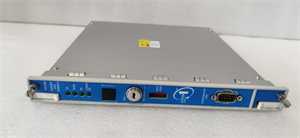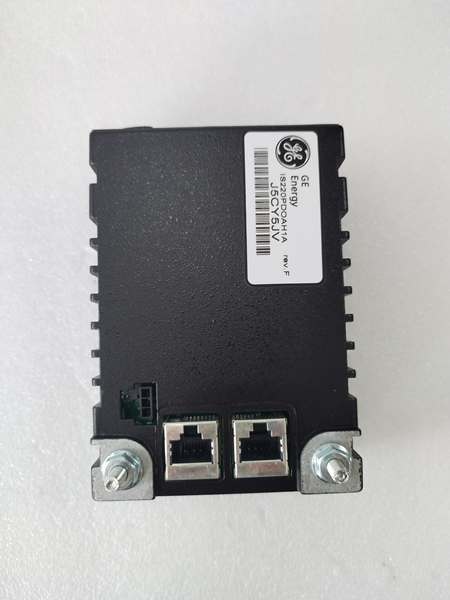
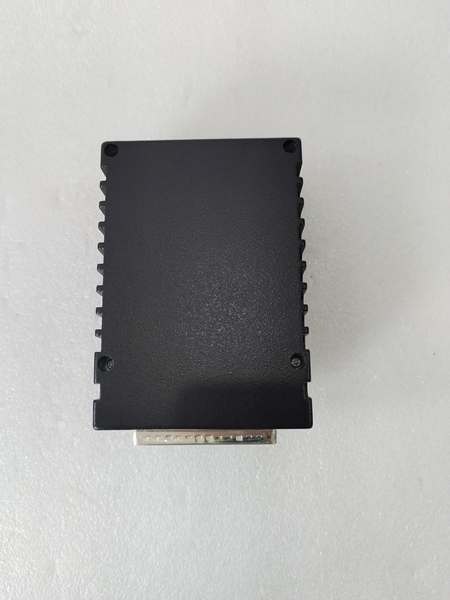
Description
Hard-Numbers: Technical Specifications
- Protocol Support: IONet (Mark VIe proprietary), 100Mbps Ethernet
- Port Count: 2× RJ45 Ethernet, 1× DC-37 field I/O connector
- Input Channels: 8 discrete/pulse, optically isolated
- Input Signal: TTL (0–5V), HTL (10–30V), magnetic pickup (conditioned)
- Max Frequency: 50 kHz per channel; min pulse width 10 µs
- Isolation Rating: 2500 VAC RMS (channel-to-channel/backplane)
- Power Draw: 3.2 W typical; 28.0 VDC nominal input
- Operating Temperature: -30°C to +65°C
- Storage Temperature: -40°C to +85°C
- Dimensions: 86.2 × 149 × 121 mm (W×H×D)
- Weight: 0.5 kg
- Hazardous Rating: Class I Div 2, Zone 2, ATEX / IECEx approved
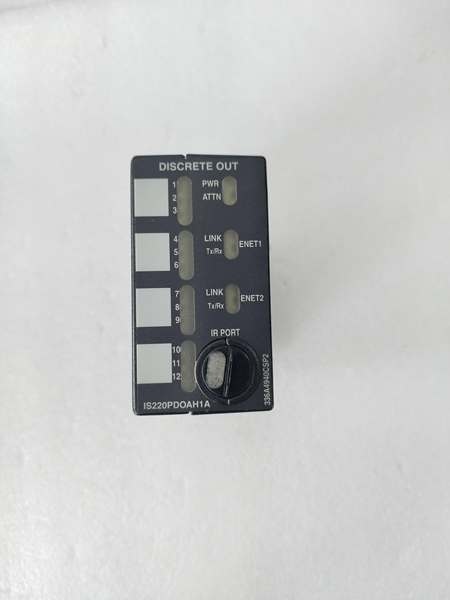
IS220PDOAH1A
The Real-World Problem It Solves
Turbine control systems lose accurate speed/phase data due to ground loops and EMI in high-vibration environments. Unfiltered pulse signals cause misalignment and false ETS trips.
Where you’ll typically find it:
- Gas turbine shaft speed and keyphasor monitoring
- Steam turbine rotor position and vibration pickup inputs
- Compressor anti-surge system speed feedback loops
Bottom line: delivers clean, isolated pulse data for critical turbine speed/phase logic.
Hardware Architecture & Under-the-Hood Logic
runs on a dedicated 32-bit RISC processor with independent channel isolation. It processes pulses locally before sending data to the controller.
- Field speed/keyphasor signals terminate at the DC-37 connector.
- Signals pass 2500V optical isolation barriers to break ground loops.
- On-board comparators convert analog pickup signals to digital pulses.
- Hardware filters reject noise; captures pulses down to 10 µs width.
- Local processor measures frequency/period and generates time-stamps.
- Data transmits over dual redundant Ethernet to the Mark VIe controller.
- On-board diagnostics detect open circuits, over-voltage, and loss-of-signal.
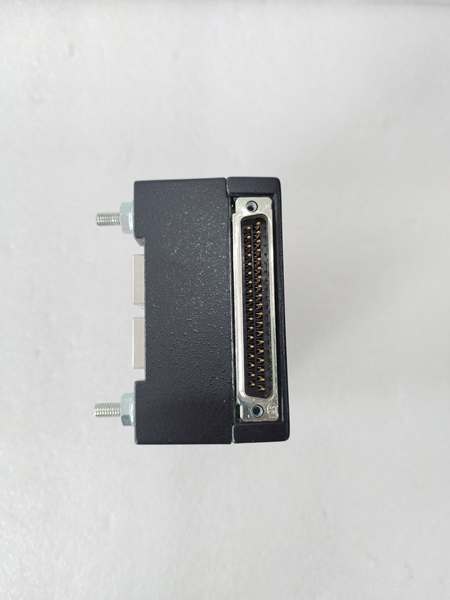
IS220PDOAH1A
Field Service Pitfalls: What Rookies Get Wrong
Under-Speeding Signal LossTechs use standard input filters and lose pulses below 1 Hz. Module defaults to 4 ms filtering; too slow for low-speed roll.
- Field Rule: Set filter to 50 µs in Toolbox for speed < 10 Hz. Verify with a signal generator.
Magnetic Pickup Wiring ErrorsRookies run pickup cables parallel to power conductors. Induced noise creates false speed pulses.
- Quick Fix: Use twisted-pair shielded cable. Route 300mm+ from power wiring. Ground shield only at marshalling panel.
Hot-Swap Backplane DamageSwapping under power bends backplane pins. Causes intermittent I/O node faults.
- Field Rule: De-energize the I/O rack or disable node via software. Wait 60 seconds before removal.
Commercial Availability & Pricing Note
Please note: The listed price is for reference only and is not binding. Final pricing and terms are subject to negotiation based on current market conditions and availability.