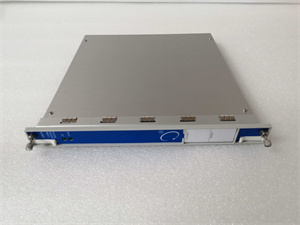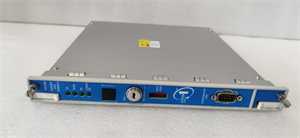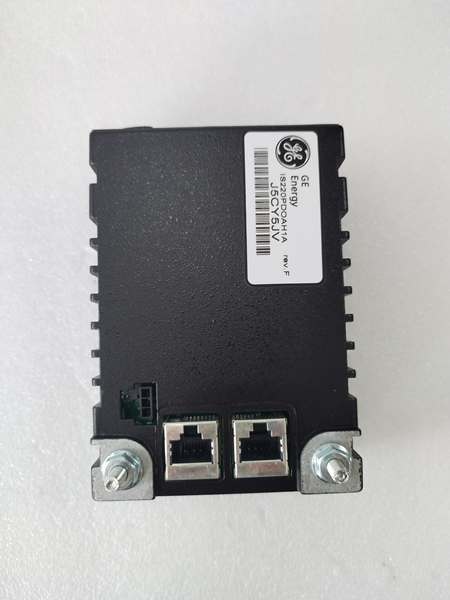
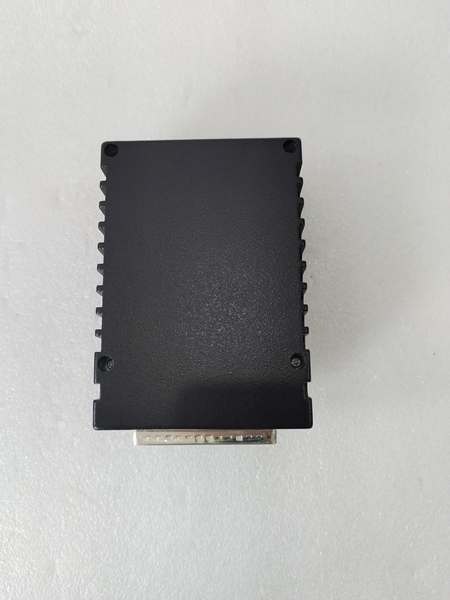
Description
Hard-Numbers: Technical Specifications
- Protocol Support: IONet (Mark VIe proprietary), Ethernet/IP, 100Mbps full-duplex
- Port Count: 2× RJ45 Ethernet, 1× HD D-sub field I/O connector
- Baud/Data Rate: 100 Mbps line rate; deterministic I/O update < 1ms
- Operating Temperature: -30°C to +65°C
- Isolation Rating: 2500V RMS channel-to-channel, channel-to-backplane
- Power Draw: Nominal 28.0 VDC, 1.5A max; input 27.4–32.0 VDC
- I/O Points: 32× discrete inputs, 32× discrete outputs (configurable)
- Input Type: 24/28 VDC contact wetting, sinking/sourcing
- Output Type: Solid-state relay, 32 VDC, 0.5A per channel
- Dimensions: 4.5” W × 3.5” H × 2.25” D
- Weight: < 2.0 lbs (0.9 kg)
- Hazardous Rating: Class I, Div 2; Zone 2 approved
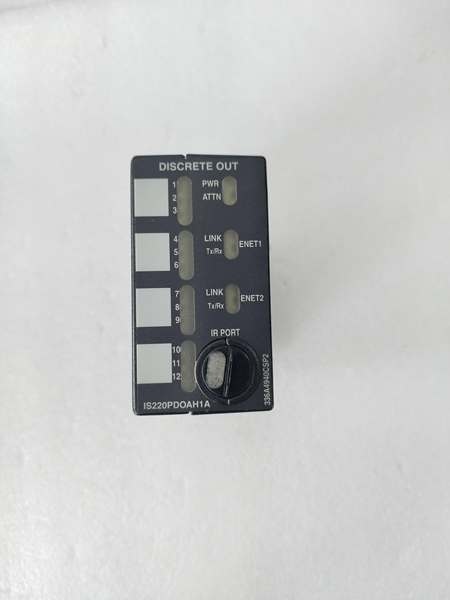
IS220PDOAH1A
The Real-World Problem It Solves
Turbine control cabinets suffer from ground loops, EMI, and noisy 24V signals that cause false trips and intermittent faults. Older I/O cards lack isolation and diagnostics, forcing hours of troubleshooting to trace bad channels or wiring.
Where you’ll typically find it:
- Gas turbine starter/exit valve interlocks
- Steam turbine trip circuits and speed relay logic
- Compressor anti-surge discrete feedback loops
Bottom line: eliminates signal cross-talk and cuts mean-time-to-repair (MTTR) on critical turbine I/O loops.
Hardware Architecture & Under-the-Hood Logic
is a self-contained I/O pack with a local 32-bit processor. It does not rely on the main controller for basic I/O scanning; isolation barriers separate field circuits from the backplane and Ethernet electronics.
- Field signals (inputs) terminate on the D-sub and pass to isolated opto-couplers.
- On-board microprocessor scans all channels, applies filtering, and timestamps states.
- Processed data is buffered and transmitted over dual Ethernet to the Mark VIe controller.
- Output commands from the controller are decoded and routed to solid-state switches.
- Each channel has continuous diagnostics: overvoltage, short-circuit, and disconnect detection.
- LEDs indicate port link/activity, power, fault, and per-group I/O status.
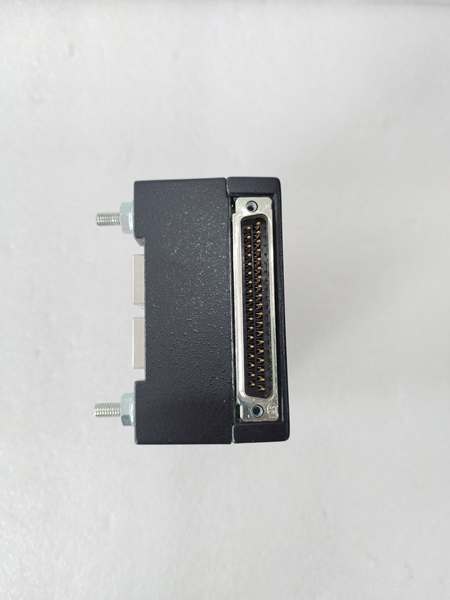
IS220PDOAH1A
Field Service Pitfalls: What Rookies Get Wrong
Wiring & Shield MismanagementRookies run field wires next to power cables or skip shield grounding. Noise induces false input triggers and output chatter.
- Field Rule: Use 18–22 AWG twisted-pair. Shield grounds only at the marshalling cabinet, not at both ends. Keep > 12” from 480V power routes.
Voltage Margins IgnoredTechs apply exactly 24V and wonder why outputs drop out under load. The module’s minimum operating voltage is 27.4 VDC.
- Quick Fix: Set field power supply to 28.0 VDC. Verify at the module terminals under full load.
Hot-Swap DamageMany try replacing with power still applied. Backplane glitches can lock up the entire I/O node.
- Field Rule: De-energize the I/O rack or disable the node via Toolbox before removal. Wait 30 seconds after power-off to swap.
Commercial Availability & Pricing Note
Please note: The listed price is for reference only and is not binding. Final pricing and terms are subject to negotiation based on current market conditions and availability.