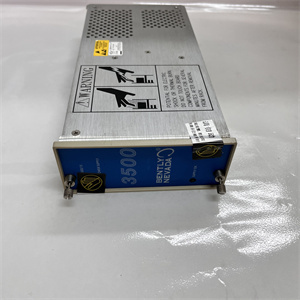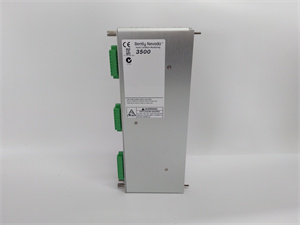
Description
Hard-Numbers: Technical Specifications
- Processor: Shared Mark VIe Processor Board (BPPx series) for deterministic real-time control and communication.
- Communication Protocol: Dual 10/100Base-TX Ethernet ports for redundant, high-speed communication with the Mark VIe controller backplane.
- Supply Voltage: 28 V DC Nominal (Supports 18-36 V DC industrial range; specifically provides -24 V DC probe power for sensors).
- Power Consumption: 19.8 W Maximum.
- Analog Inputs (AI): 4 total channels. Compatible with thermocouples, RTDs, ±10 V voltage inputs, and 4-20 mA current loops.
- Analog Outputs (AO): Configurable outputs supporting 4-20 mA current loops (dependent on connected terminal board configuration).
- Signal Conditioning: Built-in programmable filtering, open-circuit detection, and cold-junction compensation for precise sensor readings.
- A/D Converter Resolution: 16-bit high-resolution analog-to-digital conversion for highly accurate signal acquisition.
- Operating Temperature: -30°C to +65°C (-22°F to +149°F) for harsh industrial environments.
- Humidity Tolerance: 5% to 95% non-condensing.
- Vibration Resistance: Compliant with IEC 60068-2-6 and MIL-STD-810 standards for industrial and rotating machinery applications.
- Protection: Industrial-grade conformal coating for superior protection against moisture, dust, and chemical contaminants.
- Isolation: Reinforced galvanic isolation between field-side I/O and the control-side logic/communication circuits to prevent ground loops.
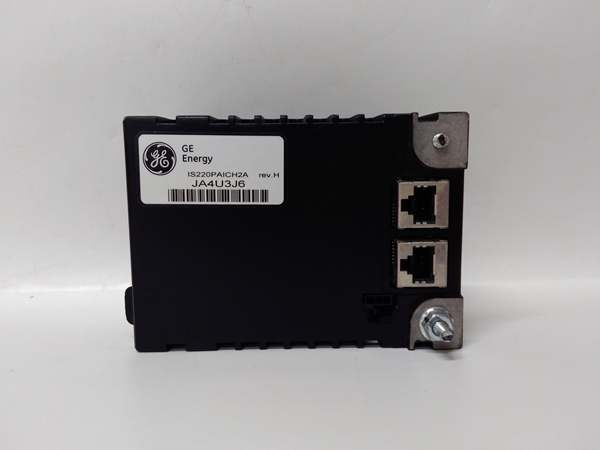
- Connectors: Dual RJ-45 Ethernet, one DC-37 pin connector for terminal board interface (J3/J4), and one 3-pin power connector.
- Dimensions (Approx.): 12.1 cm x 8.26 cm x 4.19 cm (4.78″ x 3.25″ x 1.65″).
- Weight (Approx.): 0.45 kg (1.0 lbs).
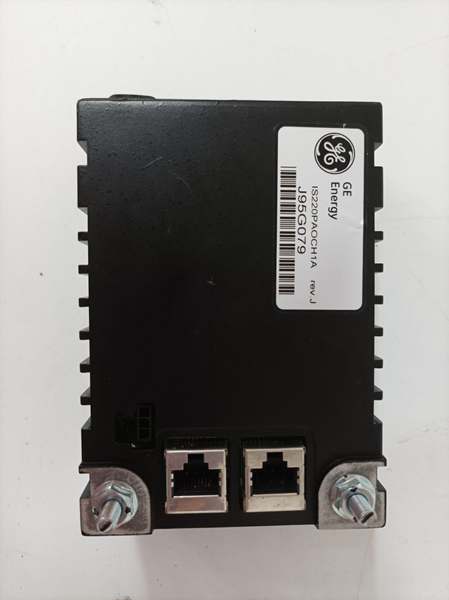
IS220PAOCH1A
The Real-World Problem It Solves
In modern power generation and aerospace-derived gas turbine applications, precise monitoring of temperature, pressure, and flow is non-negotiable. The solves the fundamental problem of high-density, high-accuracy analog signal acquisition in environments where space and reliability are at a premium.
Unlike standard I/O modules, the PCLAS1A is specifically optimized for the rapid scanning and deterministic processing required by aero-derivative gas turbines. It eliminates signal noise and drift by performing initial signal conditioning and 16-bit digitization right at the source. By integrating dual-redundant Ethernet communication, it ensures that critical turbine data is delivered to the Mark VIe controller without latency or data loss. Without this module, the control system would lack the high-fidelity sensory input needed to optimize combustion, monitor bearing temperatures, or execute emergency shutdown sequences.
Where you’ll typically find it:
- Mounted on SCLS (Single) or SCLT (Triple) Core Analog Terminal Boards within the turbine control cabinet.
- Interfacing directly with 4-20mA current loops from pressure transmitters, thermocouples, and RTDs measuring critical turbine parameters like exhaust temperature or fuel gas pressure.
- Integrated into Triple Modular Redundant (TMR) or Simplex architectures requiring high-speed, fault-tolerant analog data acquisition.
Bottom line: It is the crucial analog nerve center that provides the Mark VIe digital brain with precise, real-time situational awareness of the turbine’s physical operating conditions.
Hardware Architecture & Under-the-Hood Logic
The is engineered as a high-reliability, hot-swappable I/O node. Its internal architecture is divided between a shared processor board and a specialized acquisition board to ensure both computational power and signal integrity.
- Signal Acquisition & Conditioning: Incoming analog signals from the field pass through precision instrumentation amplifiers and anti-aliasing filters on the BCLA (Acquisition) board. The module excites sensors (like RTDs) and linearly scales the raw signals.
- High-Resolution Conversion: A 16-bit Analog-to-Digital Converter (ADC) digitizes the conditioned analog signals, providing the high resolution necessary for detecting minute changes in turbine performance.
- Microcontroller Processing: The onboard BPPx processor manages the sampling rates, executes calibration routines, and performs continuous self-diagnostics. It then packages the digitized data into Ethernet frames for deterministic transmission to the main Mark VIe controller.
- Fault Detection & Isolation: The module continuously monitors its own health, power supply quality, and communication link status. If a critical fault is detected (e.g., open sensor loop, short circuit, or loss of communication), it triggers hardware-level alarms to protect the turbine and connected equipment.
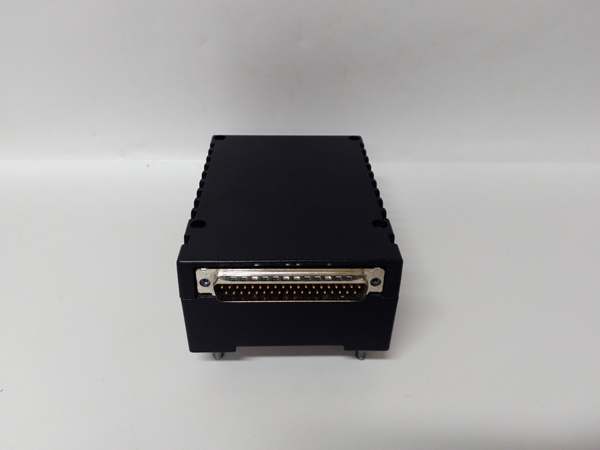
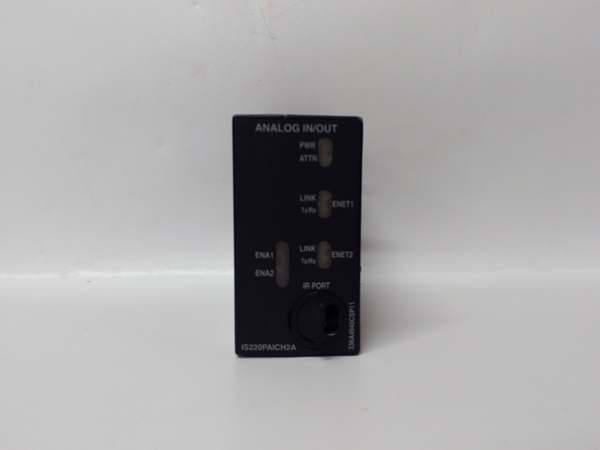
IS220PAICH2A
Field Service Pitfalls: What Rookies Get Wrong
The “Ghost Thermocouple” (Improper Cold-Junction Compensation)
Rookies often misdiagnose a faulty when dealing with erratic temperature readings from thermocouples, assuming the module itself is defective.
- The Symptom: Temperature readings from a specific channel fluctuate wildly or display impossible values (e.g., negative absolute temperatures), even after swapping the sensor.
- Field Rule: Remember that thermocouple readings rely heavily on accurate cold-junction compensation (CJC), which is managed by the terminal board (SCLS/SCLT) and referenced by the PCLAS1A. Before replacing the I/O pack, verify the CJC sensor on the terminal board is functioning correctly and that the thermal coupling between the terminal block and the module is intact. A poor thermal connection can cause massive reading errors.
Ignoring the 28V DC Power Budget
The operates on 28V DC and can consume up to 19.8W. Rookies often overlook the power supply requirements when adding new modules to an existing rack.
- The Symptom: The module powers up initially but experiences random resets, communication drops, or fails to power up auxiliary sensors (like drawing 12mA per sensor for -24V probe power), leading to sporadic process trips.
- Field Rule: Always calculate the total power budget of your I/O rack before installation. Ensure the 28V DC power supply has enough headroom to handle the maximum 19.8W load of the PCLAS1A, plus the power requirements of all connected field sensors. Use a multimeter to verify the voltage at the module’s power terminals under full load.
Forcing the Wrong Frame Rate
The Mark VIe system supports various frame rates (10ms to 320ms). Rookies sometimes force a high-speed frame rate (e.g., 10ms) for the PCLAS1A without considering the implications of signal filtering.
- The Symptom: The system throws “Input Scan Overrun” faults, or the analog values appear extremely noisy and unusable, causing the turbine control loops to become unstable.
- Field Rule: Match the module’s scan rate to the physical reality of the sensor. Thermocouples and RTDs are slow-changing signals; forcing a 10ms update rate on a 4-20mA loop with improper filtering will only amplify electrical noise. Configure the ToolboxST software to use an appropriate frame rate (typically 40ms to 80ms for analog inputs) and enable the built-in digital filtering to smooth out high-frequency noise.
Commercial Availability & Pricing Note
Please note: The listed price is for reference only and is not binding. Final pricing and terms are subject to negotiation based on current market conditions and availability.