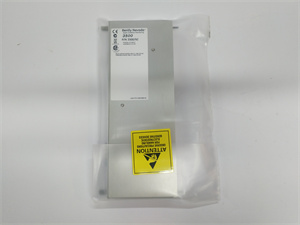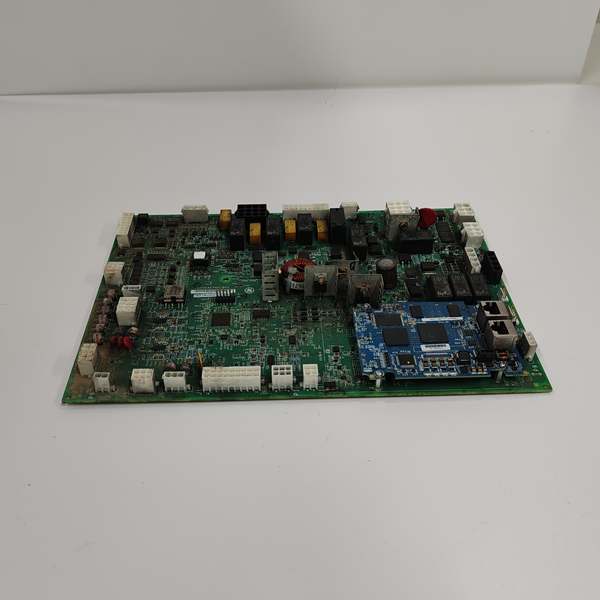
Description
Hard-Numbers: Technical Specifications
- Processor: High-performance industrial processor optimized for real-time VME bus operations and deterministic control algorithms .
- Communication Protocol: VME Bus for high-speed backplane communication; supports Ethernet, Genius Bus, and PDH Network protocols for external device integration .
- Supply Voltage: 5V DC (VME backplane power) and/or 24V DC Nominal (Auxiliary power, with wide-range tolerance for industrial fluctuations) .
- Power Consumption: ~15–30 W (Low-power design to minimize thermal stress in sealed enclosures) .
- I/O Capability: Integrated digital and analog I/O channels for direct sensor and actuator interfacing .
- Signal Conditioning: Advanced analog and digital signal processing for precise sensor data acquisition (e.g., wind speed, generator RPM, temperatures) with noise filtering .
- Operating Temperature: -40°C to +85°C (Extended industrial range for harsh nacelle/enclosure environments) .
- Humidity Tolerance: 5% to 95% non-condensing .
- Vibration Resistance: Compliant with IEC 60068-2-6 standards for nacelle and tower mounting .
- Protection: Industrial-grade conformal coating for moisture, dust, and chemical resistance .
- Isolation: Optical and galvanic isolation on critical I/O lines to prevent ground loops and electrical surges .
- Dimensions (Approx.): Standard VME board dimensions (e.g., 233 mm × 160 mm × 32 mm) .
- Weight (Approx.): 0.5–0.8 kg .
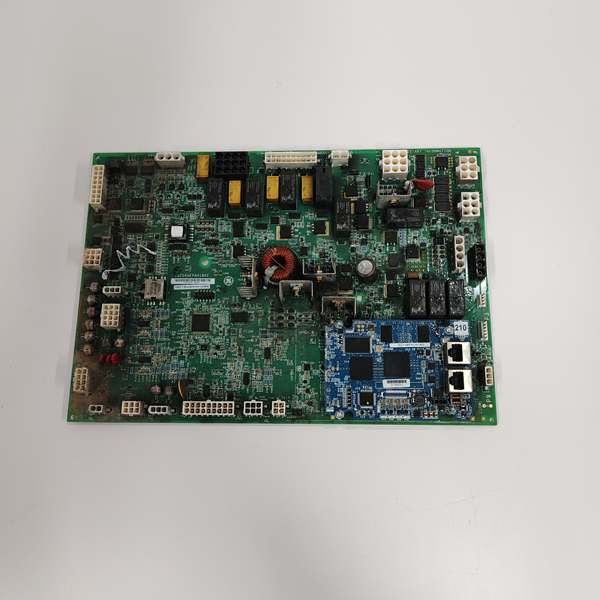
GE IS215WEPAH2BB
The Real-World Problem It Solves
Modern wind turbines require lightning-fast coordination between sensing the wind, adjusting the blade pitch, and matching the generator’s output to the grid’s demands. The solves the problem of high-speed data processing, VFD integration, and system communication within the Mark VIe architecture . It acts as a vital nervous system junction, processing inputs from across the turbine and executing the precise mathematical commands needed to control the generator’s torque and speed via the Variable Frequency Drive. Without this board functioning perfectly, the turbine cannot efficiently convert wind energy into grid-compliant electrical power .
Where you’ll typically find it:
- Mounted on the VME bus backplane inside the Nacelle Top Box or the main Turbine Control Cabinet .
- Serving as a centralized processing node that communicates with I/O packs, the main controller, and the wind farm SCADA system .
- Directly interfacing with the turbine’s Converter/Inverter controls to regulate power output .
Bottom line: It is the high-speed computational and communication workhorse that ensures the Mark VIe controller, the power electronics, and the external grid monitoring systems speak the exact same language in real-time .
Hardware Architecture & Under-the-Hood Logic
The WETAH1C is a sophisticated blend of legacy VME bus reliability and modern processing power. It is engineered to handle the deterministic timing required for safe and efficient turbine operation .
- VME Bus Master/Slave Communication: The board interfaces directly with the VME backplane, allowing it to exchange data with other control boards (like the WEMA or WEPA) in microseconds. This ensures that a command to adjust power output is executed almost instantly .
- Sensor Data Aggregation: It collects and processes analog and digital signals from various sensors (anemometers, wind vanes, shaft encoders, and temperature probes). The onboard processor filters out electrical noise to ensure the data reflects true physical conditions .
- Control Algorithm Execution: Based on the processed sensor data and high-level commands from the main Mark VIe controller, the WETAH1C executes complex control algorithms to calculate the optimal generator torque and converter switching frequencies .
- Fault Detection & System Protection: Continuously monitors its own health and the status of connected devices. If it detects a critical fault (like an over-speed condition or loss of communication with the converter), it triggers hardware-level interrupts to safely shut down the turbine or activate the disc brakes .
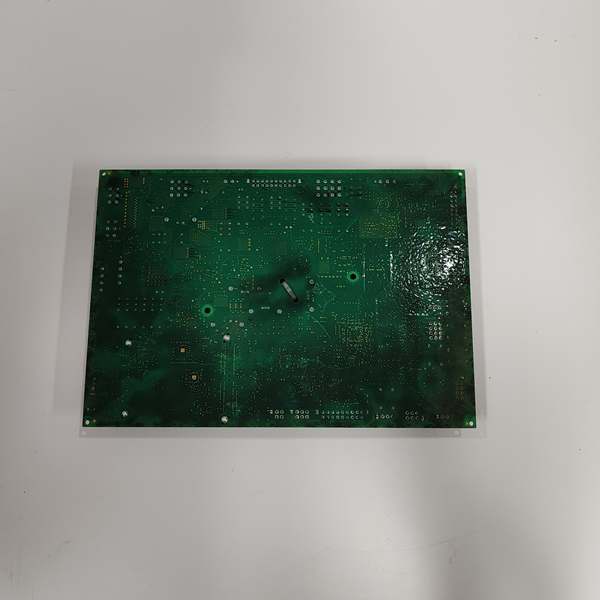
GE IS215WEPAH2BB
Field Service Pitfalls: What Rookies Get Wrong
The “Phantom Fault” Caused by Loose Backplane Connections
Rookies often assume that if a turbine is throwing communication errors related to the WETAH1C, the board itself must be fried. They swap the board, but the fault persists because the real issue was microscopic oxidation on the VME backplane contacts.
- The Symptom: The turbine drops offline intermittently, or the controller logs “VME Bus Timeout” or “Node Lost” errors during periods of high vibration (e.g., high winds or yawing).
- Field Rule: Before condemning a WETAH1C, always power down the cabinet, remove the board, and inspect the gold-plated edge connector fingers. More importantly, use a specialized contact cleaner and a non-abrasive tool to gently clean the female VME slots on the backplane. Re-seat the board firmly and ensure the retaining screws are torqued to spec.
Swapping Boards Without Saving the Configuration
The WETAH1C works in tandem with other Mark VIe processors and often contains specific configuration files or firmware revisions. Rookies sometimes hot-swap a faulty board or replace it with one from a different turbine without synchronizing the firmware or configuration.
- The Symptom: After replacement, the turbine won’t initialize, throws a “Configuration Mismatch” error, or the VFD behaves erratically because the new board is running an outdated or incompatible logic sequence.
- Field Rule: Never swap control boards between turbines unless absolutely necessary. If a swap is required, always connect a laptop with ToolboxST software, download the correct application files to the new board, and perform a full checksum verification before attempting to restart the turbine.
Ignoring ESD Precautions During Handling
In the heat of troubleshooting a turbine downtime event, rookies often forget that the contains highly sensitive modern electronics susceptible to Electrostatic Discharge (ESD).
- The Symptom: A brand-new replacement board fails within days or weeks of installation because invisible micro-damage was inflicted on the integrated circuits during the initial handling.
- Field Rule: Always use an anti-static wrist strap and work on an ESD-safe mat when handling the . If these aren’t available, frequently touch a grounded metal surface before touching the board to discharge your body’s static electricity.
Commercial Availability & Pricing Note
Please note: The listed price is for reference only and is not binding. Final pricing and terms are subject to negotiation based on current market conditions and availability.