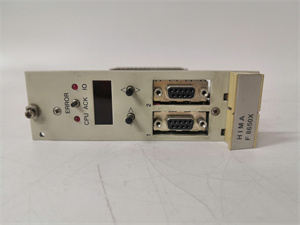
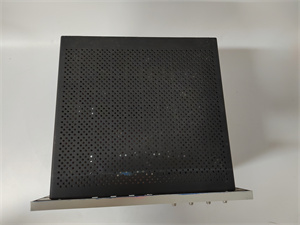
Description
Hard-Numbers: Technical Specifications
- Processor: 32-bit Embedded Microcontroller (Typical for Mark VIe distributed nodes)
- Communication Protocol: CANbus (Controller Area Network) for deterministic pitch drive networking
- Supply Voltage: 24 V DC Nominal (Operating range 18–32 V DC)
- Power Consumption: ~15–25 W (Typical operational load)
- Torque Rating: Configured for 30 Nm nominal pitch drive control (supports up to 40 Nm variants)
- Digital I/O: Interfaces with pitch motor drives, absolute encoders, and safety limit switches
- Operating Temperature: -20°C to +70°C (Designed for hub/nacelle extremes)
- Humidity Tolerance: 5% to 95% non-condensing
- Vibration Resistance: Compliant with IEC 60068-2-6 standards for rotating hub applications
- Protection: Conformal coating for humidity, salt mist, and vibration resistance
- Isolation: Galvanic isolation on CANbus and critical control paths
- Dimensions (Approx.): 200 mm × 160 mm × 50 mm (Compact PCB form factor)
- Weight (Approx.): 0.8–1.2 kg
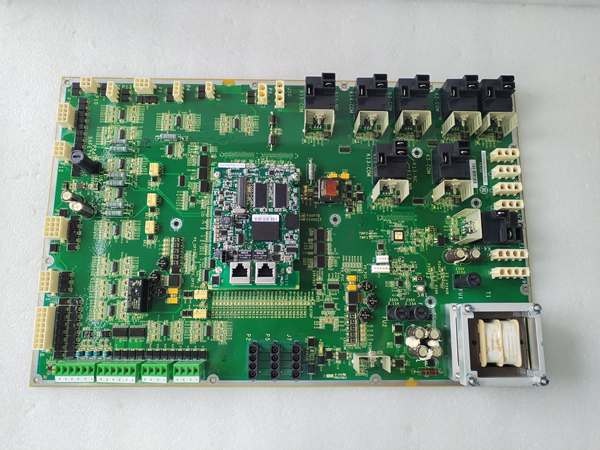
GE IS215WEMAH1A
The Real-World Problem It Solves
Wind turbines face highly turbulent and unpredictable wind shear. If all three blades are pitched uniformly without localized adjustment, the resulting asymmetric loads can severely stress the drivetrain and tower. This module solves the problem of decentralized, high-speed blade pitch control. By managing a single pitch axis locally—often mounted directly in the rotating hub—it adjusts the individual blade angle in real-time to optimize energy capture and mitigate mechanical loads. Furthermore, it acts as a critical safety node, capable of independently driving its assigned blade to the feathered position if it loses communication with the main controller or detects an overspeed condition.
Where you’ll typically find it:
- Mounted on the pitch drive assembly or inside the hub’s local control box of a GE Mark VIe wind turbine.
- Connected directly to a single pitch motor drive and its corresponding absolute encoder/resolver.
- Communicating with the main nacelle controller (like the WEMA) via a ruggedized CANbus network to receive high-level pitch commands and report back position feedback.
Bottom line: It bridges the gap between centralized turbine logic and the brutal, rotating mechanical reality of the hub, ensuring maximum energy extraction while protecting the physical asset.
Hardware Architecture & Under-the-Hood Logic
Unlike centralized controllers that try to manage everything from the nacelle, the WEPA module is a ruggedized, distributed node built to survive the constant rotation, centripetal forces, and electrical noise inside a wind turbine hub. It operates as an intelligent slave device, executing closed-loop control locally to minimize latency.
- Command Reception: Listens to the central Mark VIe controller via the isolated CANbus, awaiting target blade angle setpoints.
- Closed-Loop Positioning: Reads the raw data from the local absolute encoder or resolver to determine the blade’s current angle. It then executes PID loop calculations to drive the pitch motor precisely to the target angle.
- Local Safety Supervision: Constantly monitors the pitch drive status, motor temperature, and communication heartbeat. If the CANbus goes silent or an over-torque condition is detected, the onboard logic immediately forces the associated blade into the feathered (safe) position using hardwired fallback circuits.
- Status Reporting: Packages real-time telemetry (actual pitch angle, drive status, fault codes) and broadcasts it back to the main controller via CANbus.
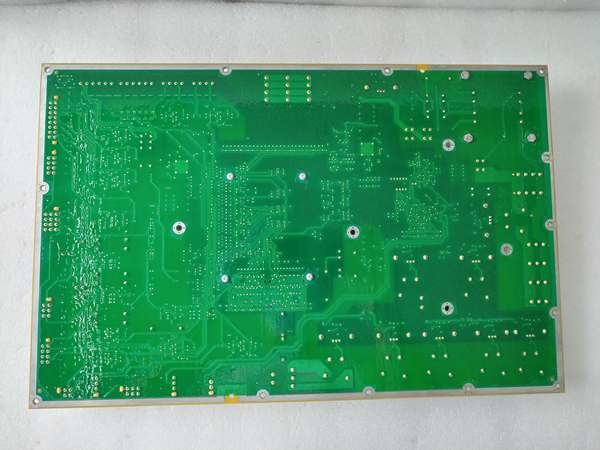
GE IS215WEMAH1A
Field Service Pitfalls: What Rookies Get Wrong
The “Terminator” Mix-up (Resistors, not Arnold)
Rookies often overlook the CANbus termination resistors when servicing the pitch system. If the WEPA module is replaced or the hub wiring is disturbed, failing to properly seat the 120-ohm termination resistors at the physical ends of the CAN chain causes signal reflection.
- The Symptom: Intermittent “Pitch Position Loss” or “CANbus Errors” that only appear when the turbine is vibrating heavily during high winds.
- Field Rule: Before closing the hub access panel, use a multimeter to check the total resistance across the CAN_H and CAN_L terminals at the farthest point from the controller. It must read exactly 60 ohms (two 120-ohm resistors in parallel). If not, hunt down the missing terminator.
Ignoring the Conformal Coating After Repairs
The inside of a turbine hub is a hostile environment filled with condensation, thermal cycling, and conductive carbon dust from the pitch motor brushes. Rookies might clean a board with standard electronics cleaner or skip re-coating after replacing a component.
- The Symptom: The “new” module fails within 3 to 6 months due to microscopic corrosion tracks forming under the chips.
- Field Rule: Treat the conformal coating like a life support system. If you touch the board, you must reapply a MIL-I-46058C compliant conformal coating to the affected areas. Pay special attention to the underside of the PCB where moisture settles.
Blade Unloading During Replacement
Rookies sometimes attempt to replace a faulty WEPA module or pitch drive while the turbine is in standby, assuming the mechanical brake will hold the blade still. However, wind gusts can cause the unpowered blade to flap or rotate unexpectedly.
- The Symptom: Severe injury, crushed hands, or stripped gears/sensors because the blade moved while the technician was working on the pitch assembly.
- Field Rule: Never service the pitch axis electronics without first ensuring the blade is mechanically locked (using the physical blade lock pins) and the hydraulic/pneumatic brakes are applied. Verify with the SCADA that the “Blade Lock” safety interlock is active before touching the WEPA module.
Commercial Availability & Pricing Note
Please note: The listed price is for reference only and is not binding. Final pricing and terms are subject to negotiation based on current market conditions and availability.