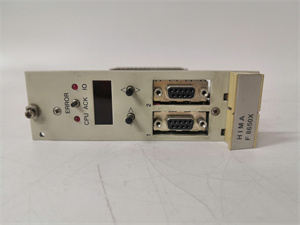
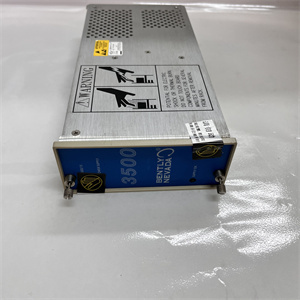
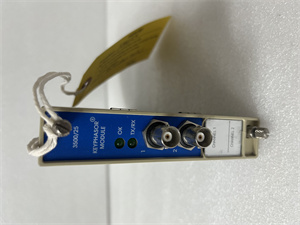
Description
Hard-Numbers: Technical Specifications
- Processor: 32-bit TMS320C32 Digital Signal Processor (DSP)
- Operating System: QNX Real-Time OS (RTOS)
- Memory: 16 MB Flash, 8 MB DRAM
- Protocol Support: CANopen, Modbus RTU, Ethernet Global Data (EGD)
- Port Count: 2 x 10/100BaseTX RJ-45, 1 x RS-485, 1 x CAN Bus
- Digital I/O: 27 x 24 VDC Digital Inputs, 9 x Relay Outputs, 3 x Solid-State Outputs
- Analog Inputs: 2 x Thermistor Temperature Inputs
- Operating Temperature: -40°C to +70°C (-40°F to 158°F)
- Power Draw: 24 V DC @ 2.0 A (Typical)
- Isolation Rating: 1500 V AC (I/O-to-Backplane)
- Dimensions: 233.35 mm x 100 mm x 25 mm (6U VME Form Factor)
- Weight: 0.5 kg (1.1 lbs)
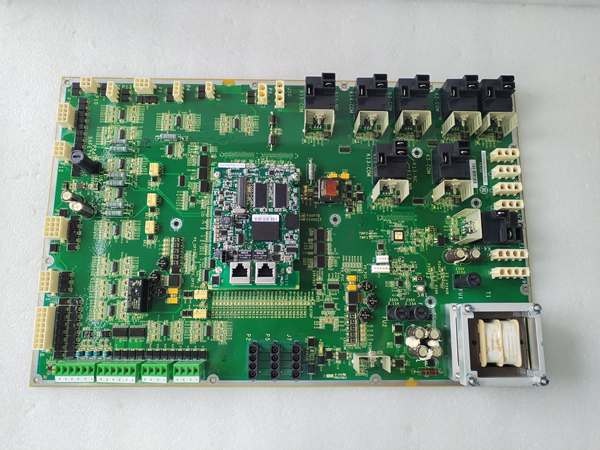
GE IS215WEMAH1A
The Real-World Problem It Solves
Wind turbines face chaotic wind shear and grid disturbances that can violently torque the drivetrain or send rotational speeds spiraling. This module acts as the first line of defense, executing deterministic algorithms to feather the blades and protect the gearbox when the wind decides to misbehave.
Where you’ll typically find it:
- Bolted into the VME rack inside the main control cabinet of a Mark VIe wind turbine nacelle.
- Wired directly to the pitch motors and absolute encoders at the hub, constantly adjusting blade angles.
- Processing emergency stop signals and grid loss events to trigger immediate feathering sequences.
Bottom line: It bridges the gap between the turbine’s central SCADA commands and the brutal mechanical reality of the rotor hub.
Hardware Architecture & Under-the-Hood Logic
This isn’t a standard PLC; it’s a DSP-driven powerhouse designed for the extreme electromagnetic interference (EMI) and vibration of a turbine nacelle. It guarantees that pitch control loops execute on time, every time, without fail.
- Data Acquisition: The DSP scans 27 digital inputs and thermistor channels to monitor grid status, emergency stops, and nacelle temperatures.
- Control Law Execution: It processes real-time wind speed and generator RPM to calculate the exact blade pitch angle required to maintain optimal torque.
- Actuator Command: Sends deterministic commands via the CAN bus and RS-485 ports to the individual pitch drives, ensuring all three blades adjust symmetrically.
- Safety Watchdog: If communication with the main controller is lost, it bypasses the system and forces the solid-state relays to trigger an immediate, hardware-level pitch-to-feather event.
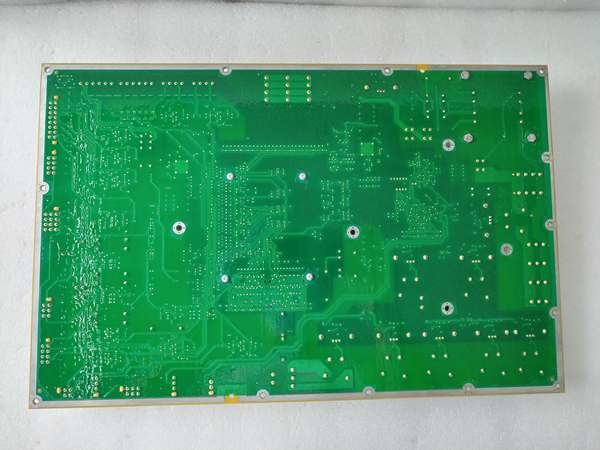
GE IS215WEMAH1A
Field Service Pitfalls: What Rookies Get Wrong
The 24VDC Supply Surge Trap
Rookies assume the 24VDC input is protected, but induced voltage from lightning strikes or contactor chatter can easily overwhelm the input stage. When the replacement board fails to power up, they incorrectly assume the new hardware is dead on arrival.
- Field Rule: Always check the 24VDC auxiliary supply with an oscilloscope for voltage spikes before connecting a new WEMA board. Install a standalone surge suppressor if the panel lacks one.
CAN Bus Reflection Issues
The WEMA talks to the pitch drives via the CAN bus. Rookies often forget the 120-ohm termination resistor at the physical end of the CAN line, leading to signal reflection and intermittent “Pitch Drive Lost” faults during high-vibration events.
- Quick Fix: Disconnect the CAN wires and measure the resistance across CAN_H and CAN_L. If it’s not 60 ohms (two 120-ohm resistors in parallel), track down the missing terminator at the last pitch drive and install it.
Conformal Coating Degradation
Turbines cycle through freezing rain, high humidity, and intense heat. Rookies swap a failed board without inspecting the conformal coating; micro-cracks allow moisture onto the PCB, causing track corrosion and repeat failures within months.
- Field Rule: Run a fingernail along the board edges. If you feel rough patches or see hairline cracks in the protective lacquer, apply a fresh coat of MIL-I-46058C compliant conformal coating before installation.
Commercial Availability & Pricing Note
Please note: The listed price is for reference only and is not binding. Final pricing and terms are subject to negotiation based on current market conditions and availability.