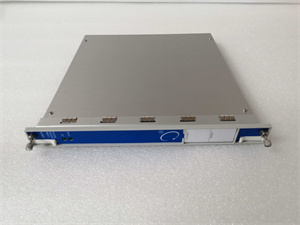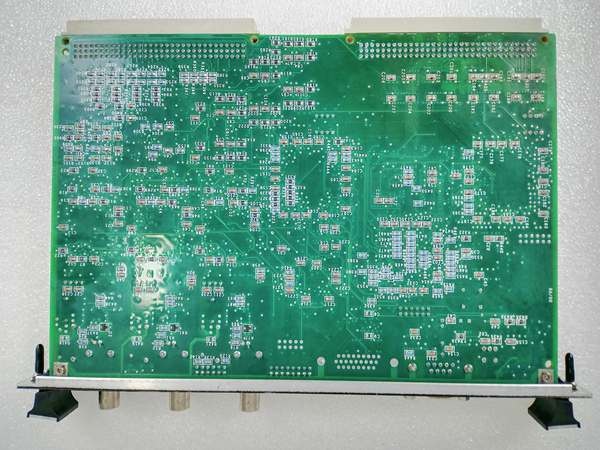
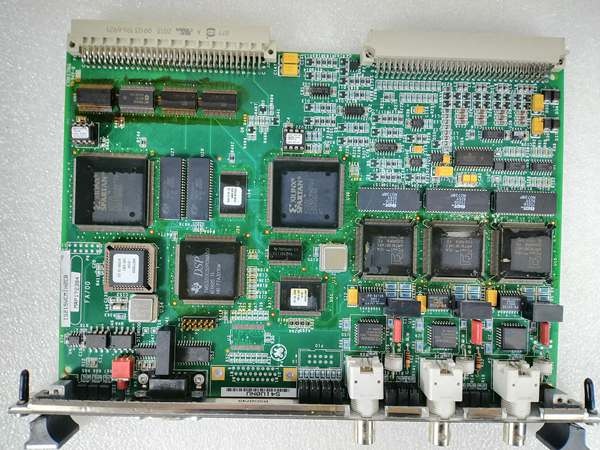
Description
Hard-Numbers: Technical Specifications
- Protocol Support: IONet (Proprietary GE), RS-232
- Port Count: 3 x 10Base2 BNC (IONet), 1 x RS-232C D-Sub
- Data Rate: 10 Mbps (IONet), 115.2 kbps (Serial)
- Frame Rate: 20 ms cycle time (50 Hz operation)
- Operating Temperature: 0°C to +60°C (32°F to 140°F)
- Isolation Rating: 1500 V AC (Port-to-Backplane)
- Power Draw: 5 V @ 2.5 A, 12 V @ 0.5 A (Typical)
- Processor: Texas Instruments TMS320C32 32-bit DSP
- System Architecture: Triple Modular Redundant (TMR)
- Dimensions: 233.4 mm x 160 mm (9U VME equivalent)
- Weight: 1.0 kg (2.2 lbs)
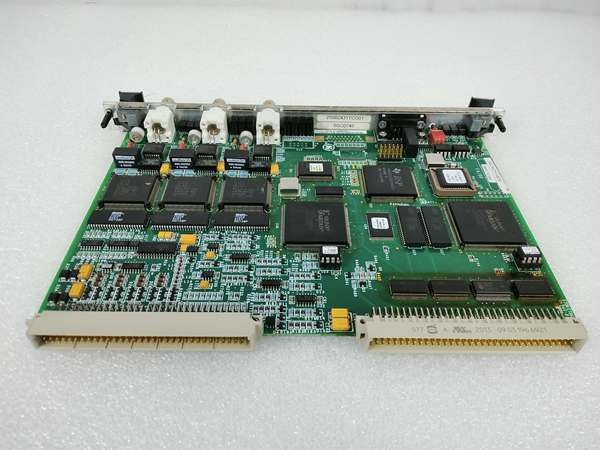
GE IS215VCMIH2C
The Real-World Problem It Solves
In a Triple Modular Redundant (TMR) setup, you can’t afford a single point of failure. This module acts as the central traffic cop for three separate VME racks, ensuring that if one path glitches, the other two override it instantly.
Where you’ll typically find it:
- Deep inside a TMR Mark VI control cabinet, sandwiched between I/O blocks in a Frame 7FA gas turbine.
- Managing the 20ms state exchanges between redundant controllers to keep the fuel stroke reference rock solid.
- Replacing an older H2C variant in a retrofit, bringing better noise immunity to a vibration-prone compressor station.
Bottom line: It’s the hardware enforcer of your turbine’s voting logic, keeping bad data from tripping the unit.
Hardware Architecture & Under-the-Hood Logic
This isn’t just a bus driver; it’s a TMR coordinator. Built on a 6U VME form factor, it uses a dedicated 32-bit DSP to handle the heavy math of signal voting and system synchronization. It ensures that Controller A, B, and C are always seeing the exact same snapshot of the turbine.
- State Exchange: Continuously grabs local I/O data and swaps it with the other two VCMI modules via the IONet at a rigid 20ms heartbeat.
- TMR Voting: Takes the three sets of data, runs them through the simplex/TMR voting algorithm, and dumps the finalized, error-checked commands to the VME backplane.
- DSP Pre-processing: Offloads the filtering and data packaging from the main CPU, ensuring the VME bus doesn’t get saturated during a transient load.
- Fault Management: Monitors its own power rails and communication links, instantly flagging a “Failed” status to the diagnostic LEDs if a 5V or 12V rail dips out of tolerance.
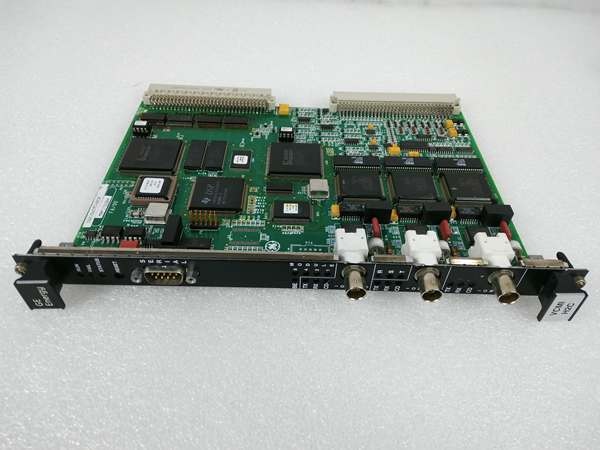
GE IS215VCMIH2C
Field Service Pitfalls: What Rookies Get Wrong
The “Revision B” Firmware Mismatch
Swapping an old H2C with a new H2CB seems like a drop-in job. It isn’t. The “B” revision carries updated firmware and EMI filtering. If your Mark VI toolbox software is outdated, the controller will reject the new hardware and throw a fit.
- Field Rule: Always check the firmware compatibility matrix in the GEH-6421C manual before installing a “Revision B” board. Update the ToolboxST suite first.
Terminating the TMR IONet Daisy-Chain
In a TMR setup, the three VCMIs talk to each other over the IONet coax. Rookies often forget that the middle board in the daisy chain needs specific BNC termination, or they leave a loose end hanging. This causes reflections that corrupt the 20ms state exchange.
- Quick Fix: Verify the 50-ohm terminator is securely screwed onto the last active BNC port of the chain. Wiggle the connector; if the “Link” light flickers, you’ve found your culprit.
Ignoring the Pre-Vote Table Sync
When you hot-swap a failed VCMI in a live TMR rack, the new board has to catch up with the other two controllers. Amateurs rush the reboot, causing a temporary data mismatch that forces a turbine trip.
- Field Rule: Watch the diagnostic LEDs. Wait for the “Run” light to stabilize and ensure the IONet transmit/receive lights are blinking in sync with the other two racks before closing the cabinet door.
Commercial Availability & Pricing Note
Please note: The listed price is for reference only and is not binding. Final pricing and terms are subject to negotiation based on current market conditions and availability.