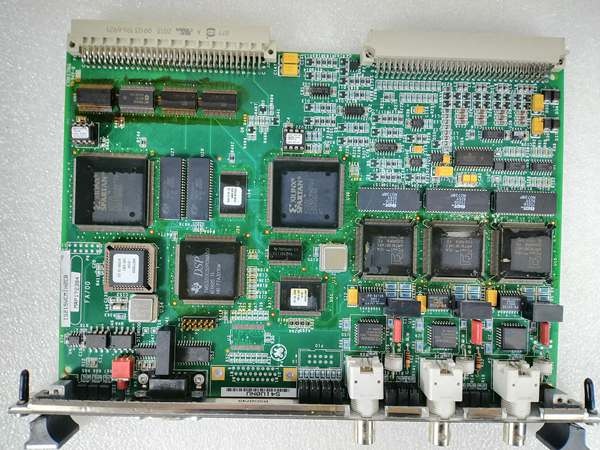
Description
Hard-Numbers: Technical Specifications
- Protocol Support: IONet (Proprietary GE), RS-232
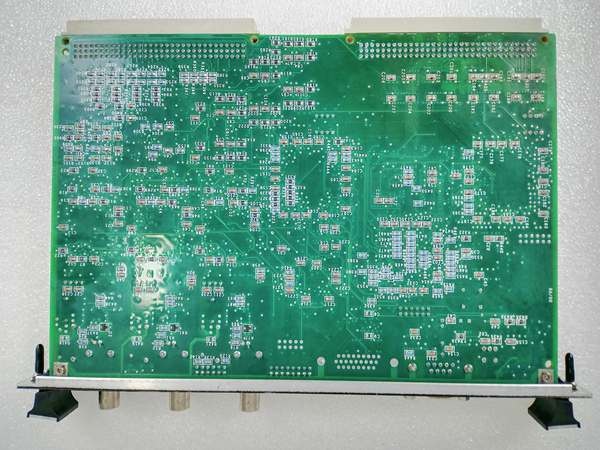
- Port Count: 3x 10Base2 BNC (IONet), 1x RS-232C D-Sub (Debug)
- Data Rate: 10 Mbps (IONet), 115.2 kbps (Serial)
- Operating Temperature: -30°C to +65°C (-22°F to 149°F)
- Isolation Rating: 1500 V AC (Port-to-Backplane)
- Power Draw: 5 V @ 2.5 A, 12 V @ 0.5 A (Typical)
- Processor: Pentium 133 MHz / TI TMS320C32 32-bit DSP
- Memory: 32 KB Dual-Port SRAM, 64 KB Flash
- Dimensions: 160 mm x 100 mm (6U VME Form Factor)
- Weight: 0.4 kg (0.88 lbs)
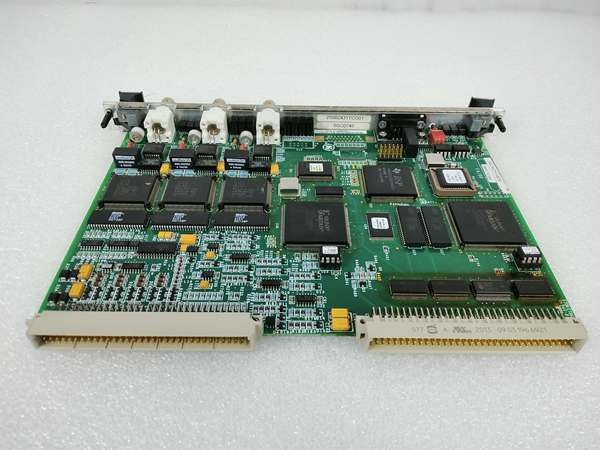
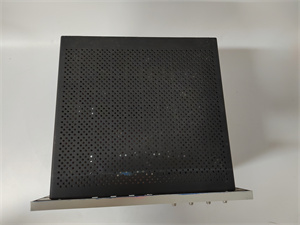
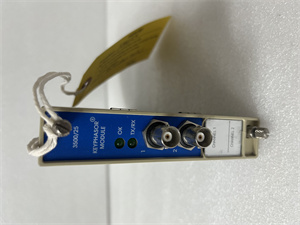
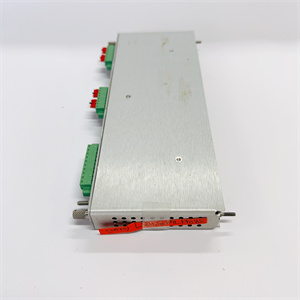
GE IS215VCMIH2C
The Real-World Problem It Solves
Dispersed I/O and noisy fieldbus networks turn your control loops into a nightmare, causing nuisance trips and expensive downtime. This module acts as the deterministic traffic cop, ensuring your control commands reach the actuators in milliseconds, completely immune to the plant’s electrical noise.
Where you’ll typically find it:
- Mounted in the main VME rack of a Mark VI control cabinet at a combined-cycle power plant.
- Daisy-chained via coaxial cables to remote I/O termination boards scattered across the turbine skid.
- Managing TMR (Triple Modular Redundant) data voting in steam turbine protection systems.
Bottom line: It is the communication backbone that keeps the turbine online and prevents catastrophic control lag.
Hardware Architecture & Under-the-Hood Logic
This isn’t just a dumb port expander; it’s a bus master driven by a dedicated DSP and Pentium chip. It offloads VME bus arbitration and external network communication, freeing up the main CPU to focus on core turbine control algorithms.
- VME Bus Arbitration: It actively listens to and controls the VME backplane traffic, prioritizing data requests from I/O modules to prevent data collisions.
- DSP Data Handling: The onboard DSP pre-packages I/O status updates and utilizes integrated transformer components to filter out EMI, guaranteeing signal integrity.
- IONet Transmission: It converts parallel backplane data into deterministic serial packets routed through its three 10Base2 BNC ports, allowing for flexible multi-path redundancy.
- Diagnostic Monitoring: It continuously polls the link status and translates bus health into actionable data displayed on the front-panel TX/RX/CD and binary (1, 2, 4, 8) LEDs.
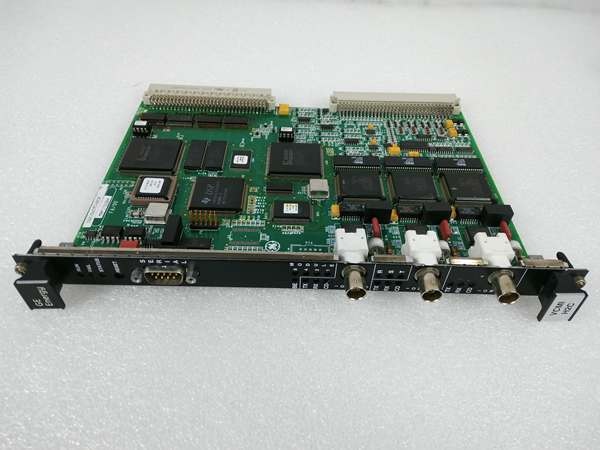
GE IS215VCMIH2C
Field Service Pitfalls: What Rookies Get Wrong
BNC Termination Ignorance
Rookies often slap a coaxial cable into the BNC port without properly terminating the ends of the IONet chain. This causes signal reflection, resulting in intermittent “Loss of Communication” faults that disappear the moment you look at it.
- Field Rule: Always install a 50-ohm barrel terminator on the last BNC connector in the daisy chain. Verify termination with a multimeter; never assume the last guy did it right.
Misinterpreting the LED Binary Code
When the “Fail” LED snaps on, amateurs usually panic and hit the reset button. They completely ignore the 1, 2, 4, and 8 LEDs, which actually form a hexadecimal fault code indicating the exact nature of the problem.
- Quick Fix: Read the binary LEDs before touching anything. A specific combination like LED 1 and 4 glowing points directly to a checksum error or memory issue, saving you hours of blind troubleshooting.
Improper Grounding of Shielded Coax
Technicians often ground the coaxial cable shield at both ends—the turbine base and the control cabinet. This creates a ground loop that injects high-frequency noise directly into your IONet packets.
- Field Rule: Ground the shield at the source end only. Leave the shield ungrounded (but insulated) at the VCMI end to kill the ground loop.
Commercial Availability & Pricing Note
Please note: The listed price is for reference only and is not binding. Final pricing and terms are subject to negotiation based on current market conditions and availability.