Description
Product Introduction
The is a UCVG series controller board within the GE Mark VI/VIe ecosystem. Unlike the standard UCVE(which is purely a computation/Voting engine), the UCVG variant is designed as a more integrated “General Purpose” controller.
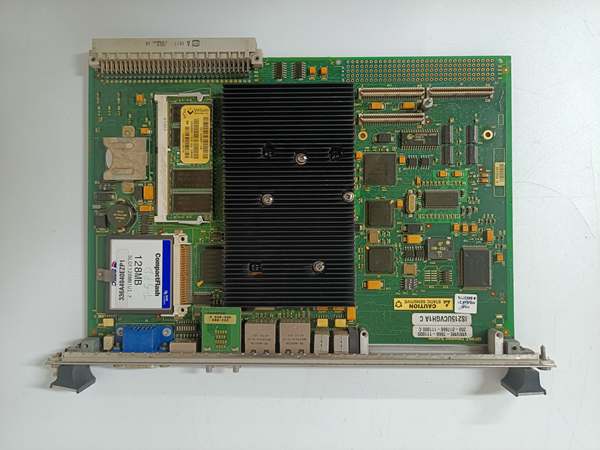
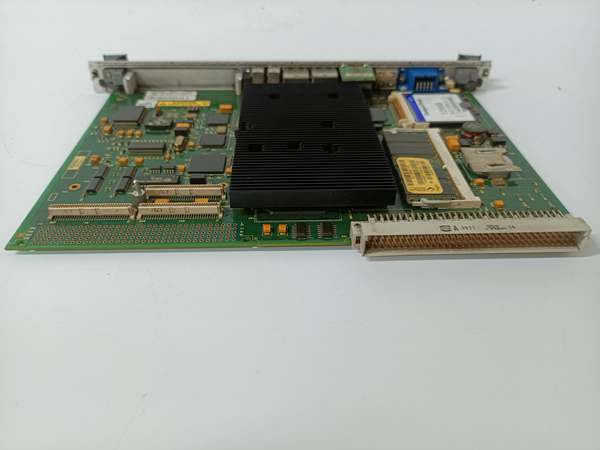
This “H1AC” revision is a Single-Slot VME board that houses a 650 MHz Intel Celeron processor, 128 MB SDRAM, and 128 MB Flash. Its defining feature is the front-panel I/O: it includes SVGA (Video), Keyboard/Mouse, and USB ports, allowing technicians to connect a local monitor and peripherals directly to the controller for on-site diagnostics without a laptop. It handles turbine sequencing, data acquisition, and can communicate via dual Ethernet (IONet) and serial ports. It is commonly used in applications requiring local operator interaction or where a separate HMI PC is not desired .
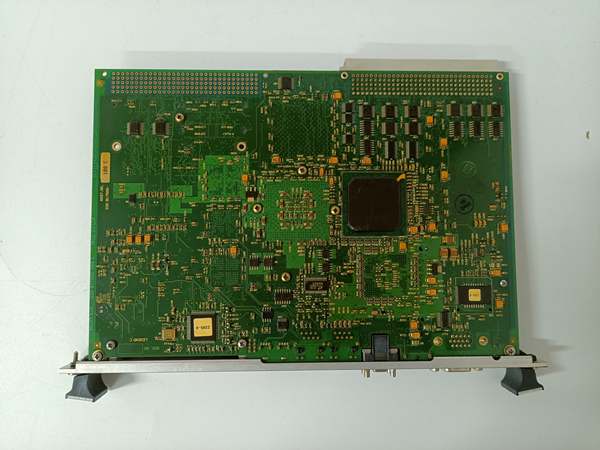
IS215UCVGH1AC
Key Technical Specifications
- System Role: UCVG (Universal Control – General Purpose w/ Graphics)
- Processor: Intel Celeron (Ultra Low Voltage, ~650 MHz)
- Memory: 128 MB SDRAM (Runtime), 128 MB Flash (Storage)
- Form Factor: 6U VME (Single Slot)
- Front Panel I/O:
- SVGA Port (Video Output for local Monitor)
- Keyboard / Mouse Ports (PS/2 or USB depending on rev)
- USB Ports (For peripherals/flash drives)
- 2x Ethernet (IONet/Control Network)
- Serial Ports (RS-232, COM1/COM2)
- Backplane: VME64 (P1/P2 Connectors for Rack Communication)
- Power Req: +5 V DC (Typical VME draw), +12V (for USB/Video)
- Indicators: System OK, Active, Network Link/Act LEDs
- Temp Range: -20 °C to +70 °C (Operational)
- OS: QNX (Custom GE Image)
Quality Control Process (Engineer’s Perspective)
- Incoming Verification: Match serial to manifest. Inspect 96-pin VME fingers for wear. Crucially, check the VGA and USB ports on the faceplate for bent pins (very common during rack access).
- Boot & Video Test: Seat in a VME rack with 5V/12V. Connect a VGA monitor to the front. The GE boot logo must display during POST. If the screen is blank but “OK” LED is green, the GPU section may be faulty.
- Peripheral Check: Plug a USB keyboard in. Enter BootMon (usually Ctrl+X during boot). Navigate the menu to confirm keystrokes are registered—verifies the I/O controller hub is alive.
- Ethernet Stress: Patch Port 1 to a laptop. Ping flood at 1500-byte packets; 0% loss is required. The “H1AC” revision typically has robust magnetics.
- Final QC & Packaging: Clean VME fingers with isopropanol. Bag in rigid ESD foam. Label “QC Passed – Video/USB/Net OK”.
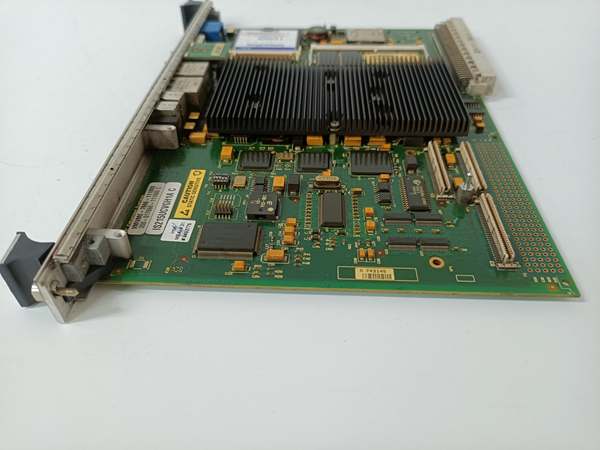
IS215UCVGH1AC
Replacement Pitfall Guide
❗ UCVG vs UCVE (Critical Selection):
- UCVE (
IS215UCVEH2Aetc.) = Headless (No Video/USB). Pure processing/Voting. - UCVG () = Has Video/USB ports.
Do not swap a
UCVEfor aUCVGH1ACwithout checking the project file (.tcf). The system may expect a headless controller; forcing a UCVG might require BIOS/Config changes to disable “Wait for Video” timeouts that can delay turbine startup.
❗ Local Monitor Dependency: If the site relies on the front SVGA port for local turbine status (e.g., in a remote pump house), simply swapping “any” controller won’t work. You must use the UCVGtype. A standard UCVEhas no video output capability.
❗ Application Download: Like all Mark VIe controllers, swapping hardware requires downloading the Control Application (.appl) and Configuration (.cfg). Because this board has more I/O (USB/Video), a mismatch between the old .tcffile and the new “H1AC” hardware definition canflag “Hardware Mismatch” warnings in ToolboxST.
❗ 12V Rail Requirement: Unlike basic VME cards, the video/USB features on UCVGdraw power from the +12V backplane rail. In older Mark VI racks where the +12Vsupply is disabled or faulty, the board may boot (5V OK) but USB ports won’t work and the monitor stays black.
❗ VME Seating: 6U board with faceplate ports. Ensure the faceplate screws are secured; the weight of VGA/USB cables can torque the board out of the P1/P2 backplane connectors over time, causing “VME Bus Error”.
Keep these in mind and you’ll cut 90% of rework time.
Compatibility Matrix & Benchmarks
- → GE IS215UCVEH2A: Functional Substitute (with caveats)— UCVG has added Video/USB. Can run the same logic apps, but physical I/O differs. Use UCVG if local HMI is needed.
- → Mark VIe VME Rack: Direct— Slides into standard Controller Slots (Carrier required if not integrated faceplate).
- → Standard VME CPU (Non-GE): Incompatible— Requires GE QNX image and ToolboxST handshake.
- Boot Time: ~30-45s (Incl. Video Init)
- Video Res: Typically 1024×768 (Industrial Panel compatible)
- Peripheral Power: +12V DC (From Backplane)