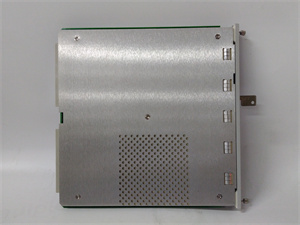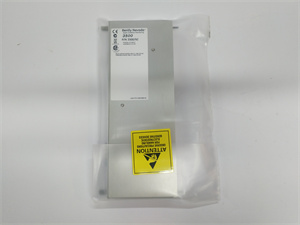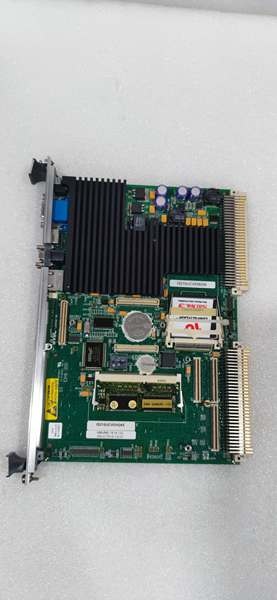
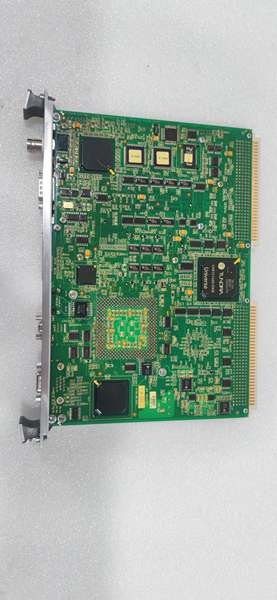
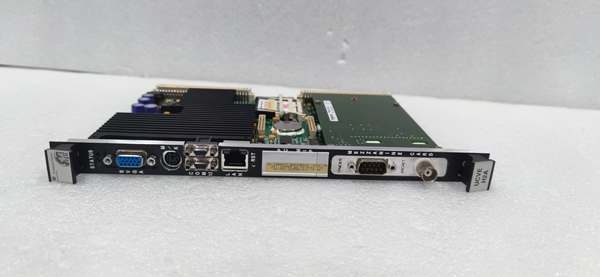
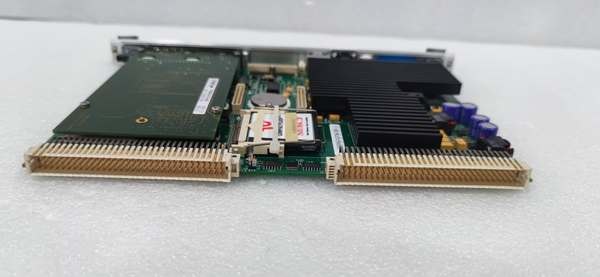
Description
Hard-Numbers: Technical Specifications
-
Processor: 300 MHz Intel Celeron (Socket 370) with MMX technology
-
System Bus: VME64 (64-bit data path, 33 MHz)
-
DRAM: 32 MB onboard
-
Flash Memory: 16 MB CompactFlash (bootable)
or 128 MB
(configuration dependent)
-
Operating System: QNX Neutrino (real-time, multitasking)
-
Ethernet: 2× RJ45 ports (10BaseT/100BaseTX, auto-negotiating)
-
Serial Ports: 2× RS-232C (COM1 for setup, COM2 for Modbus/DCS)
-
Mezzanine Slot: 1× PMC site for DLAN daughterboard
-
Power Supply: +5 VDC at 6.6A typical, 8.6A max; +12 VDC at 180mA; -12 VDC at 180mA
-
Operating Temperature: -30°C to +65°C
-
Storage Temperature: -40°C to +85°C
-
Clock Synchronization: ±100 microseconds to VCMI board via external interrupt
-
Processing Capacity: Up to 100,000 rungs/blocks per second
-
Dimensions: 15.9 cm × 17.8 cm × 3.0 cm (single-slot 6U VME)
-
Weight: 0.91 kg (2 lbs)
-
Manual: GEH-6421

GE IS215UCVEM09B
The Real-World Problem It Solves
You know the drill: LM2500 gas turbines on offshore platforms or naval vessels where a control fault means loss of propulsion or power generation in hostile environments. The IS215UCVEM09B is purpose-built for these Land-Marine applications—providing deterministic control with QNX hard real-time performance, dual Ethernet for redundant HMI paths, and VCMI clock sync that keeps multiple controllers locked to within 100 microseconds. It’s not a general-purpose PLC; it’s a marine-certified turbine controller that handles everything from startup sequencing to load sharing between multiple LM units.
Where you’ll typically find it:
-
Offshore oil platform LM2500/LM6000 generator sets providing prime or backup power
-
Naval vessel propulsion systems (frigates, destroyers) using aero-derivative marine gas turbines
-
Industrial cogeneration plants with LM series turbines in combined heat and power service
Bottom line: It keeps aero-derivative turbines running in harsh marine environments where standard industrial controllers corrode or lose synchronization, handling fast-load changes and anti-surge protection with microsecond-level timing precision.
Hardware Architecture & Under-the-Hood Logic
The IS215UCVEM09B mounts in a single VME slot of a Mark VI LM control rack. It’s a complete single-board computer running QNX, but purpose-built for turbine control—not general computing. The board connects to I/O via the VME bus and uses a VCMI (VME Communication Interface) board as the bus master for external data exchange. The M09B revision includes a DLAN daughterboard on the PMC mezzanine site for specific LM application networking.
Signal flow and processing logic:
-
Control Execution: The 300 MHz Celeron runs the LM-specific control toolbox (turbine startup, fuel control, vibration monitoring) under QNX with priority-based preemptive multitasking
-
I/O Handling: Process inputs/outputs from VME-based I/O boards (simplex or TMR) are accessed via the VME64 bus; the controller reads inputs, computes outputs, and writes back to the CSDB (Control System Database)
-
Clock Synchronization: An external clock interrupt from the VCMI board synchronizes the controller’s execution cycle to ±100 microseconds—critical for multi-controller load sharing and anti-surge coordination
-
Network Communication: Ethernet 1 handles EGD (Ethernet Global Data) for HMI and peer-to-peer controller communication; Ethernet 2 can be configured for redundant paths or Modbus TCP to DCS
-
DLAN Interface: The PMC mezzanine DLAN daughterboard provides specialized communication for LM aero-derivative specific devices (fuel metering valves, inlet guide vane actuators)
GE IS215UCVEM09B
Field Service Pitfalls: What Rookies Get Wrong
Confusing UCVE with UCVEM Variants The “M” in UCVEM09B stands for Land-Marine (LM) aero-derivative applications. Rookies grab a standard UCVE (IS215UCVEH2A) from spares and wonder why the LM2500 startup sequence faults out. The UCVEM has different I/O mapping, clock synchronization parameters, and DLAN daughterboard requirements specific to marine turbines.
Field Rule: Verify the controller variant matches your turbine type. UCVEM is for LM series only; UCVEH is for heavy-duty Frame turbines; UCVF is double-slot high-performance. Check the faceplate label—if it doesn’t say “UCVEM,” don’t install it in an LM rack.
Forgetting the DLAN Daughterboard The M09B revision requires a PMC mezzanine DLAN card for LM-specific communication. Rookies install the base UCVEM09B board, power up, and get “DLAN Fault” alarms because the daughterboard is missing or loose in the PMC slot.
Quick Fix: Inspect the bottom edge of the board for the PMC mezzanine card—it should be fully seated with retention clips engaged. The DLAN card has a separate faceplate with fiber optic or coax connectors (depending on revision). If missing, the controller cannot communicate with LM fuel control valves. Order the complete assembly, not just the base board.
Ignoring VCMI Clock Sync Requirements The UCVEM09B relies on the VCMI (VME Communication Interface) board for the external clock interrupt. Rookies replace the controller but don’t check the VCMI, then complain about “Clock Sync Fault” alarms. Without the VCMI’s 100 microsecond sync pulse, the controller cannot maintain deterministic timing for multi-controller applications.
Field Rule: Always verify VCMI status LEDs before declaring a UCVEM fault. The VCMI must show “Active” and provide the clock interrupt. If the UCVEM shows sync faults but runs otherwise, swap or reseat the VCMI board first—it’s the master clock source, not the controller.